Get Full Government Meeting Transcripts, Videos, & Alerts Forever!
Get email alerts on the Land Use Procedure topic
No spam. Unsubscribe anytime.
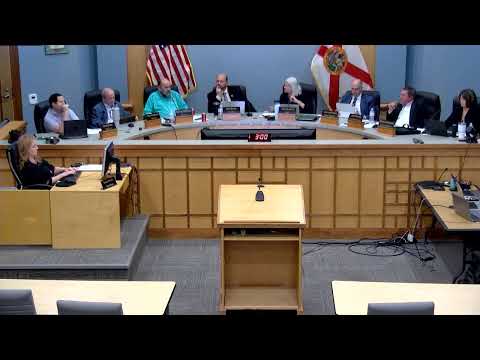
Walton County commissioners vote to send land-use hearings to special magistrate; staff to return on plats
Summary
The board approved an ordinance assigning quasi‑judicial land‑use hearings to a special magistrate and asked staff to return with a separate ordinance to streamline record plat approvals as a consent‑agenda item.
Walton County commissioners on April 22 approved an ordinance that sends the county’s quasi‑judicial land‑use hearings to a special magistrate for evidentiary review, with the board reserving final approval authority.
The ordinance assigns specified quasi‑judicial proceedings to a magistrate — either an administrative law judge supplied through the Department of Administrative Hearings (DOA) or a contract magistrate — who will hold evidentiary hearings and return written findings for the board to accept or reject. County Attorney staff said the written decision must be returned within 30 days or by the third regularly scheduled commission meeting that follows the hearing.
Commissioners and county legal staff framed the change as a procedural shift intended to put technical evidentiary hearings in the hands of a hearing officer while leaving policy and final determinations to the elected body. County Attorney staff recommended DOA as the preferred provider for magistrate services because DOA provides trained administrative law judges and standardized reporting.
Under the approved approach, planning commission and Board of Adjustment hearings would continue to take public testimony; the approved ordinance adds a two‑stage approach for affected quasi‑judicial matters: an evidentiary hearing for sworn testimony and a separate public‑comment section. The chair retains discretion over the scope and duration of the public‑comment portion.
If the board rejects a magistrate’s written decision it must state on the record the specific factual or legal errors prompting rejection. Appeals remain available to affected parties in circuit court under existing law.
Commissioners also directed staff to bring back a separate ordinance to process record‑plat approvals as a consent agenda item (ministerial review) if the commission adopts the magistrate approach. That followup ordinance will be prepared and advertised separately.
The ordinance as adopted took effect after the vote. Supporters said the change will produce clearer written records and help identify code provisions that may need correction; some commissioners and members of the public cautioned the move will likely reveal inconsistencies in the land development code and trigger code updates.