Get Full Government Meeting Transcripts, Videos, & Alerts Forever!
Get email alerts on the Public Safety Fire Stations topic
No spam. Unsubscribe anytime.
Commissioners back study of new fire stations, training center using excess LOST dollars
Summary
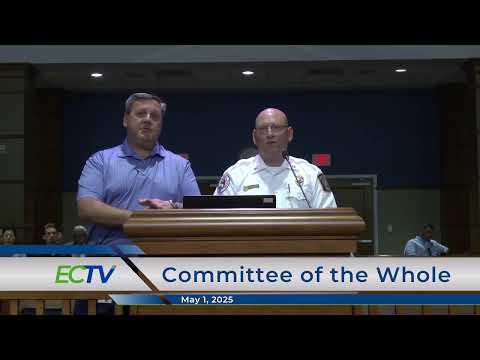
Commissioner Hoffberger proposed using excess local option sales tax (LOST) funds—estimated about $38 million available—to build four new fire stations, rehabilitate others and create a regional training center. Commissioners expressed support and asked staff and the fire chief to advance planning, procurement and site study.
Commissioner Hoffberger presented a plan to the Board of County Commissioners on May 1, 2025 to use a portion of roughly $38 million in unallocated local option sales tax (LOST) dollars for public-safety capital projects, including four new fire stations, living-quarters rehabilitation and a regional training center.
Hoffberger said the county should prioritize stations at Lillian Highway, Highway 97 at Kingsfield Road, Paradise Beach and Gulf Beach Highway, and address a storage/operability issue at White Ash Road. She said a high-end budget estimate to replace the four stations and related demolition would be about $34,000,000, or roughly $6.8 million per station, and proposed issuing a procurement notice by June 1, evaluating proposals by Aug. 1 and aiming to break ground March 1. “It would be my ask that we issue this RFP … by June 1,” Hoffberger said.
County administration said the proposal is fundable from available LOST dollars if the board directs staff to proceed. Several commissioners voiced support, emphasizing public-safety and insurance impacts in areas distant from stations.
Fire Chief Harrison described a proposed training campus to support the new stations and workforce development: a multi-story burn and high-rise prop for high-rise operations, a residential burn building for common housing fires, hazmat props, a rubble pile for collapse rescue, confined-space props and satellite training locations for north and south ends of the county. Harrison argued that training is critical because “when we go to an emergency, there’s no redo, there’s no do over… It’s 1 shot.” He said the department has run an internal fire academy with a 100% success rate and wants to expand to paramedic training and other state-certified courses at a county facility.
Discussion included possible use of a progressive design-build contract to reduce change orders, a request to prioritize local contractors where feasible, and interest in pairing the training campus with revenue-generating training programs. Representative Salzman was credited with securing $1 million in state funding toward the training site. Commissioners asked staff and Chief Harrison to study locations (including county-owned property and a Brownfield site referenced for the training facility) and return with specifications and cost estimates.
No formal board vote was taken on an expenditure during the meeting; commissioners asked staff to advance site and procurement planning and to incorporate training-center options into the capital proposal for future board consideration.