Get Full Government Meeting Transcripts, Videos, & Alerts Forever!
Get email alerts on the Film Production topic
No spam. Unsubscribe anytime.
Filmmaker recalls 16mm backcountry shoot for 'tetrahedron' and weather, sound challenges
Summary
In a recorded interview, the project's narrator described a late‑spring backcountry shoot for a short film called "tetrahedron," saying the crew hiked roughly 12 miles to the top of Devil's Circle, slept under ponchos instead of tents, and lost much location sound to weather and technical problems.
Narrator, the interviewee, described a late‑spring backcountry shoot for a short film titled "tetrahedron," saying the hike from the trailhead to the summit of Devil's Circle was "probably about 12 about 12 miles" and that the team slept under ponchos rather than using tents. "We didn't take tents or anything. We just carried a couple of ponchos," the Narrator said.
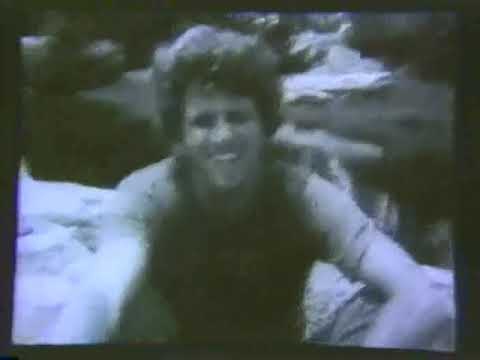
The interviewee said the crew shot on 16 millimeter film. "These are the, the rolls of 16 millimeter film," the Narrator said while describing footage and gear. They identified crew members on camera: Fred (who the Narrator described as trying to get sync sound with a portable recorder), Charlie (referred to as "Charlie the Jeweler"), Jasper and others. The Narrator said sound problems limited usable audio: "We got some sound, but it was so poor that, couldn't, couldn't use it," and that Fred "just didn't have his his Nakamichi, squared away." Those are direct quotes from the recording.
The crew described route and locations in the footage as they climbed past Thorn Lake and Jasper Lake and followed a waterway toward high ridges. The Narrator said they reached a ridge identified in the recording as "Devil's Thumb" and said the ridge "is over 4 2000," as spoken in the interview. At higher elevation they encountered strong wind and rapid weather change: "we were dying from the wind," the Narrator said, and the team later descended roughly 1,000 feet because they were exposed on the ridge.
The interview includes on‑camera moments that the Narrator characterized as intentionally "spiritual," including a piano passage and black‑and‑white imagery. The Narrator also described low‑tech field living and staging: carrying rocks in packs as a joke, for instance — "I filled in his pack with a thousand rocks" — and moments of lightheartedness on camera alongside physical strain from altitude and wind.
No formal actions, votes or policy directions were discussed in the recording. The session is an oral account of the filming process, equipment choices and on‑location obstacles rather than a governing‑body proceeding. The recording frequently alternates between commentary from the Narrator and short interjections labeled as questions or remarks by other speakers.
The interview supplies details useful for historians of local filmmaking and for those studying low‑budget location shoots: the use of 16 mm film, reliance on ponchos for shelter, sync‑sound failures in windy alpine conditions, an estimated 12‑mile approach, and a precautionary descent of about 1,000 feet after exposure to high winds.