Get Full Government Meeting Transcripts, Videos, & Alerts Forever!
Get email alerts on the Civil War Memory topic
No spam. Unsubscribe anytime.
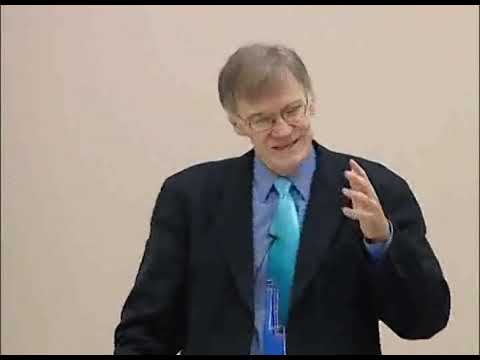
Yale historian David W. Blight: Civil War memory shifted from emancipation to reunion
Summary
At a University of Montana lecture, David W. Blight said U.S. public memory of the Civil War was reshaped in the late 19th and early 20th centuries by reconciliationist narratives and the Lost Cause, which together marginalized emancipation and helped normalize Jim Crow-era attitudes.
David W. Blight, professor of history at Yale University, told a University of Montana audience that U.S. public memory of the Civil War shifted over the late 19th and early 20th centuries from an emphasis on emancipation and Reconstruction to a reconciliationist narrative that minimized slavery as the war’s cause.
Blight outlined three dominant strains of Civil War memory he identified in his research: "reconciliationist memory," which elevated shared soldierly sacrifice; "white supremacist memory," which took forms including terror and later Jim Crow ideology; and "emancipationist memory," rooted in African American political memory and the politics of Reconstruction. "We tend to know those collective memories when we meet them," Blight said, arguing that ritual, rhetoric and politics shape how groups remember.
Blight said the reconciliationist strain and the Confederate Lost Cause legend helped make the war’s public story palatable to white Americans across regions by the early 20th century. He cited Bruce Catton’s 1965 essay that portrayed the Confederate legend as a unifying cultural force, and said historians later showed the Lost Cause was also "a virulent racial ideology, deeply rooted in white supremacy." The result, he said, was a national narrative in which the role of slavery and the political stakes of emancipation were often obscured.
To illustrate how public commemoration was reshaped, Blight described the 1913 Gettysburg reunion and later memorial gatherings. He said government records show tens of thousands of veterans were brought to reunions at government expense; "53,000 veterans, by the way, were brought to Gettysburg at government expense for this big reunion," he said. He said the 1913 gathering was explicitly segregated and that some widely seen documentary footage has been edited across years: "I looked everywhere to find a black veteran at that 1913 fiftieth anniversary, and there were none," he said, adding that some film editors later incorporated footage from the 1938 reunion into earlier footage.
Blight emphasized the tension between "healing" and "justice" as central to how nations confront violent pasts, noting that the United States never conducted a formal truth commission after the Civil War. He pointed to congressional Klan hearings in 1870–71 as the closest analogue, and said those records remain valuable testimony of the violence used to reshape politics during Reconstruction.
During audience questions Blight discussed contested figures such as John Brown and referenced W. E. B. Du Bois’s interpretation of Brown as a contested, Christ‑like figure. He also discussed recent scholarship, including Drew Gilpin Faust’s work on death and mourning in the Civil War era, and criticized certain treatments that, in his view, depoliticize the war’s causes.
Blight closed by warning against a facile, surface-level reconciliation that ignores persistent inequality: balancing remembrance that heals with actions that deliver justice remains unresolved. "Finding some balance between healing and justice is everybody's problem," he said.