Get Full Government Meeting Transcripts, Videos, & Alerts Forever!
Get email alerts on the Community Award topic
No spam. Unsubscribe anytime.
Brendan Wirk named Jeannette Rankin Peace Center’s 2025 Peacemaker; urges action on Palestine
Summary
Educator and organizer Brendan Wirk received the Jeannette Rankin Peace Center’s Peacemaker of the Year award in Missoula and used his acceptance to describe his organizing work, call for accountability over the Gaza conflict, and honor victims through a candlelit reading of names and ages.
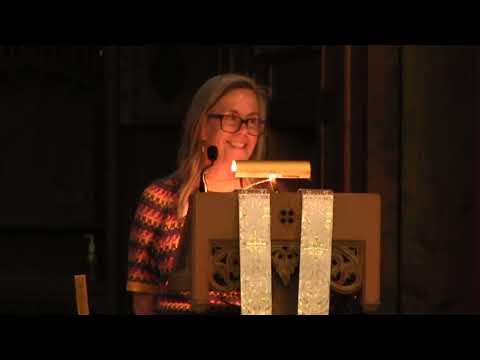
Nicole Mitchell, executive director of the Jeannette Rankin Peace Center, presented the center’s 2025 Peacemaker of the Year award to educator and organizer Brendan Wirk at a ceremony at Holy Spirit Parish in Missoula on a recent evening. The event included tributes from former teachers and longtime activists, a quilt unveiling by the Missoula Peace Quilters and a speech by Wirk that linked his local organizing to international human-rights concerns.
The award recognizes a Missoula resident who, in the words of the center, exemplifies nonviolence, social justice and environmental sustainability. Nicole Mitchell opened the program with a land acknowledgement and thanked the Missoula Peace Quilters and volunteers for the ceremony. “As a cornerstone of Missoula’s vibrant community of social change and activism, the Jeannette Rankin Peace Center stands for peace that is rooted in justice, equity, and human connection,” Mitchell said.
Patty Hixson, who taught Wirk in high school and later worked with him as a colleague, described his long trajectory from a student who memorized the flags of the world to a teacher of Arabic in Missoula County public schools and a founder of Montanans for Palestine. “I’m honored today to be here and talk about Brendan in the early years,” Hixson said, recalling his work with the Academic World Quest and his overseas reporting that shaped his advocacy.
Robbie Liven, a long-time local activist, highlighted Wirk’s organizing after the Oct. 7 attacks and his role in building demonstrations and trainings in nonviolent de-escalation. Liven said Wirk’s work stretches from classroom language instruction and translation for immigrant families to coalition-building across groups. Liven also described the founding of SALAM (Standing Alongside American Muslims) and Wirk’s union involvement with the Montana Federation of Public Employees.
At the center of the evening, Wirk used his remarks to connect personal history to political commitments. He described living and working in the West Bank and the influence of that experience on his subsequent organizing in Montana. He criticized U.S. domestic and foreign policies in broad terms and repeatedly urged his audience to confront what he called moral and political failings. "How dare we not feel shame?" Wirk asked as he recounted reading the names of victims. He then led a candle-lighting and age-by-age reading of named victims from Gaza and asked attendees to extinguish candles as ages were read.
Wirk cited organizing accomplishments and recent aid efforts, saying Montanans for Palestine had sent direct aid and raised money statewide; he thanked local chapters and volunteers for raising roughly $20,000 in direct aid.
The Missoula Peace Quilters unveiled a handmade quilt made for Wirk. Suzanne Starett, representing the quilting group, described a design inspired by arabesque motifs and said the quilters interviewed the honoree before drafting the design. The quilt’s back incorporates a cultural scarf and hand-embroidered details, Starett said.
Speakers named local political episodes and controversies as part of Wirk’s broader point about civic speech. Wirk criticized local governmental responses to ceasefire resolutions and said that speaking about Palestine has exposed tensions in local politics. He closed by urging organization and long-term political change and offered the Arabic greeting, “Assalamu Alaikum Warahmatullahi wa barakatuh.”
The ceremony concluded with an invitation for attendees to the parish hall for refreshments and a request that the community continue the center’s work on peace and justice.