Get Full Government Meeting Transcripts, Videos, & Alerts Forever!
Get email alerts on the Art Exhibit Land Policy topic
No spam. Unsubscribe anytime.
Jason Clarks "Freeland" at Missoula Art Museum links Dawes and homestead history to prairie loss and restoration
Summary
Artist Jason Clarks exhibition 'Freeland' at the Missoula Art Museum formed the backdrop for a panel that connected the Dawes, allotment and Homestead Acts to contemporary conversations about prairie loss and restoration.
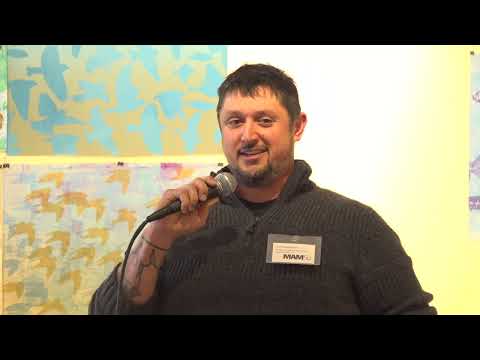
Jason Clarks exhibition Freeland, on view in the Missoula Art Museum's Linda M. Frost Gallery, uses printmaking to examine the Dawes, allotment and Homestead Acts and their impacts on land, animals and people, the museums senior curator said at a public panel.
"This exhibition, Freeland, which examines the Dawes, allotment, and homestead acts, and their impacts on land and animals and people," Brandon Ranches, senior curator at the Missoula Art Museum, told attendees. The gallery wall Clark described as a 60-print series and the full project as 320 prints: "...this wall is a 60 prints... I decided to do another 60 prints and so that's what this that's what the show is. It's 320 prints," Clark said.
Nut graf: Clark and panelists used the show to connect legal and historical policies to contemporary ecological loss and cultural restoration. Panelists and audience members tied the prints to themes of dispossession, the disappearance of prairie ecosystems and the ongoing cultural role of bison.
Clark described the projects origins during the COVID-19 pandemic when he read about bison restoration and the history of the landscape; he said that research led him to a project framed by numbers associated with land policy. The curator and panelists said the gallery and exhibit were intended to amplify contemporary Indigenous artistic expression and to open conversation about stewardship and restoration.
Panelists also tied the art to living practices. Roy Big Crane offered oral history and family memory about bison and landscape connections, and others framed restoration in both ecological and cultural terms. "The land and the indigenous people cannot be separated. Without the people, there is no land. And without the land, there is no people," Clark said when panelists discussed restoration beyond purely ecological actions.
The event was presented as a conversation rather than a formal decision-making session; audience members asked questions about the exhibit, the lineage of bison in American Prairies herds and how art and culture can participate in long-term restoration work. The discussion ended with a reading and an audience Q&A and invited attendees to continue conversations with panelists.