Get Full Government Meeting Transcripts, Videos, & Alerts Forever!
Get email alerts on the Local History topic
No spam. Unsubscribe anytime.
ResearcherHighlights Black communities in Western Montana, 1870–1940
Summary
A University of Montana researcher told a Missoula audience that Buffalo Soldiers, homesteading and restricted districts shaped African American life in Missoula and Hamilton from the late 19th century through the 1930s, and announced local preservation events that will present those histories to the public.
Sophia Natier, a doctoral student in anthropology at the University of Montana, told a For History Buffs audience in May that African American communities in Western Montana—particularly in Missoula and Hamilton—left a larger mark on local life between about 1870 and 1940 than the standard narrative has recorded.
Natier said new demographic analysis, archival records and oral histories show population shifts linked to the arrival of federal Buffalo Soldier units, the use of the 1862 and 1909 Homestead Acts by Black families, and later out-migration during the Jim Crow era. "When we change the narrative, the remembered are not the forgotten," Natier said at the conclusion of her talk.
Her presentation summarized statewide census figures she cited: the Black population in Montana rose from about 0.9% in 1870 to 1.1% by 1890 (roughly 83 to 1,490 people in the presenter’s slides), then declined to 0.8% in 1900 and to about 0.2% by 1920 as communities relocated to larger cities. Natier attributed the early growth in part to the stationing and retirement of Buffalo Soldier units—the 24th and 25th Infantry and the 9th and 10th U.S. Cavalries—at posts that included Fort Missoula, Fort Harrison (Helena), Fort Keogh (Miles City) and Fort Shaw (Great Falls).
Natier described how Fort Missoula’s garrison helped form enduring local institutions: veterans and their families settled on Missoula’s North Side, helped found congregations and civic clubs, and fielded athletic and musical groups. She outlined a local Black civic and cultural life that included Saint Paul AME Church (located at 1427 Phillips Street and active, she said, between about 1909 and 1938), the Hawthorne Club (also called the Rocky Mountain Colored Club in contemporary press) and a Black Masonic lodge established in 1921. Natier said the Hawthorne Club operated under various owners and locations from about 1901 until its closure after owner Eddie Joyner’s death around 1960.
The presentation also detailed so-called "restricted districts"—places adjacent to downtown where minority residents, immigrant families and working women were clustered and ostracized. Natier cited three Missoula districts (Parker’s Island, West Front Street and Cold Springs) and said Cold Springs, near Miller Creek, was known for frequent violence; she cited a documented killing on Oct. 19, 1897, when Private Elias King of Company G killed Private Edward Bolton of Company H. Natier said many such incidents were reported in the contemporaneous Missoulian and were often adjudicated by the city rather than solely by military authorities.
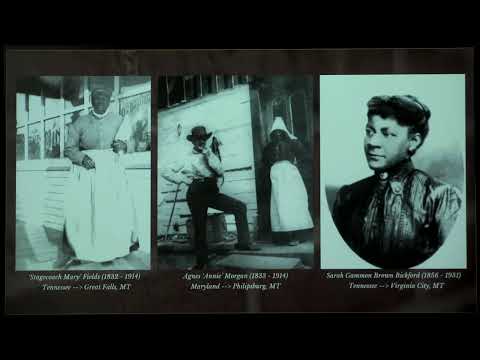
Natier presented several local personal histories to illustrate daily life and civic contributions: James Robert Mudd, a long-time cook at Saint Paul AME Church barbecues; Henry Smith, a Hamilton resident and Buffalo Soldier; Clara Smith, who ran boarding houses in Hamilton and whose properties were among several burned in the period around 1908–1911; Frank Gray (also reported in contemporaneous notices as "Phoebe"), a World War I veteran who lived in Hamilton; and Tish Nevins, who ran "Tish’s Place," a Hamilton boarding house and restaurant that Natier said provided room, board and schooling assistance for children.
Natier described other local patterns: the role of homesteading (she cited the 1862 Homestead Act and the Enlarged Homestead Act of 1909) in bringing Black families west, the decline of Chinese and other Asian populations after restrictive laws such as the Page Act of 1875 and the Chinese Exclusion Act of 1882, and the economic role of red-light districts and saloons in some western towns before statewide prohibition (Montana’s 1916 vote and enforcement around 1918 was cited).
She also discussed material culture and community rituals: Saint Paul AME Church fundraisers and large public barbecues (Natier reported a 1925 barbecue that served 443 pounds of steer, 50 pounds of pork and 30 pounds of lamb to more than 300 guests and raised approximately $138 for a community beneficiary), baseball teams associated with infantry units, and the 1897 bicycle corps trial by members of the 25th Infantry that rode from Missoula toward St. Louis as an army experiment.
Natier said recent preservation and public-history projects are beginning to incorporate these stories. She cited work with the Downtown Missoula Partnership and the Ravalli County Museum, the 2023 Cardinal Enterprises tour and the Unseen Missoula program, and announced a planned 2025 historic walking tour of Hamilton’s red-light/restricted district produced with the Ravalli County Museum. She also listed upcoming Missoula-area events organized with the Missoula Historic Preservation Office, including a women’s-history walking tour on May 3, a red-light district tour with state Chinese historian Mark Johnson on May 10, a Garden City history walk on May 17 and the Missoula historic-preservation awards on May 22.
The presentation closed with Natier’s central argument: re-framing local sites and sources can return marginalized people to the historical record. Audience members asked follow-up questions about sources, census accuracy and the social causes of violence in restricted districts; Natier said much of the reporting about violence came from the contemporary local press and that socioeconomic pressures and company-specific reputations within infantry companies were contributing factors, while acknowledging that some questions—particularly tribal histories—require specialists and tribal scholars.
Supporting details and specific numbers were drawn from Natier’s slide text, archival citations she discussed, and contemporaneous newspaper accounts she referenced in her talk. The session was hosted by Lee Silliman of the For History Buffs planning committee, who introduced the speaker and announced library and partner events.