Get Full Government Meeting Transcripts, Videos, & Alerts Forever!
Get email alerts on the Bison Restoration topic
No spam. Unsubscribe anytime.
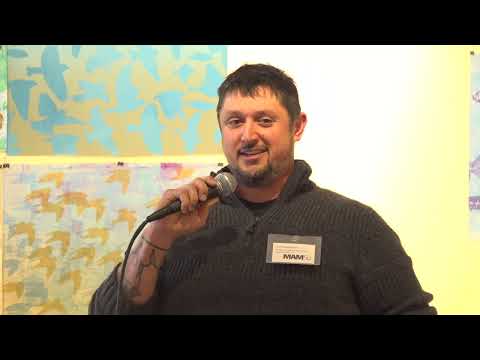
Panel at Missoula Art Museum spotlights bison restoration, acres and tribal partnerships
Summary
Panelists at the Missoula Art Museum discussed ecological and cultural restoration of prairies and bison, the American Prairie Reserve partnerships with tribes, herd lineage and land metrics including acres and herd size.
Panelists at an event in the Missoula Art Museum's Linda M. Frost Gallery discussed efforts to restore bison and prairie ecosystems and described how those efforts intersect with tribal partnerships and land management.
The panel, convened around Jason Clarks exhibition, moved quickly from art and history into practical questions about restoration, forage accounting and the cultural role of bison. Scott Heidelbrink, director of landscape stewardship at American Prairie, said, "Right now, so we have hooves on the ground on about 45,000 acres. We've been approved, by the BLM and state to graze another roughly about 40,000, that do not advise on them yet. And so that's in future plans." He also told the audience American Prairie currently manages about "850 bison in 2 herds."
Why it matters: panelists framed bison restoration as both ecological and cultural work. Roy Big Crane described bison as integral to Indigenous lifeways: "All our people relied upon the bison for many things ... It meant shelter, food, medicine, lodging." Panelists said returning bison at landscape scale affects plant, animal and human communities and requires long-term coordination with land managers and tribes.
Panelists described how American Prairie sources and distributes animals. The reserves early imports included animals from Wind Cave National Park; later additions included Elk Island National Park (Canada). Scott said the organization has recently taken bison from Colorado State University and animals with "Yellowstone lineage" from Fort Belknap. Scott also described annual herd management practices: with limited forage the reserve periodically moves surplus animals to other herds or partners. Scott said the organization works with tribal partners through groups such as the Intertribal Buffalo Council; he named Rocky Boy, Fort Peck, Fort Belknap and Blackfeet among Montana partners.
The audience asked about animal-unit-month (AUM) accounting. A panelist explained that federal and state leases set AUM rates and that, for forage accounting on those public leases, bison and cattle are treated as equivalent in standard AUM calculations. Scott said American Prairie performs site-by-site forage assessments and adjusts stocking rates on deeded property based on observed conditions.
Panelists emphasized restoration as a long-term, culturally informed project rather than a single technical fix. Corey Williamson, who moderated the discussion, told attendees restoration includes "restoring a balance and the return to systems of interconnectivity and reciprocity." Multiple speakers said returning bison in ways that let them express natural behaviors remains a high priority: "A bison does not stand behind a fence," Heidelbrink said in explaining why the group aims to move beyond small, fenced herds.
No formal votes or policy actions were taken at the panel; the event was a public conversation and audience Q&A. Panelists discussed ongoing approvals and land needs, and repeatedly described tribal collaboration, but made no commitments on specific land acquisitions or transfers during the event.
The conversation closed after a question-and-answer period; attendees were invited to speak with panelists individually.