Get Full Government Meeting Transcripts, Videos, & Alerts Forever!
Get email alerts on the Ethics And Conflicts topic
No spam. Unsubscribe anytime.
Public speakers urge Seattle City Council to reject proposed ethics-code rollback
Summary
More than 30 public commenters — in-person and remote — urged the City Council to oppose a proposed ordinance that would allow council members to vote on matters where they have a financial interest, citing transparency and conflicts-of-interest concerns.
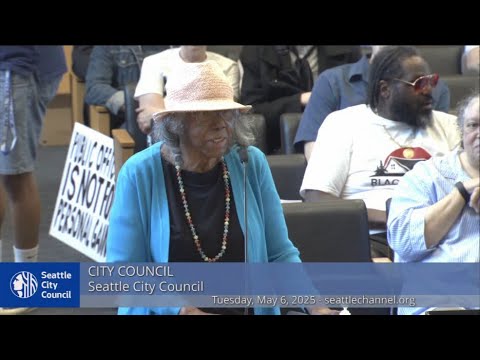
At a May 6 meeting of the Seattle City Council, more than 30 public commenters spoke during the hybrid public-comment period, the majority urging the council to reject proposed changes to the city’s ethics rules that would allow council members to vote on matters involving financial conflicts of interest.
Speakers repeatedly framed the proposal as a rollback of long-standing protections. Rachel Snell told the council, “Please vote no on this proposal that would roll back ethics protections.” Natalie Morgan of FairVote Washington said, “I urge you to oppose this proposal and maintain transparency and public trust in our city government.” Several speakers referenced local history of disclosure rules and Seattle’s role as a model for transparency.
Commenters named specific concerns: potential self-dealing by council members who own rental properties, reduced protections for renters, and the effect on public trust amid broader national concerns about corruption. Marshall Bender, a Seattle Public Library employee, said the change would permit “self dealing” and singled out similar rules in other cities as not being a reason to lower local standards. Multiple speakers cited Seattle Municipal Code 4.16.070 (as discussed during testimony) and urged the council to preserve the existing recusal requirement.
Speakers described the proposal as especially harmful to tenants and low-income residents. Julia Buck recounted a personal experience with a landlord’s conduct after her father’s death to argue against loosening rules for landlord-council members. Groups and individuals representing renters, labor, democracy-reform organizations and neighborhood associations delivered overlapping testimony opposing the proposed change.
A number of speakers warned of political consequences if the council proceeds. Workers Strike Back and other speakers said they would hold elected officials accountable at the ballot box. Several asked council members proposing the change, including Council member Cathy Moore (named by speakers), to withdraw the ordinance.
The council proceeded with other agenda items after public comment. No council vote on the proposed ethics ordinance occurred at this meeting; the public comment period was a forum for constituents to register support or opposition.