Get Full Government Meeting Transcripts, Videos, & Alerts Forever!
Get email alerts on the Meeting Decorum topic
No spam. Unsubscribe anytime.
Wausau committee debates meeting decorum and signage; public commentator warns of legal risks
Summary
The committee discussed proposed decorum language, whether to restrict signage during meetings, and whether to add a brief decorum statement before public comment. A public commenter urged the committee to consult free‑speech experts and cautioned that sample rules from other towns have faced legal challenges.
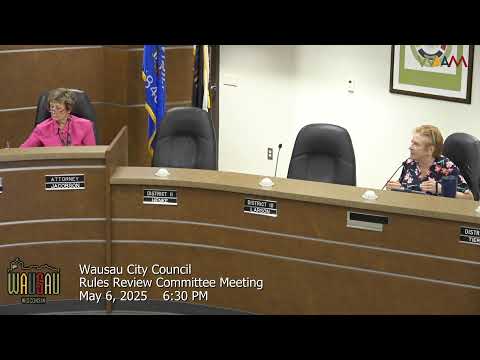
The Rules Review Committee for the City of Wausau discussed meeting decorum rules, whether to restrict signage at public meetings, and whether to include a brief decorum statement before public comment; the committee did not adopt restrictions on signage and directed staff to draft briefer decorum language for further review.
Tom Killian, a resident who provided public comment, urged caution and outside review before adopting decorum language drawn from other municipalities. Killian noted a sample decorum policy in the packet from Yacolt, Washington and said the town "was highlighted in the press for its lawsuit trying to shut down the speech of Washington state auditor's office" and that "a judge dismissed Yaacold's suit." Killian also cited a recent federal appeals-court decision in October 2024 that struck down school-board public-comment policies the court found had "banned abusive, obscene, or personally directed comments" and argued the committee should consult groups such as the ACLU Foundation for Individual Rights and Expression or the Institute for Justice.
Committee members discussed three decorum subitems: (a) restrict signage, (b) creating a short statement to read or place on the agenda before public comment (a civic mission/decorum blend), and (c) whether the council should read or display a short mission statement at the start of meetings. The chair summarized that the discussion did not mean the committee was adopting restrictions but that members should give direction if they wanted staff to pursue legally feasible wording.
Alderperson Killian said she did "not support restricting signage as long as it does not disrupt or present a danger to our chamber," adding that a non‑disruptive sign is an element of freedom of speech. Alderperson Preston Keith and others urged concise wording focused on the elements that matter in practice—behavior that "disturbs, disrupts, or otherwise impedes the orderly conduct of any council meeting." The city attorney reminded members that Robert's Rules is the default parliamentary authority when ordinances do not specify decorum.
The committee agreed to "word‑smith" a concise decorum statement and to return with revised language at a future meeting; members emphasized that any legally enforceable restriction would require additional legal review.
Ending: No new restrictions were adopted. Committee members asked staff to prepare a shorter decorum statement for the committee’s next meeting and to research legal precedents as requested by public comment.