Get Full Government Meeting Transcripts, Videos, & Alerts Forever!
Get email alerts on the Grease Management topic
No spam. Unsubscribe anytime.
Wausau commission approves drafting grease management ordinance and revising hauler fees
Summary
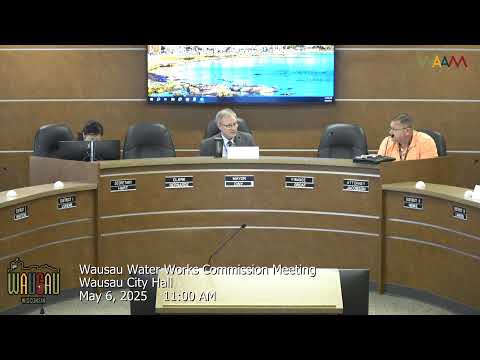
The Wausau Waterworks Commission voted May 6 to direct staff to draft a grease management program for possible incorporation into city code and to revise septic/grease hauler fees to better reflect treatment costs.
The Wausau Waterworks Commission voted May 6 to direct staff to draft a grease management program for possible inclusion in city ordinance and to update the fee schedule for septic and grease-hauler waste brought to the city treatment plant.
Commissioner Force moved to have staff develop a grease management program and Commissioner Watson seconded the motion. The commission approved the motion by voice vote. Commissioner Robinson later moved and Commissioner Force seconded a separate motion to authorize staff to update the hauler fee schedule; that motion was also approved.
Staff said the utility takes an average of about 40,000 gallons of grease trap waste each month and that concentrated "slugs" of grease can disrupt treatment processes and damage equipment. Ben, staff member, said one immediate option is an annual permit that would require businesses to provide third-party inspection records showing grease interceptor maintenance; the utility would not perform the inspections itself.
Staff said the Marathon County Health Department currently does not enforce ongoing maintenance of grease interceptors for all establishments, and utility staff have begun contacting the county to identify existing grease interceptor inventories. Commissioners discussed whether the health department, the plumbing code or the utility should administer and enforce any new program. "We will definitely work with the health agencies," Eric said, adding the utility has only begun preliminary contacts.
On fees, Ben recommended eliminating a blended rate and switching to fees based on thousand-gallon units, noting other utilities use different fee structures and that material arriving at the plant varies in treatment cost. The commission directed staff to draft both an ordinance proposal and a revised hauler fee schedule and return those drafts for future approval; staff will work with the city attorney and legal as needed.
Both actions passed by voice vote; no dollar amounts or final ordinance language were adopted at the May 6 meeting.