Get Full Government Meeting Transcripts, Videos, & Alerts Forever!
Get email alerts on the Mental Health topic
No spam. Unsubscribe anytime.
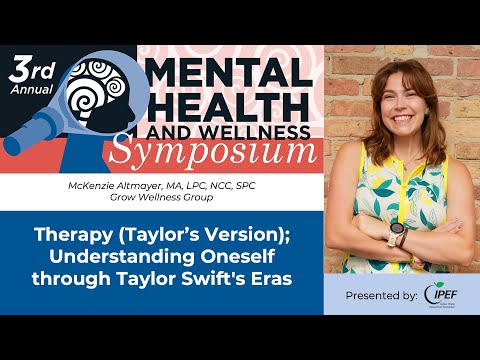
Therapist maps Taylor Swift "eras" to personality profiles and clinical interventions
Summary
A therapist presented a 30-minute talk linking Taylor Swift album "eras" to personality features and suggested therapeutic tools, offering attendees practical interventions such as goal ladders, I-statements, and mindfulness techniques.
Presenter, a therapist, spent roughly 30 minutes mapping Taylor Swift "eras" to common personality patterns and proposing brief therapeutic interventions attendees might use. "We are going to figure out what era each of you fall within," the Presenter said, framing the talk as an assessment that connects music-based identity with clinical strategies.
The talk organized listeners into archetypes tied to album-era themes (Debut, Fearless, Speak Now, Red, 1989, Reputation, Lover, Folklore, Evermore, Midnights and TTPD) and suggested an intervention matched to each profile. The Presenter said the exercise was meant to "meet this person wherever they are at" and to build on strengths rather than change someone into a different era.
Key recommendations were practical, short-form tools widely used in psychotherapy: a "goal ladder" for Debut-era optimism that breaks outcome goals into process steps; a character sheet and reality-testing for Fearless-era rose-colored expectations; use of "I statements" to channel Speak Now-era advocacy into less confrontational communication; and a confidence resume to counter Red-era insecurity and reassurance-seeking. For 1989-era social thrill-seekers, the Presenter proposed a "defining friendships circle" to help distinguish close friends from acquaintances; for Reputation-era boundary-setters, the talk suggested explicit boundary language instead of abrupt cutoff.
For more inward-facing eras, interventions included Johari window work for Lover-era people-pleasing tendencies; gratitude journaling for Folklore-era escapism; self-care planning for Evermore-era caretakers; safe-place grounding mindfulness for Midnights-era anxiety; and a notice-name-accept approach to help TTPD-era intellectualizers sit with feeling as well as label it. The Presenter summarized: "When we actually take the time to feel our emotions, you'll find that they tend to cycle through a lot quicker than when we just ignore them and shove them to the side."
The talk mixed illustrative descriptions with concrete practices and repeatedly emphasized meeting clients where they are. There were no formal motions, votes, or policy decisions recorded in the transcript; the event was a standalone presentation of therapeutic strategies. The Presenter encouraged attendees to visit a website with more information and resources.
The presentation referenced common clinical frameworks (attachment styles, I-statements, Johari window, mindfulness grounding) and popular-culture touchstones (Taylor Swift, the Eras Tour, Ticketmaster) to make interventions relatable, but did not assert clinical outcomes or make claims about efficacy beyond standard therapeutic rationale. Attendees were given practical exercises and names for approaches they could explore further with a clinician if desired.
Ending: The Presenter closed by inviting questions and directing attendees to online materials for more detail: "Visit if you like, but that's what I got for you."