Get Full Government Meeting Transcripts, Videos, & Alerts Forever!
Get email alerts on the County Budget topic
No spam. Unsubscribe anytime.
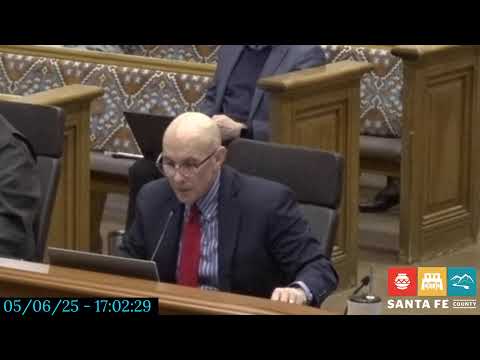
Santa Fe County manager presents $305 million FY26 operating budget and contingency plan
Summary
County management proposed an operating budget of about $305 million (excluding transfers), described revenue estimates and contingencies, and outlined staffing and capital priorities including ERP and jail-management investments.
County Manager Schaefer presented a high-level overview of Santa Fe County’s proposed FY26 operating budget Monday, saying the recommended operating budget is approximately $305,000,000 excluding transfers and includes roughly $253,000,000 in recurring expenditures and $51,000,000 in nonrecurring expenditures, including contingency funds.
The budget presentation focused on revenue estimates from the county’s independent economist, planned contingencies and reserve policy, and targeted staffing and capital investments. Schaefer said the county used a “mean” revenue estimate — the official estimate from the economist — and built in contingency funds and one‑time cash cushions to withstand downside risk.
Why this matters: The budget frames near‑term spending and reserve use while preserving flexibility if revenues fall short. Schaefer told the commission the county is planning for a range of outcomes and has set aside contingencies and committed portions of fund balance to protect services in a potential downturn.
The county manager described the contingency structure and a special opportunity fund that currently holds about $8,800,000 for grant‑seeking and matching requirements; he said a wildfire mitigation match could use up to $2,500,000 of that amount. He also noted a proposed budget contingency total of about $19.2 million for FY26.
On major revenue lines, Schaefer said the property tax estimate for FY26 is about $65.7 million (mean estimate), with a low estimate near $62.7 million. Gross receipts tax and lodgers tax growth were described as modest on the mean case; lodgers tax was estimated at about $2.7 million (mean) and the proposed budget would split lodgers tax revenue 50/50 between the lodgers tax facilities fund and the lodgers tax advertising fund “as allowed under state law and the county ordinance.” The manager said he budgeted vacancy savings at 10% as a recurring resource.
Board members pressed for context on recession risk. Commissioner Green asked how prior recessions translated into gross receipts declines; Schaefer said the Great Recession produced an 11.5% decline in gross receipts tax and that the budget’s low estimate would represent a lower outcome than that historical downturn. Schaefer said the contingency and reserves would not fully cover a multi‑year revenue decline of that magnitude without additional policy adjustments.
Staffing and benefits: Schaefer outlined targeted recurring investments including funding for a class-and-compensation refresh ($2,461,000) for certain bargaining and non‑bargaining positions, an estimated 0.5 percentage‑point increase in the county’s PERA contribution (budgeted at about $375,000), and an estimated group health cost increase (about $426,000). He also proposed two specific new positions: an administrative assistant for the county’s front‑facing kiosk at 240 Grant Avenue, and a records/IPRA clerk in the county attorney’s office to help with inspection of public records act requests.
Large projects and future years: Schaefer said the recommended budget includes the second portion of funds estimated to complete implementation of the county’s enterprise resource planning (ERP) and jail‑management systems; the board previously approved consultant work and the FY26 budget contains remaining implementation costs. He also described potential options for revenue bonds issued in 1997 for correctional facilities that mature in 2027 (roughly $2.2 million in annual debt service related to corrections), and said rebonding could be a future way to fund a substantial renovation/expansion of the adult detention facility or to reallocate general fund resources when debt service obligations end.
Other items to watch: the budget includes no solid waste rate changes but notes prior cost‑of‑service work that showed solid waste revenues covered only about 12.3% of FY24 costs; the county will revisit rates as needed. Schaefer also said county staff will explore becoming a Medicaid provider for additional services in FY26, which could change fee revenue sources for certain county operations.
The county manager concluded the presentation by offering to run further departmental discussions in scheduled study sessions and by asking the board if it wanted additional briefings on federal funds at risk or other issues.
Ending: Commissioners asked for follow‑up materials including FTE counts, organizational charts and a one‑page fund summary; Schaefer said staff would provide those materials in advance of upcoming hearings.