Get Full Government Meeting Transcripts, Videos, & Alerts Forever!
Get email alerts on the Hud Consolidated Plan topic
No spam. Unsubscribe anytime.
Planning Commission approves North Miami’s five‑year HUD consolidated plan; staff and commissioners flag rising homelessness demands
Summary
The Planning Commission voted unanimously to approve resolution PC17‑107, forwarding North Miami’s proposed five‑year HUD consolidated plan and the FY2025–26 annual action plan for CDBG and HOME funds to the city council.
The Planning Commission voted unanimously to approve resolution PC17‑107, sending the proposed North Miami five‑year consolidated plan (2025–2029) and the fiscal‑year 2025–26 annual action plan — covering Community Development Block Grant (CDBG) and HOME Investment Partnerships (HOME) funding — on to the city council for final approval.
The item required the commission’s recommendation because U.S. Department of Housing and Urban Development (HUD) requires a five‑year consolidated plan and an annual action plan that prioritize local needs and explain how federal funds will be used.
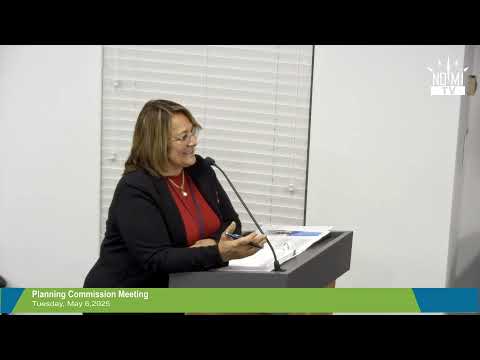
Albert Bazile, the city’s Housing and Social Services Director, said the consolidated plan combines HUD data with local outreach and noted the scale of public engagement: “We received 262 responses,” he told the commission. Bazile said staff used HUD and American Community Survey data to compare local conditions to county and state benchmarks and to prioritize what HUD funds should pay for.
Bazile summarized funding and priorities he expects to submit to HUD: last year’s CDBG allocation was “$779,123,” and HOME allocations are typically under $300,000 annually, so most federal funds will come from CDBG and be directed toward housing rehabilitation, public services (subject to HUD’s 15% cap), and public facility improvements. He explained program eligibility and income limits: CDBG activities typically target households at 80% of area median income (AMI) or below; HOME rental assistance typically serves households at 60% AMI or below.
Several commissioners pressed Bazile on homelessness and service demand in North Miami. Bazile said the city’s own client intake shows an increase in demand: “we recorded a total of 445,” and he cited program‑level counts, saying, “rapid housing moving assistance is 247.” He told the commission that some people identified as homeless are unsheltered in clusters along Biscayne Boulevard and other locations, and he said the department must balance HUD‑eligible activities with funding the city can spend timely.
Bazile outlined the public‑participation schedule: a 30‑day public comment period planned for May 19–June 18 (staff said they hoped to post actual allocation numbers after HUD issues FY2025 allocations around May 15), and a planned council review in June with a HUD submission target in August. He cautioned that missing HUD’s submission deadline could jeopardize funding for the coming year.
After discussion, Commissioner McDermott moved to recommend approval; the motion was seconded and the commission voted unanimously to forward the consolidated plan and annual action plan to city council.
Ending note: The commission’s vote sends the draft plan to council and begins the 30‑day public comment window; the plan includes limits and caps set by HUD and will return to council with final dollar allocations once HUD publishes the FY2025 award amount.