Get Full Government Meeting Transcripts, Videos, & Alerts Forever!
Get email alerts on the Hydrogen Blending Transparency topic
No spam. Unsubscribe anytime.
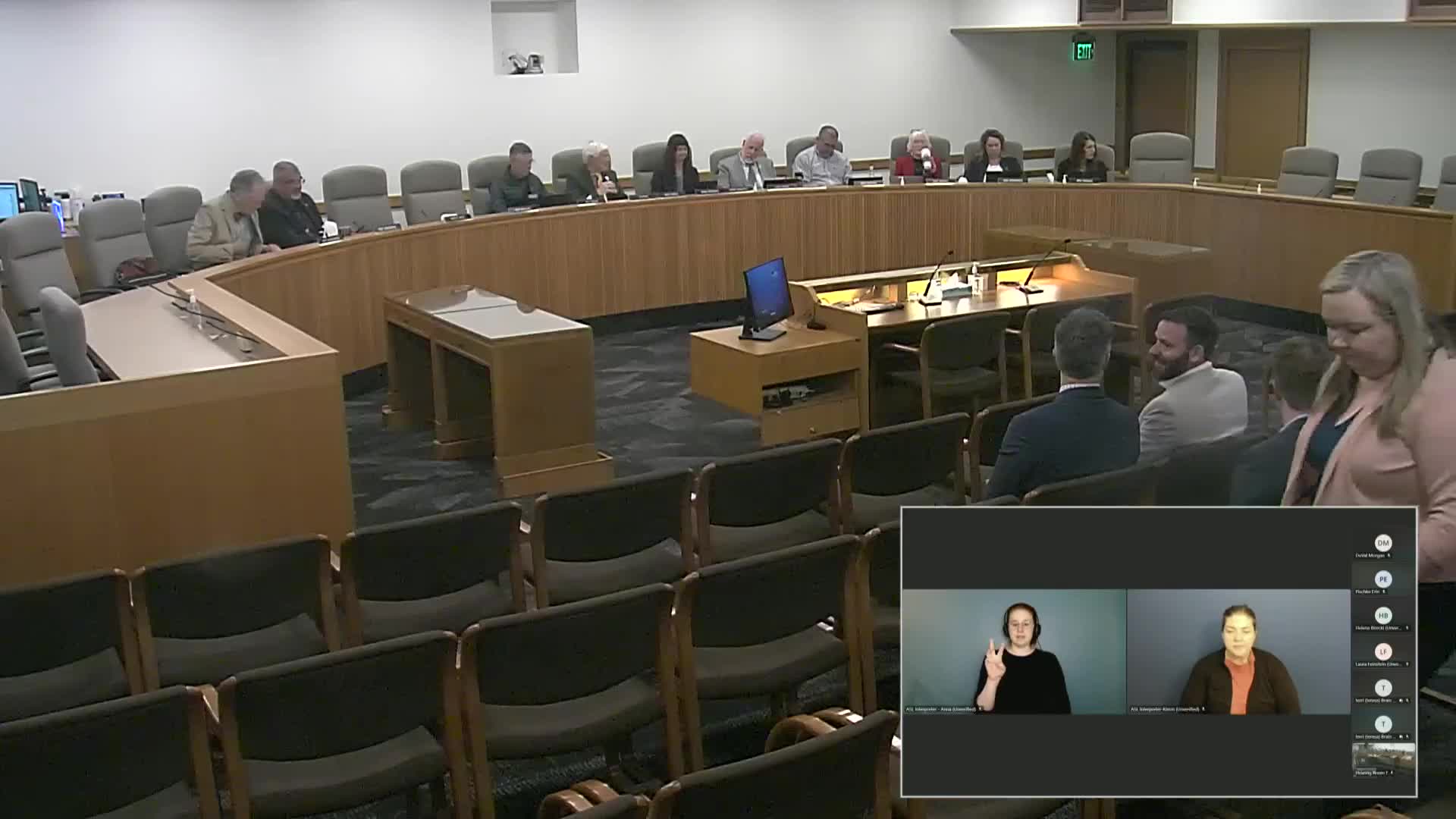
Committee hears arguments for transparency on hydrogen blending in gas supply
Summary
Senate Bill 685 would require natural gas utilities to notify the Public Utility Commission and customers if planned hydrogen blending in delivered gas exceeds a defined threshold (amended to 2.5% by volume) or if blending occurs at any amount after June 30, 2030; supporters described the bill as a transparency measure to build public trust after a local pilot project drew public concern.
Senate Bill 685 would require a natural gas utility to notify the Public Utility Commission and affected customers if the utility plans to increase the hydrogen content in its delivered gas above a specified threshold — set in amendments to 2.5% by volume — and to post specified information on utility websites. Proponents said the bill fills a transparency gap after a local pilot in Portland proceeded with limited public notice; utilities and trade groups said they were largely neutral with concerns about unnecessary alarm and potential impacts on decarbonization efforts.
Senator Khan Pham, the bill’s chief sponsor, said constituents raised safety and health questions after learning about a hydrogen blending pilot project in Southeast Portland. “This bill is fundamentally about transparency and trust,” Pham said, and she described months of stakeholder engagement to reach a consensus threshold and reporting requirements. Pham said the bill does not regulate hydrogen deployment but requires notice so customers know what is being produced and delivered.
Climate and public‑health advocates supported notification requirements. “Blending hydrogen with methane does not eliminate emissions,” said Emily Bowes, representing the Sierra Club of Oregon, who noted lifecycle and leakage concerns and urged caution. Nora (Oregon director for Climate Solutions) said hydrogen is valuable for hard‑to‑electrify industrial uses but is not an efficient route to decarbonize buildings; she and other advocates asked for safeguards and public engagement so hydrogen does not become a stranded or counterproductive resource.
Northwest Natural and other utilities said they are neutral on the bill after amendments set a 2.5% threshold and later‑date reporting trigger, and company witnesses asserted hydraulic blending is being studied as one of several decarbonization tools. “Safety is a core value at Northwest Natural,” Mary Morlands, director of environmental policy and corporate responsibility at Northwest Natural, said; she said the pilot project that spurred the debate was well below 1% and that the company supports transparent communications with customers.
Trade groups and labor representatives raised a mix of views. Brad Archuleta, a business agent for Plumbers & Steamfitters Local 290, said federal PHMSA regulations (Part 192) already govern pipelines and that hydrogen blending has been handled safely in other jurisdictions. Industry associations including the Northwest Gas Association and Renewable Hydrogen Alliance said they supported reasonable transparency but warned that notice requirements could unfairly stigmatize hydrogen projects and slow development of clean hydrogen supply.
Witnesses and committee members debated technical and policy details — including the relative climate merits of blending vs. electrification, the safety implications for behind‑the‑meter appliances and pipeline materials, and whether utilities should be required to file economic, safety and emissions impact analyses before blending. Building Codes Division staff told the committee that code standards can evolve, but committee members pressed for follow‑up materials about safety thresholds and impacts at lower blend levels.
The committee closed the hearing without a vote. Testimony and post‑hearing remarks indicated stakeholders reached partial consensus on a transparency baseline but that technical follow‑up and regulatory detail will be needed if blending projects expand.