Get Full Government Meeting Transcripts, Videos, & Alerts Forever!
Get email alerts on the Labor Relations topic
No spam. Unsubscribe anytime.
Heated public hearing on bill that would allow unions to sue over false impersonation of union representatives
Summary
House Bill 3789A, which would create a private right of action allowing labor organizations to sue individuals or groups they allege falsely impersonated union representatives, prompted a large, contentious public hearing with competing testimony from union officials, the Freedom Foundation and other groups.
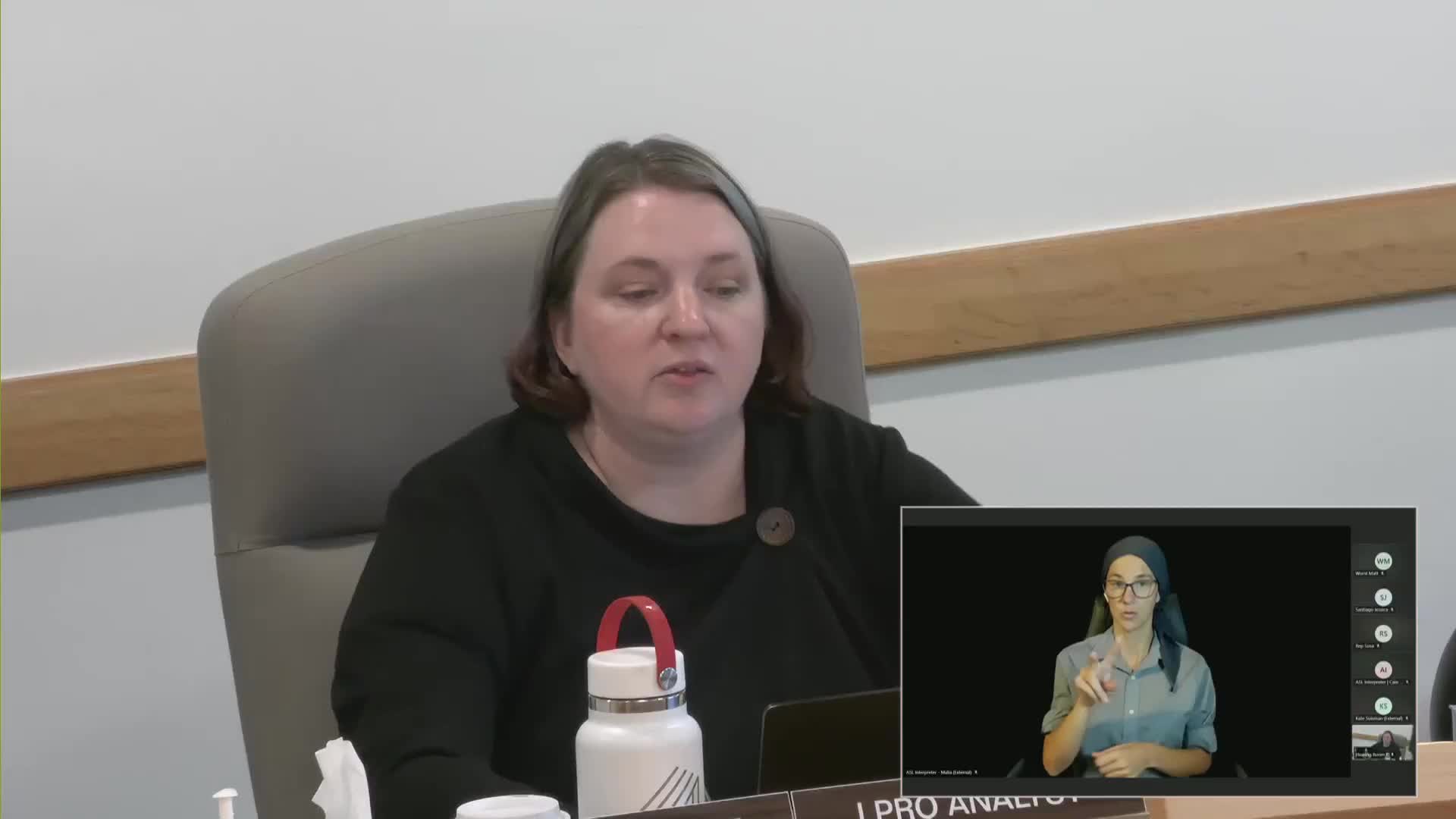
A large and sometimes contentious public hearing on House Bill 3789A filled the Senate Committee on Labor and Business on May 6 as proponents, opponents and neutral parties debated whether a new civil cause of action is needed to address alleged impersonation of union representatives.
House Bill 3789A would make it unlawful to "falsely impersonate a union representative" and allow a labor organization that alleges such impersonation to bring a civil action seeking statutory damages. The committee received a dash‑6 amendment that adds a requirement that the impersonation be done with intent to undermine or interfere with the labor organization or otherwise negatively impact the labor organization; the amendment also clarifies that monetary awards are statutory damages.
Proponents — including Representative Hai Pham (bill sponsor), Representative Tom Anderson and representatives of the Oregon Education Association, AFSCME and the Oregon School Employees Association — told the committee they are responding to organized campaigns in which third parties distribute mailers or visit members' homes and use union names, logos or the likeness of union leaders in ways that can mislead members, particularly those who are economically vulnerable or have limited English proficiency. Tracy Ann Nelson of the Oregon Education Association recounted an instance in which a canvasser allegedly posed as OEA staff in a neighborhood and solicited educators.
Opponents, including witnesses from the Freedom Foundation, testified the bill targets lawful advocacy and could chill protected speech. Ben Straka of the Freedom Foundation said the organization clearly identifies itself and directs recipients to its website; he warned the bill's definition and the statutory damages could be used to impose crippling litigation costs on critics. Representative Lucetta Elmer, who opposed the bill in the House, said the measure is broad and that evidence presented on the House floor did not establish the type of impersonation the bill targets.
Several committee members asked for clarification about what would constitute unlawful conduct under the bill. Some senators said it should be straightforward — "Don't be a fraud," said Senator Anthony Broadman in a succinct intervention — while others asked whether mailers that look similar to union materials but include a return address would meet the threshold for fraud. Legislative Counsel and committee staff were asked to examine specific mailed examples submitted into the record.
Testimony highlighted competing concerns: unions argued the materials and door‑to‑door approaches used by some anti‑union campaigns can deceive and harm workers; opponents argued the proposal risks chilling political speech, could be used selectively, and that existing fraud statutes (ORS 165.8 was cited during the hearing) already prohibit impersonation and deceptive practices.
The committee temporarily closed the hearing and said it would resume further consideration of HB 3789A and several other public hearings on Thursday. Members asked legislative counsel to review the dash‑6 amendment and examples submitted to the record to clarify scope and constitutional risk.