Get Full Government Meeting Transcripts, Videos, & Alerts Forever!
Get email alerts on the Corrections Medical Facility topic
No spam. Unsubscribe anytime.
DOC proposes centralized medical facility and pharmacy to serve aging prison population
Summary
Oregon DOC told the Public Safety Subcommittee it seeks funding to study and design a centralized medical campus to provide geriatric, hospice and acute care, consolidate pharmacy operations and reduce costly off‑site trips for oncology and other treatments.
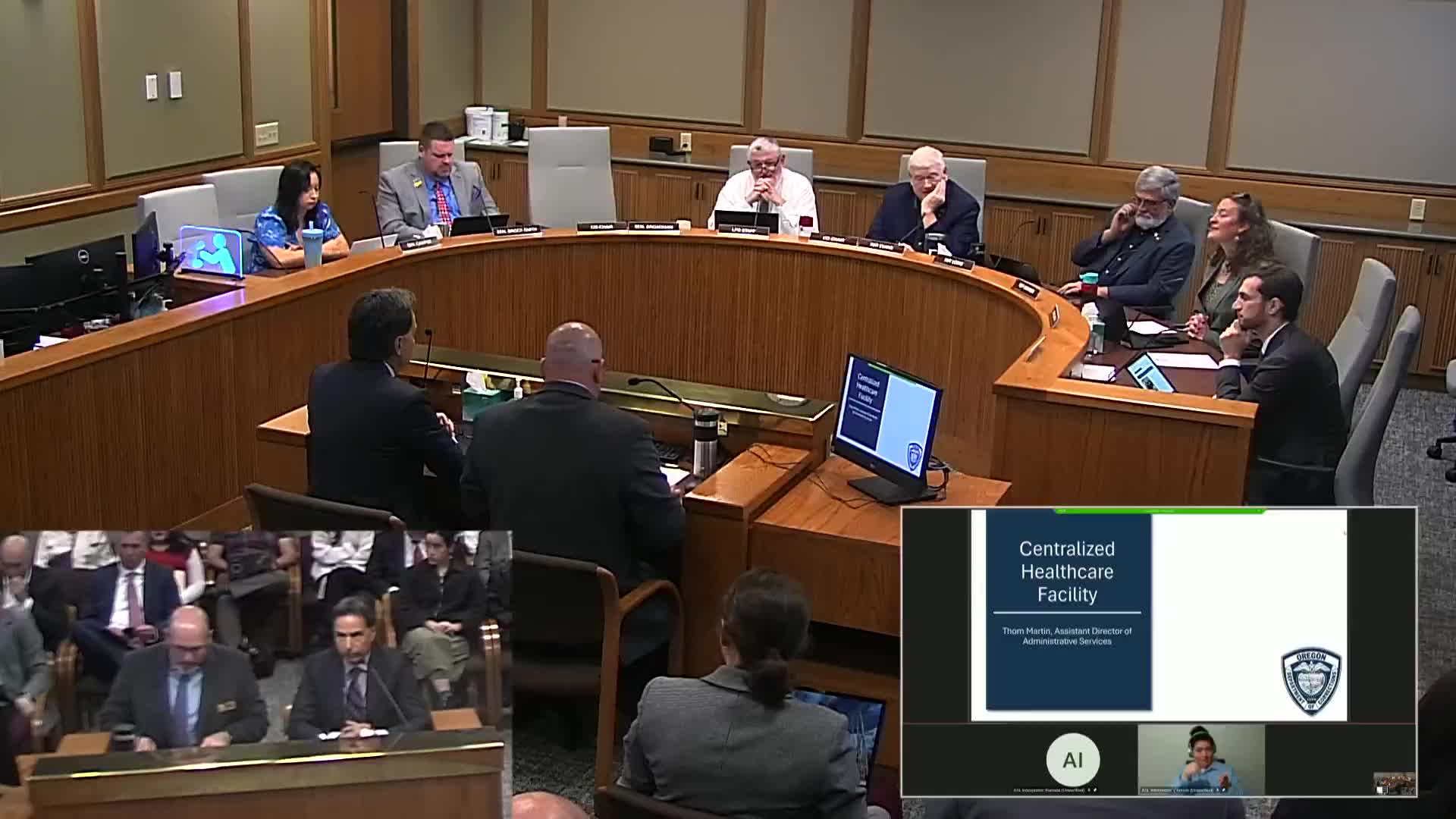
Tom Martin and other DOC officials told the Public Safety Subcommittee on May 6 that the department wants to develop a centralized medical facility to provide acute, long‑term and geriatric care for adults in custody and to co‑locate a main pharmacy and transport unit.
"The medical care facilities within our institutions here in the Valley, for the most part, are severely outdated, undersized for the demand, and in need of significant repair and updating," Tom Martin said, adding that the department’s pharmacy is leased and not configured to compound medicines or support in‑house oncology dosing.
The nut graf: DOC said that modernizing pharmacy capacity and building a medical campus could reduce outside medical trips and costs — the agency cited 377 oncology‑related trips in a recent 12‑month period that involved 120 unique adults in custody and cost about $5.09 million for those trips alone — and would better serve a growing 55‑and‑older population in custody.
DOC described components of the proposal: a clinical and long‑term care facility, a centralized pharmacy with compounding capacity, and a co‑located transport unit. Martin said a campus approach could allow use of minimum‑custody adults in custody as trained peer mentors to support hospice and geriatric care and create reentry job certifications.
Legislators asked about leveraging federal health programs. DOC staff said Medicaid currently does not pay for care while individuals remain in custody, though DOC is pursuing a Medicaid waiver that could allow Medicaid to pay for some care up to 90 days before release. "We are working on the Medicaid waiver proposal, which would allow us to, tap into Medicaid funding, about 90 days from a person's release from custody," DOC staff said.
Members also asked whether more expansive earned‑time or medical release policies could reduce institutional health costs; DOC said eligibility and statutory changes would be legislative decisions and that the department would provide data about how many people currently in memory care or hospice might be candidates for release.
Ending: The subcommittee took the presentation for the record and asked DOC to provide follow‑up on eligibility counts, per‑person health costs and potential Medicaid waiver impacts; no formal action was taken at the hearing.