Get Full Government Meeting Transcripts, Videos, & Alerts Forever!
Get email alerts on the Privacy Policy topic
No spam. Unsubscribe anytime.
DOJ briefs Senate committee on car‑data rules as panel advances vehicle privacy bill
Summary
The Oregon Department of Justice told the Senate committee that the Oregon Consumer Privacy Act already protects personal data collected by smart devices, and HB 3875 would extend OCPA coverage specifically to motor vehicle manufacturers and affiliates; the committee moved the bill to the floor after technical Q&A.
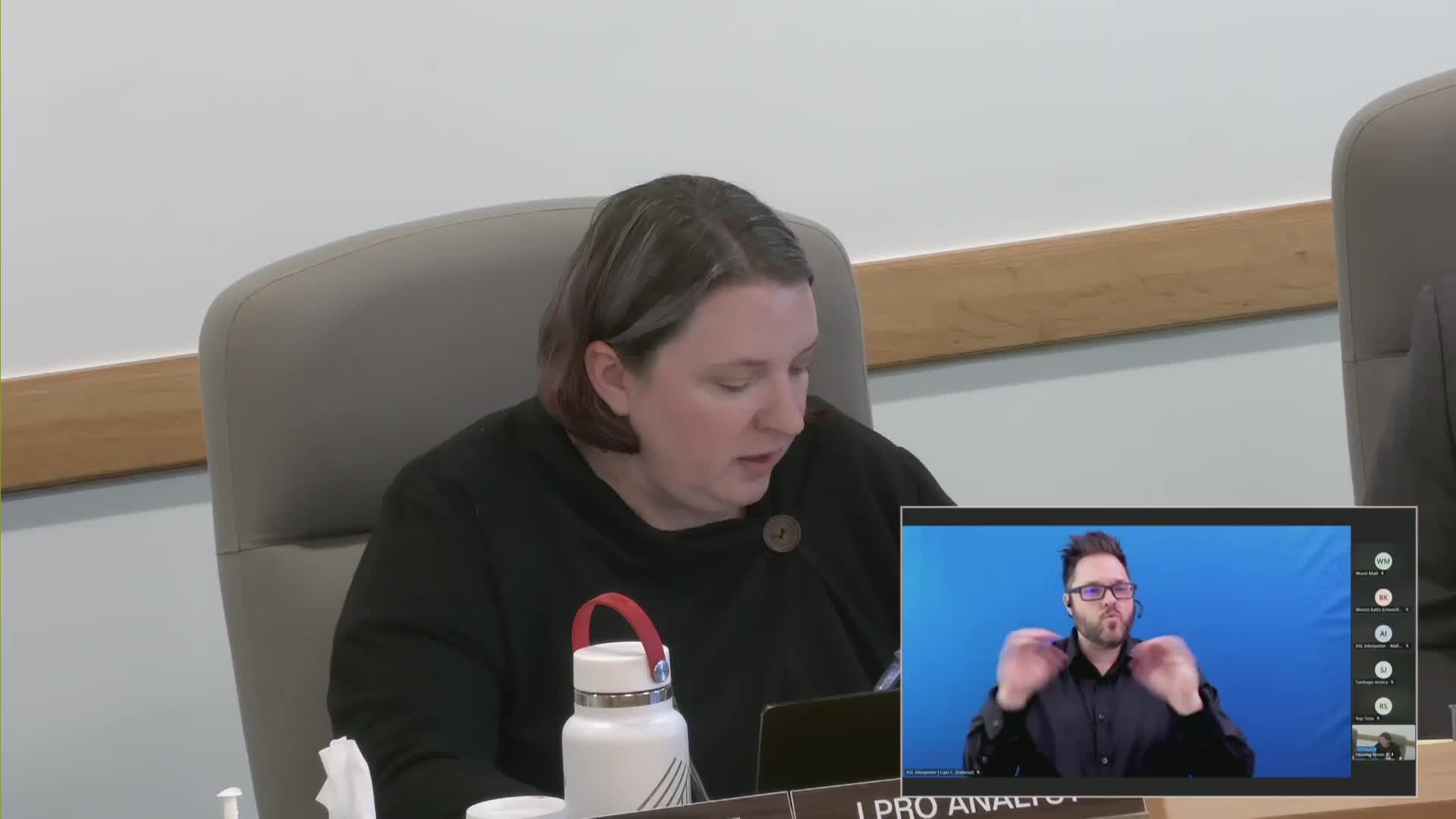
The Oregon Department of Justice appeared before the Senate Committee on Labor and Business on May 6 to explain how the Oregon Consumer Privacy Act (OCPA) applies to motor vehicle manufacturers and to answer committee questions about sensitive data and consent.
Leslie Wu of the Department of Justice and Dr. Katie Blevins of DOJ's OCPA enforcement team told senators that the OCPA already protects personal data collected from connected devices, including vehicles, and that HB 3875 is intended to ensure the law explicitly covers motor vehicle manufacturers and affiliates that control or process consumer personal data derived from vehicle use.
Dr. Blevins said the bill narrows focus to manufacturers because most vehicle data collection comes from large companies rather than small businesses; sponsors have proposed lowering the threshold at which OCPA applies for vehicle manufacturers to ensure consumers' rights apply to those data controllers. She explained a policy distinction between personal data and sensitive personal data: items such as precise geolocation are treated as sensitive and require consumer consent for sale, while broader personal data (addresses, basic demographics) are covered but treated differently under the law.
Senators asked how consent is manifested and whether consumers truly understand opt‑in/opt‑out notices, especially given lengthy contracts and purchase paperwork. Dr. Blevins said the law requires privacy notices to be clear and accessible and that consumers can revoke consent after providing it. She also noted the law contains safeguards to protect small businesses while focusing enforcement on larger controllers of consumer data.
After the technical briefing, the committee, with no objections on the floor, voted to forward HB 3875 with a due‑pass recommendation to the full Senate. Senator Pham agreed to carry the bill on the Senate floor.
The committee also received supporting materials and pointed members to documents prepared by DOJ that further explain which data categories are treated as sensitive under OCPA, including ethnicity, religion, biometric data, precise real‑time location, and personal data of children under 13.
DOJ staff also noted that the bill does not change which categories are protected; rather it changes the thresholds and coverage for vehicle manufacturers and affiliates.