Get Full Government Meeting Transcripts, Videos, & Alerts Forever!
Get email alerts on the Water Resources Administration topic
No spam. Unsubscribe anytime.
Senate passes package of administrative updates to modernize water resources permitting and grant programs
Summary
House Bill 33 64, a package of administrative and process updates for water programs, passed the Senate. Sponsors said the changes will reduce paperwork, speed application handling and eliminate time spent processing applications that cannot be approved.
The Oregon Senate voted to pass House Bill 33 64, a collection of administrative updates aimed at modernizing parts of the state's water-resources permitting and grant programs. Supporters said the measure will streamline application processing, reduce document handoffs, and free staff time to address applications that can be approved.
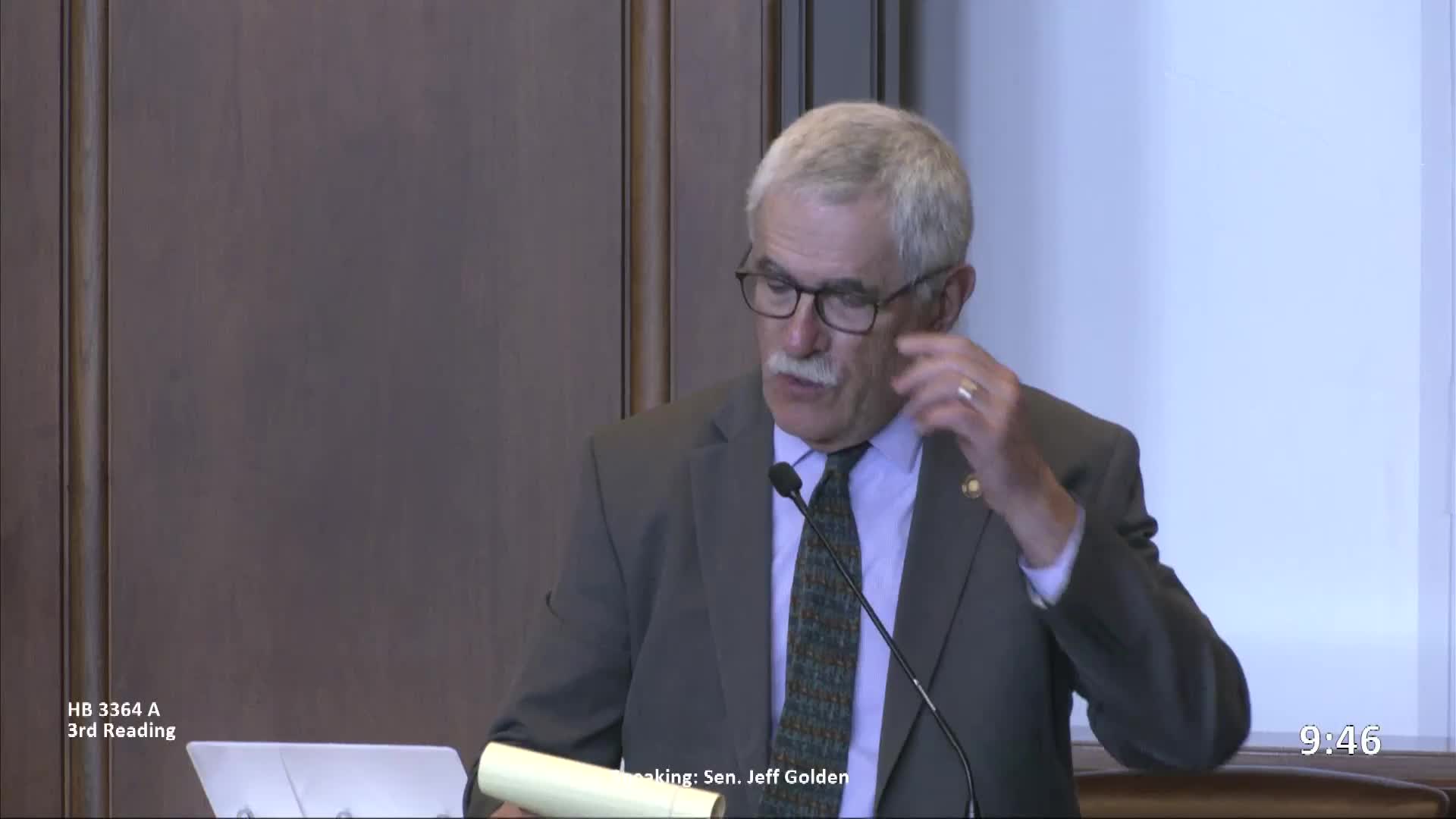
Senator Golden, presenting the bill, described it as part of a broader effort begun last year to improve the efficiency of the Oregon Water Resources Department (OWRD). He told colleagues the bill updates two specific programs: the Water Conservation, Reuse and Storage Grant Program (established by Senate Bill 1069 in 2008) and the Water Supply Development Account (established by Senate Bill 83 in 2013).
Golden summarized the department's assessment of expected impacts: adopting electronic documentation could save "up to a week per application" by removing the need to print and mail documents; allowing phased applicant processing would reduce caseworker delays when applicants have not yet provided approvals; and returning applications for areas no longer open for appropriation would eliminate staff time spent processing applications that legally cannot be approved (an initial front-end review may take 1'4 hours more per application, but would reduce downstream workload).
Supporters said the package is intended to increase OWRD's capacity and reduce multi-year waits for routine approvals by removing inefficiencies in the internal workflow. The Senate recorded a constitutional majority for passage and declared the bill passed on third reading.
The bill contains administrative and procedural changes; it does not itself appropriate additional funds in the Senate floor discussion. Implementation details and the degree of time savings will depend on OWRD rulemaking and administrative practices.