Get Full Government Meeting Transcripts, Videos, & Alerts Forever!
Get email alerts on the Municipal Utilities Water Sewer topic
No spam. Unsubscribe anytime.
House committee hears narrow fix to let three coastal cities’ elected councils raise water, sewer rates
Summary
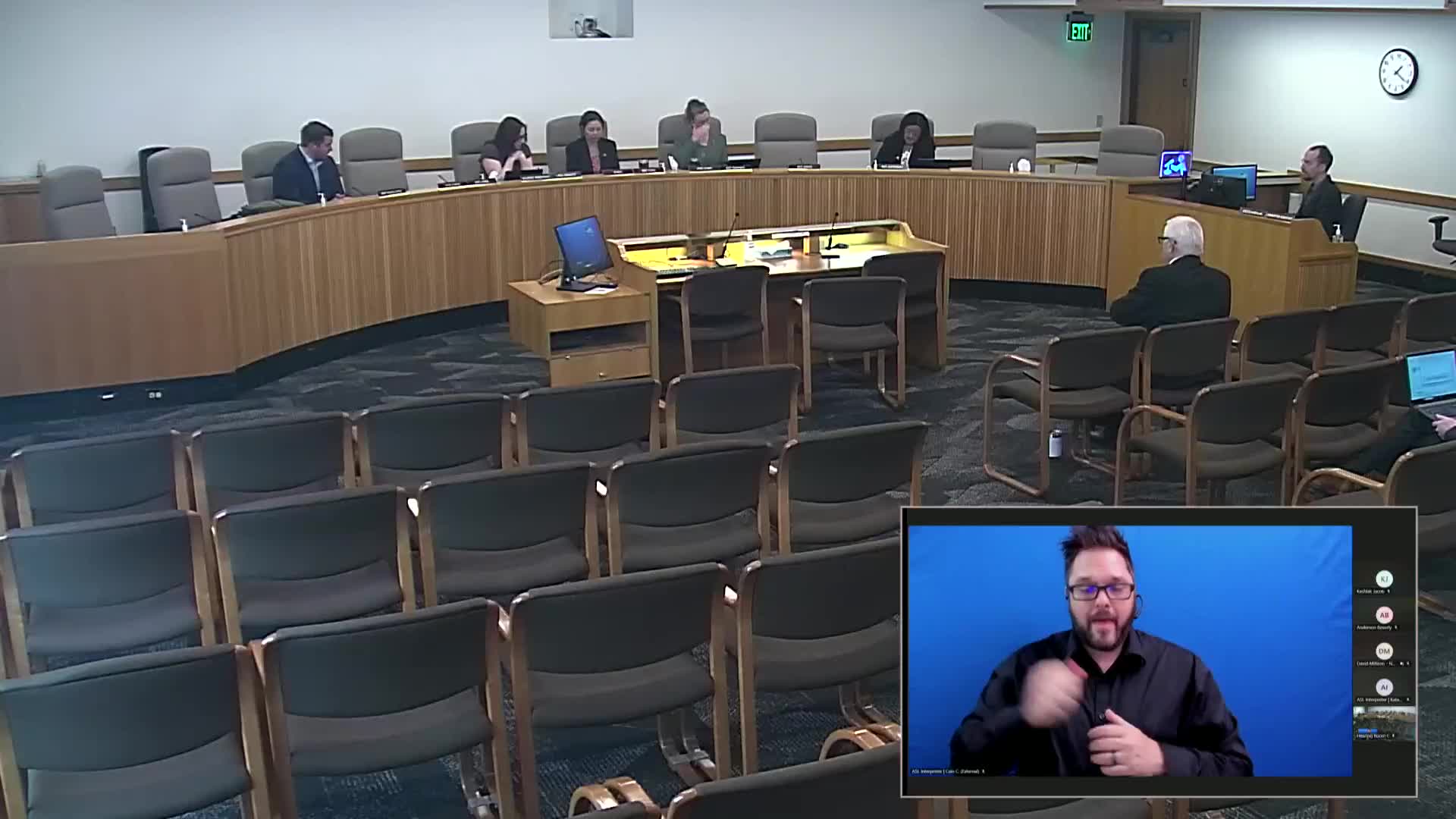
Lawmakers heard testimony May 6 on Senate Bill 10 62 A, a targeted measure to let the city councils of North Bend, Reedsport and Bandon set water and wastewater fees to address aging infrastructure and avoid service moratoriums.
The House Committee on Emergency Management, General Government, and Veterans on May 6 heard public testimony on Senate Bill 10 62 A, a bill that would allow the city councils of North Bend, Reedsport and Bandon to set fees, rates and other charges for municipal water and wastewater services without a voter double‑majority.
Proponents said the change is narrowly focused on health-and-safety utilities and is intended to let elected local officials plan and finance urgent upgrades. "So all this does is say we're granting the board, sure, water board, whatever the right to raise rates if they choose that it's necessary," Representative Boomer Wright said during the hearing. Senator Anderson described the bill as "really a simple bill" targeted to the three cities.
The bill matters because witnesses described failing infrastructure and the risk of service freezes that would block new housing and economic development. "When that pipe ruptures, there'll be no press release, just for all waste where our kids dig for clams," David Miller, city administrator for North Bend, told the committee, describing an 8‑inch clay pipe installed about 1948 and saying 39% of the city's sewer network is older than 70 years. Miller said North Bend's current monthly residential sewer rate is $37.57 and that the city proposed staged increases to $43.99, then $52.79, then $63.35 to stabilize its sewer fund and become eligible for state and federal grants.
Committee members asked about local control and alternatives such as charter changes. Representative questions emphasized concern that a state legislative fix for three named cities could prompt other municipalities to seek similar exceptions. Senator Anderson and proponents said the bill was deliberately limited to three cities because a broader fix raised complications with special districts and charter language; he said the targeted approach is intended to address immediate health-and-safety risks while giving the Legislature time during the interim to craft broader solutions.
The committee record shows the bill "came out of the Senate" with votes in that chamber (as summarized to the committee), and the hearing closed without a committee vote in the excerpt. The record includes local officials’ appeals that council control over water and sewer rates is needed to maintain regulatory compliance, allow planned capital projects and avoid moratoria on new building permits.
No formal committee action on this bill is recorded in the provided transcript excerpt beyond the public hearing. Committee members and presenters repeatedly framed the measure as a narrow, temporary fix for specific cities, leaving other charter provisions intact and preserving voter accountability through elected councils.
Details from testimony: - Affected cities named in testimony: North Bend, Reedsport, Bandon. - Claim in testimony: 39% of North Bend’s sewer network is more than 70 years old (David Miller). - Current monthly residential sewer rate cited for North Bend: $37.57 (David Miller). - Proposed staged rate increases presented by North Bend: to $43.99 (2025), $52.79 (2026), $63.35 (2027) (David Miller). - Proponents said the change would restore local authority for water and wastewater fees for the three cities but leave other charter fee rules in place.
The committee closed the public hearing and moved on to other agenda items; proponents said the change would allow local officials to plan multi‑year repairs and pursue grant funding without waiting for a double‑majority voter turnout.