Get Full Government Meeting Transcripts, Videos, & Alerts Forever!
Get email alerts on the Peer Support Confidentiality Public Safety topic
No spam. Unsubscribe anytime.
Law enforcement, fire and dispatch leaders urge confidentiality for peer support in public hearing
Summary
Chiefs, sheriffs and dispatch officials testified in favor of House Bill 3929 A, which would broaden confidentiality protections for peer support services for public safety employees under ORS 181.8835 and add the Oregon Judicial Department marshal's office to covered agencies.
Law enforcement, fire and emergency communications leaders told the Senate Committee on Judiciary May 6 they strongly support House Bill 3929 A, a measure that would broaden confidentiality protections for peer support services provided to public safety employees and clarify limits on when such communications may be disclosed.
Hood River County Sheriff Matt English, testifying on behalf of the Oregon State Sheriffs' Association, said the bill "places limits on the circumstances under which these communications are confidential" and would help ensure first responders continue to use peer support without fear that conversations will be disclosed in legal proceedings.
Marcia Hardin, chief of police in Albany and president of the Oregon Association of Chiefs of Police, said peer support teams are "an essential component of our wellness strategies" and urged the committee to act after a Washington state court order prompted concerns that peer-support conversations could be subject to disclosure. "That trust depends on that confidentiality," Hardin said, adding that if confidentiality is not protected, officers may hesitate to seek help.
Brian Stewart, director with the Oregon Fire Chiefs Association and assistant chief with Clackamas Fire District, told the committee peer support is a "cost effective" and valuable tool that helps first responders "empty our backpacks" of accumulated traumatic exposures, allowing them to remain effective and healthy over long careers.
Nikita Thomas, equity manager for the City of Portland's Bureau of Emergency Communications (BOEC), described the intense and lasting effects of dispatch work and said peer support confidentiality is a "strongest pillar" in sustaining a resilient workforce. "The opportunity to speak with others who have firsthand understanding of the challenges... is invaluable," Thomas said.
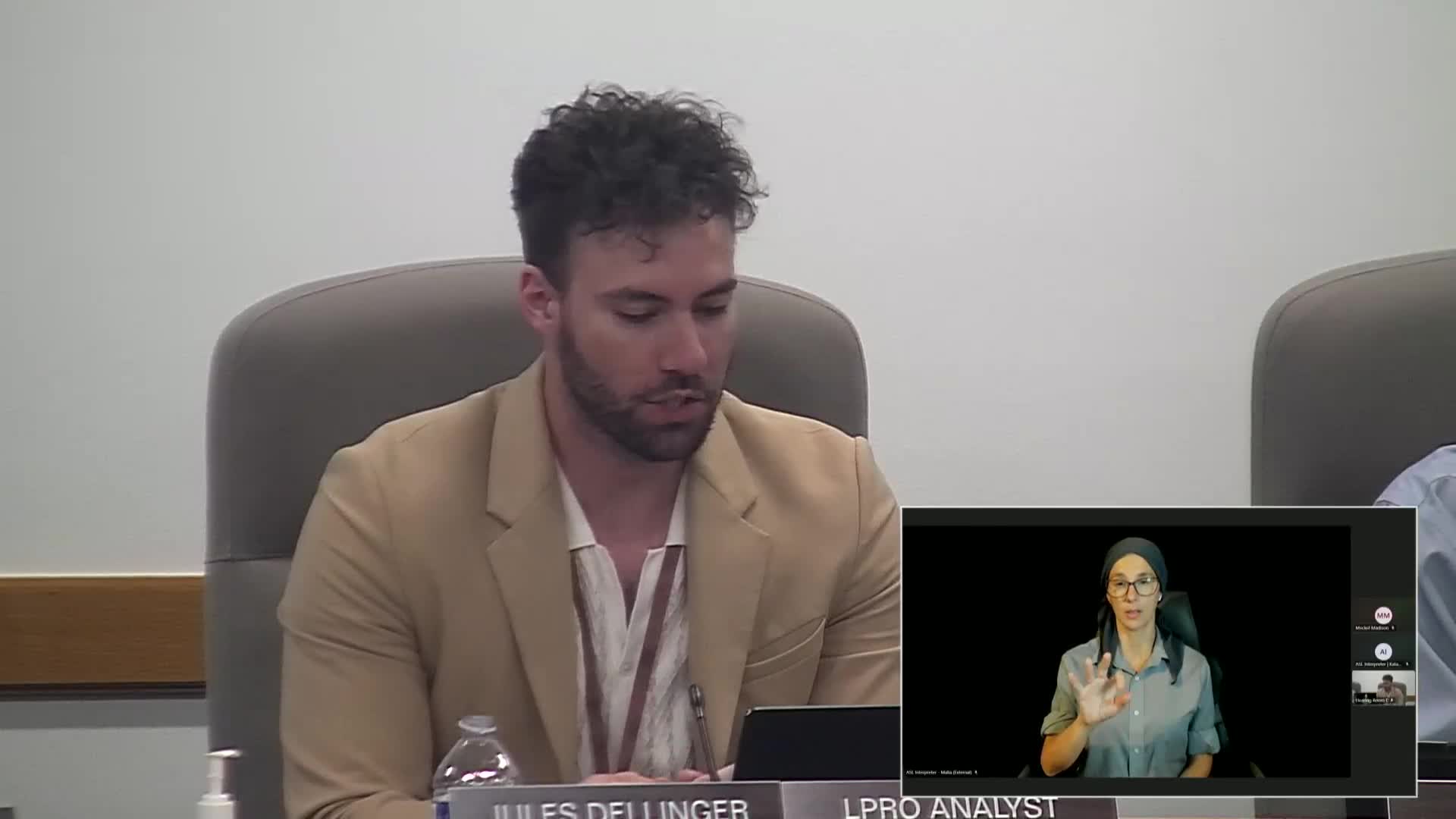
Jules (committee staff) summarized the bill in committee: House Bill 3929 A restructures the confidentiality provisions in ORS 181.8835 so the protections apply to peer support services (not only peer counseling sessions), extends coverage to services provided by public safety agencies, mass transit districts and emergency services providers to their employees via designated and trained peer supporters, and adds the Oregon Judicial Department marshal's office to the definition of public safety agency. The measure also clarifies that covered communications are confidential, not admissible in judicial proceedings and not public records, while setting limits on disclosure.
Committee members asked questions about how the bill differs from existing law. Sheriff English said the change is intended to broaden protections to reflect contemporary peer-support practices — including nonclinician peer supporters who receive agency training — because previous language was more narrowly tied to clinicians. Senator McLean asked whether the bill was substantially similar to prior legislation the committee passed; committee staff and witnesses said it was similar but extended coverage to peer support formats in current use.
The committee closed the public hearing on House Bill 3929 A after the panel's testimony. No committee vote on the measure was recorded in the hearing transcript.