Get Full Government Meeting Transcripts, Videos, & Alerts Forever!
Get email alerts on the Aerosol Duster Restrictions topic
No spam. Unsubscribe anytime.
Committee hears victims and retailers on bill to restrict youth sales of aerosol dusters containing DFE
Summary
Lawmakers heard testimony May 6 on SB 1032A, a bill that would prohibit retail sales of aerosol dusters containing difluoroethane (DFE) to people under 18, require warning labels and limit purchase quantities; proponents cited fatal bystander cases and national injury data, retailers supported a negotiated, neutral amendment package.
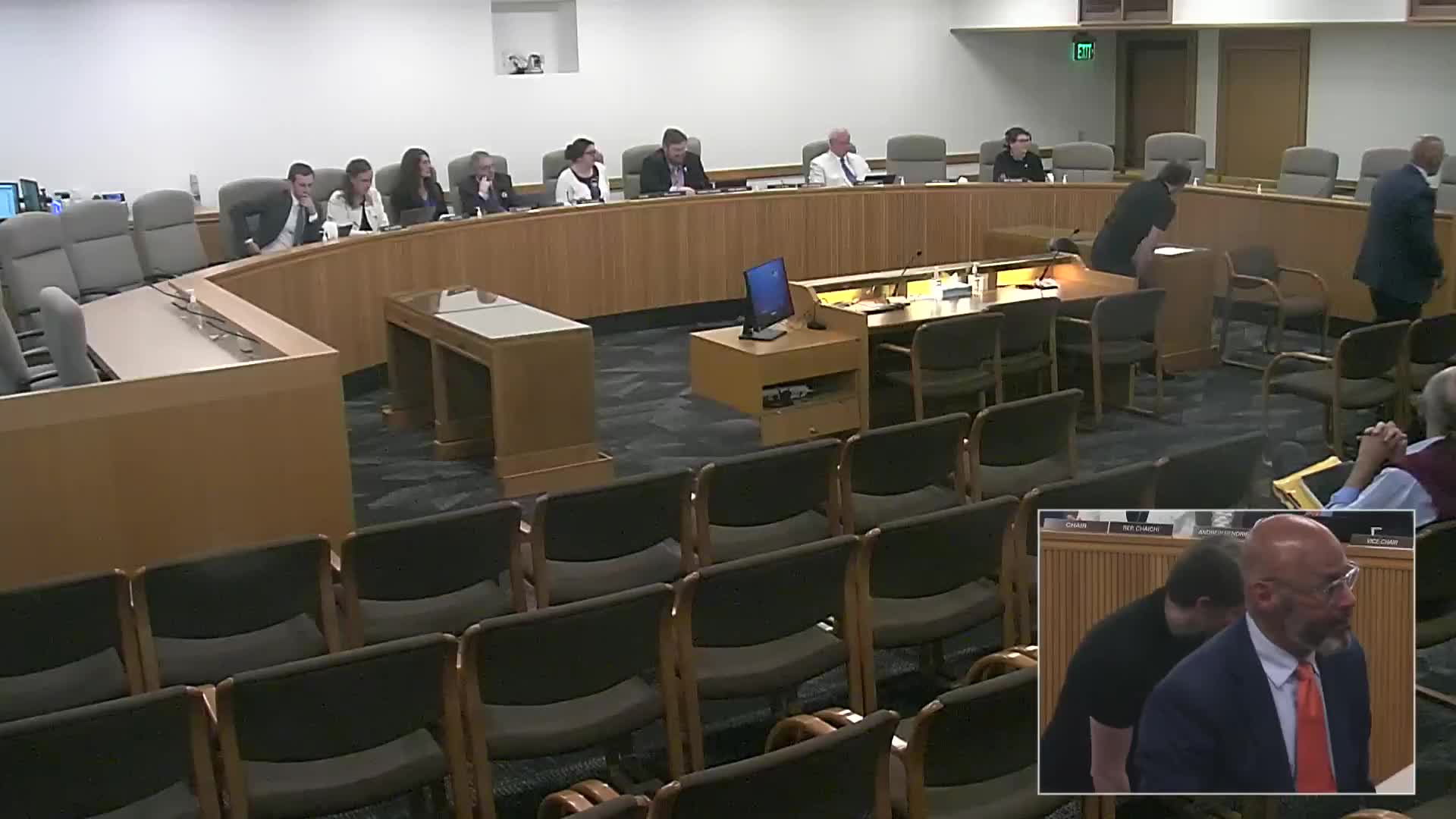
SALEM — The House Committee on Commerce and Consumer Protection held a public hearing May 6 on Senate Bill 1032A, which would prohibit retail sales of aerosol dusters that contain difluoroethane (DFE) to buyers under 18, require prominent warning language and place product behind counters or on locked displays similar to spray paint or razors.
Sponsor Sen. Lisa Reynolds told the committee the bill was prompted by family members of victims and by national safety data. “DFE is a chemical used in aerosol keyboard dusters that adult and kids are now getting high on,” Reynolds said, citing dangers including seizures, heart attacks and asphyxiation. She said the U.S. Consumer Product Safety Commission (CPSC) estimates the social cost of injuries and deaths from aerosol duster abuse exceeds $1 billion annually.
Ray Thomas and Kim Brasch, relatives of Jolene Brash Berry, described Ms. Brash Berry’s death after a driver who had reportedly inhaled duster left a North Salem Home Depot, inhaled in the parking lot and lost consciousness while driving, striking and killing her. Thomas described store security footage showing the purchaser holding a can as he left the store and said the chemical’s rapid clearance from the body makes post-incident detection difficult.
Kim Brasch, the victim’s aunt, urged lawmakers to adopt point-of-sale protections and noted alternatives exist such as rechargeable electric air blowers that do not use the chemical solvent.
Derek Sangston, policy director and counsel for Oregon Business and Industry (OBI), testified the retail sector worked with sponsors to reach a neutral position on a revised bill. Key industry-negotiated elements that moved OBI to neutral included lowering the purchase age from 21 to 18, limiting purchases to three canisters per transaction, allowing delivery when age verification is performed, providing a business-to-business exemption and aligning the warning language with existing federal requirements.
Committee questions explored enforcement and scope. Representative Cherry noted that Oregon’s intoxicants definitions (ORS 801.321 and related provisions) list inhalants and that difluoroethane appears among listed substances, suggesting existing criminal statutes addressing driving under the influence of intoxicants may already apply. Members also asked whether online retailers such as Amazon would be affected; Sangston said delivery rules in the bill allow for verified-age deliveries and that the text contemplates an ID check for pickup and delivery systems.
Witnesses cited national numbers in written and oral testimony: CPSC reported about 1,100 deaths associated with DFE between 2006 and 2022 and an estimated 29,000 emergency-department visits for inhalation of aerosol duster products in the same period.
No committee vote occurred during the May 6 hearing. Testimony showed bipartisan sponsor support, engagement from family members of a victim, negotiated retail neutrality on the amended bill language and follow-up legal questions about how the product fits into existing intoxication statutes.
Next steps include committee review of amendments and staff follow-up on legal questions about DUI and online retail compliance.