Get Full Government Meeting Transcripts, Videos, & Alerts Forever!
Get email alerts on the Public Finance topic
No spam. Unsubscribe anytime.
Board approves up to $194 million in tax-exempt bonds for Vanderbilt LifeFlight
Summary
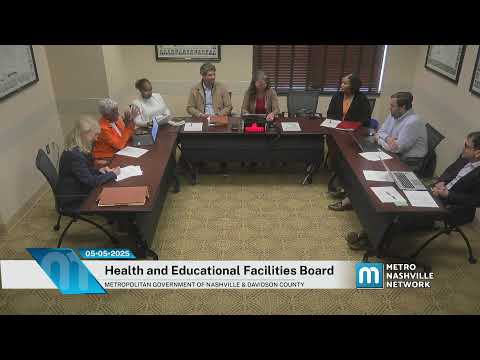
The Health and Educational Facilities Board granted final approval for Vanderbilt University Medical Center to issue up to $194 million in tax-exempt revenue bonds to buy aircraft for its LifeFlight program and to refinance existing debt; the board also elected a vice chair and held a brief onboarding request from a new member.
The Health and Educational Facilities Board voted to grant final approval for Vanderbilt University Medical Center to issue up to $194,000,000 in tax‑exempt revenue bonds to purchase aircraft for its LifeFlight air‑medical program and to refinance existing tax‑exempt debt.
The bond package includes about $70,000,000 for new aircraft (nine helicopters and one fixed‑wing aircraft) and roughly $124,000,000 to refinance outstanding tax‑exempt debt on campus facilities, board presenters said. Dwight Seeley, a representative of Vanderbilt University Medical Center, said the purchase would support the LifeFlight program and bring aircraft ownership and billing in‑house from the current vendor, Air Methods.
The approval matters because Vanderbilt plans to operate the fleet directly when its contract with Air Methods ends. "We will have over 4,000 flights a year, throughout Middle Tennessee that come not only to Vanderbilt University Medical Center, but also to other hospitals that patients are transported," Seeley said. He also said, "Since 1984, there's been 85,000 patients that have been transported without 1, fatality or even 1 air accident," citing the program's safety record.
Nut graf: Board members and staff described the financing as legally permissible under tax‑exempt financing rules for medical aircraft, said it should reduce Vanderbilt's cost of capital and shift operational billing from Air Methods to the medical center, and noted the IRS and market constraints that shape term and amortization.
Board and staff discussion focused on loan structure, lifespan of aircraft for tax‑exempt purposes and operational impacts. Presenters said the financing would slightly change Vanderbilt's fixed‑to‑floating interest mix from roughly 13% to about 16% floating, and that refinancing the $124,000,000 portion would save the medical center about $340,000 a year in interest and tax costs. Michael Wharton of Kaufman Hall was listed as Vanderbilt's financial advisor in the meeting.
Board members asked about interest rate risk and contingency plans for higher market rates. Seeley described the institution's target fixed/float mix and said the floating exposure was manageable. When asked about insurance and maintenance, Vanderbilt staff said those costs would be covered from operating cash and that the operating model under the new structure would be a fixed fee paid to the vendor for pilots and service, plus variable pay tied to flight hours.
A board staff member identified as Cindy addressed statutory limits on financing equipment, saying, "The statute, as you know, is very broad and includes equipment for the projects we finance. Typically, we don't see that because it is a shorter life for economic life purposes... that's why we don't normally see this. This is kind of an outlier because it's so specialized and they're expensive assets and so it is a cost effective for them a hospital to, finance these through us." Cindy explained that the IRS typically treats aircraft as having a seven‑year useful life for tax‑exempt financing; board presenters said the bonds would be structured with a seven‑year put and amortize roughly 65% of the aircraft value within that period to preserve tax‑exempt compliance.
No members of the public spoke at the published public hearing and no written comments were submitted, the board reported. Following discussion, a motion to approve the request was moved and seconded; the board voted in favor and the motion carried.
The meeting also included brief administrative items: the board elected Tyler as vice chair (Tyler identified by first name only in the record), and a new board member requested an educational "lunch and learn" session on the board's process for common financing types. Staff agreed to arrange an informational session.
Ending: The board closed the public hearing record and adjourned after the votes and administrative items; staff said they would follow up offline to schedule the requested orientation session.