Get Full Government Meeting Transcripts, Videos, & Alerts Forever!
Get email alerts on the Child Marriage Ban topic
No spam. Unsubscribe anytime.
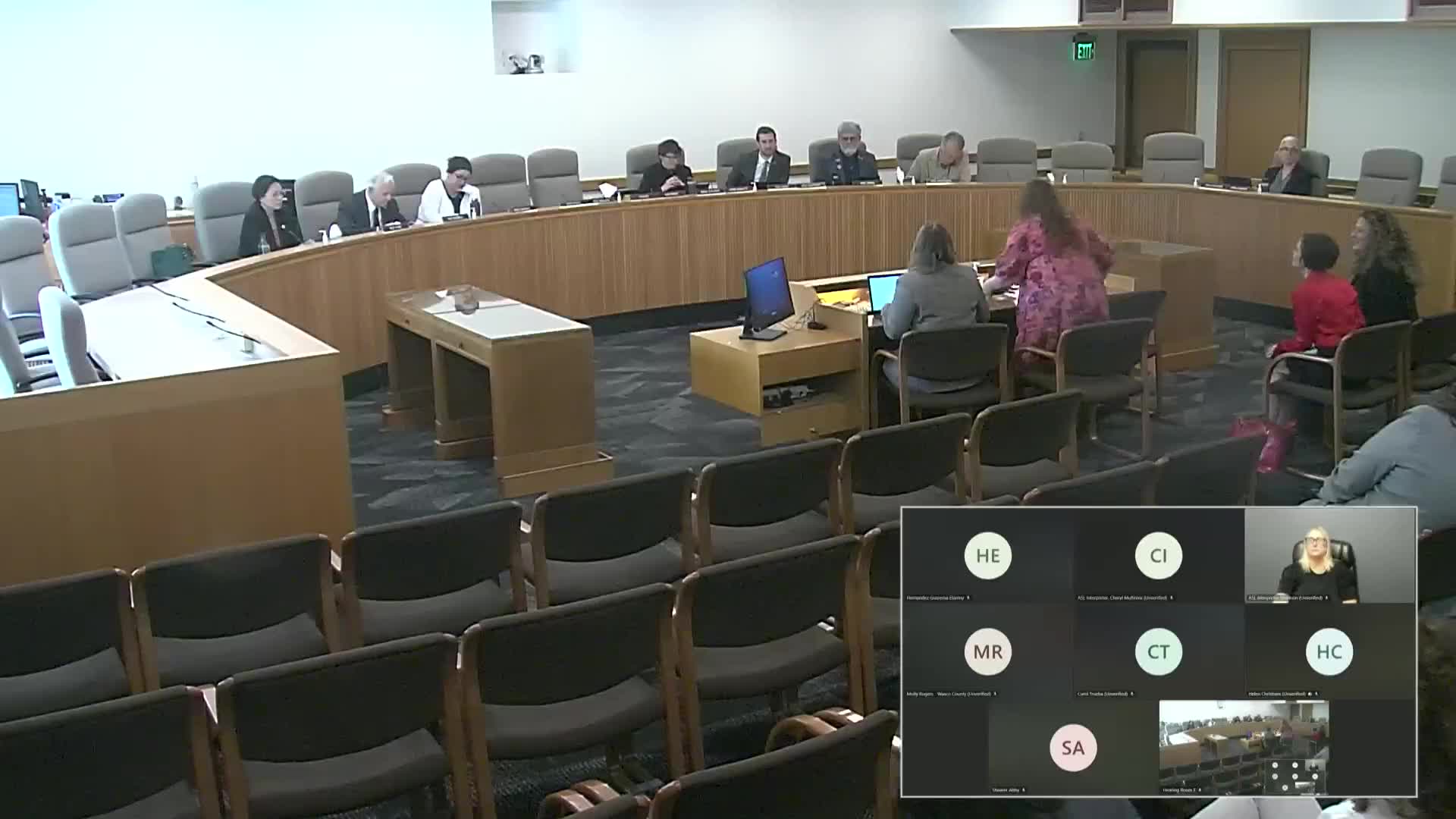
Supporters urge Oregon to raise marriage age to 18, telling personal and policy harms at public hearing
Summary
Advocates, survivors and human-rights groups told the House Judiciary Committee SB 548 should raise the legal marriage age to 18 with no exceptions, citing links to domestic violence, school dropout and human trafficking.
Supporters of Senate Bill 548 urged the House Committee on Judiciary to end all underage marriage in Oregon, telling the committee on Tuesday that the existing parental-consent exception harms mostly girls and can be used to evade statutory sexual-offense laws.
Kaylee McGuire, testifying on behalf of Senator Janeen Sollman, said the bill would raise the marriage age to 18 and described research linking underage marriage to poverty, domestic violence, adolescent pregnancy, mental health and substance-use disorders. “The United Nations defines marriage before the ages of 18 as a fundamental violation of human rights,” she said.
Nut graf: Witnesses including survivors and national advocacy groups described patterns they say are common when minors are permitted to marry: coercion by family members, automatic emancipation that removes parental financial responsibility, and an avenue that can enable trafficking or avoid prosecution for statutory offenses.
Frady Reese, who identified herself as a forced-marriage survivor and an advocate with Unchained at Last, told the committee the current law lets a single parent sign a marriage form for a 17-year-old without notifying the other parent and called that a “get out of jail free card” for some alleged offenders. Reese said the law can automatically emancipate a married minor and remove parental financial obligations, creating incentives for parents to force a child to marry to end child-support obligations.
Becca Powell, director of advocacy and outreach for Unchained at Last, described the limited legal protections minors have before turning 18, and said that domestic-violence shelters and legal remedies are often unavailable to minors even if they are emancipated by marriage. “The only solution is to make 18 no exceptions,” Powell said.
Michelle Hanash, director of policy and women's programs at a survivor-founded nonprofit, cited state data showing thousands of minors married in recent years and said the practice disproportionately affects girls. Several remote and in-person witnesses, including Anastasia Law of Equality Now, framed the change in international human-rights terms and noted that the United States Human Rights Committee has urged prohibiting marriage under 18.
Survivor Amy Turpin described her own experience of being married at 16 and said the marriage isolated her, removed her access to financial resources and harmed her long-term health and well-being. Several witnesses noted that as of the hearing at least 14 U.S. states had already ended child marriage with no exceptions, and proponents urged Oregon to do the same.
Committee members asked about religious liberty and recognition of out-of-state marriages; witnesses replied that major faith groups that have engaged on the issue have supported bans and that the bill would not invalidate marriages performed in other states prior to a change in Oregon law.
Ending: The committee closed the public hearing and will consider the bill in its coming work session schedule.