Get Full Government Meeting Transcripts, Videos, & Alerts Forever!
Get email alerts on the Health Care 340b Contract Pharmacies topic
No spam. Unsubscribe anytime.
Senate committee hears sharply divided testimony on bill limiting drug-makers' 340B contract-pharmacy restrictions
Summary
A public hearing on House Bill 2385 drew competing testimony from federally qualified health centers, rural hospitals and drug manufacturers about restrictions manufacturers place on which pharmacies can dispense 340B drugs and the effect on patient access and health-center services.
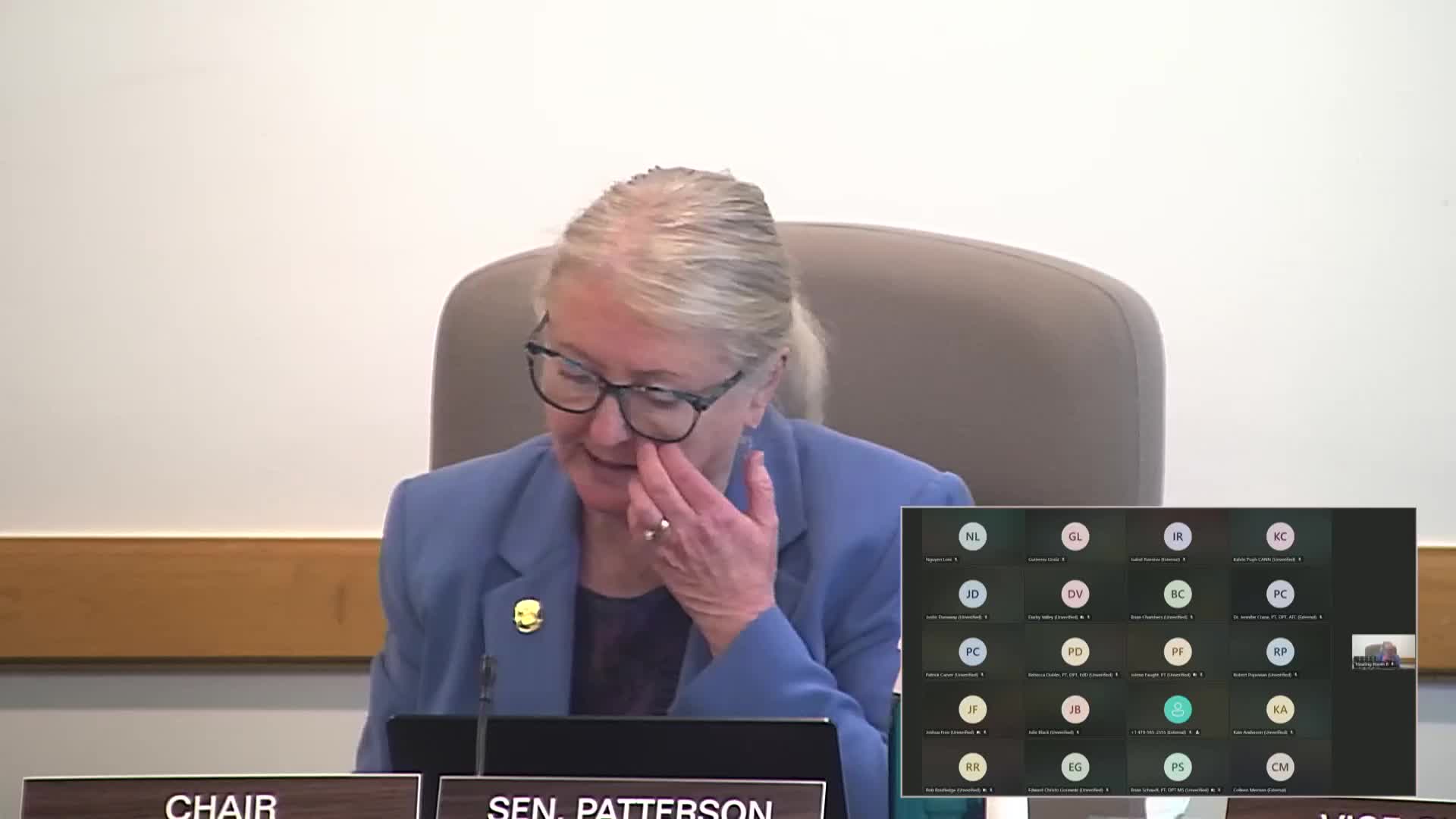
The Senate Committee on Healthcare on May 6 heard more than three hours of testimony on House Bill 2385, which would prohibit drug manufacturers from denying or restricting a covered entity’s ability to acquire or deliver 340B-priced outpatient drugs through contract pharmacies.
Representative Rob Nosse, the bill’s chief sponsor, told the committee the 340B program was created to stretch federal resources and allow hospitals and federally qualified health centers (FQHCs) to reinvest savings into patient services. "This bill simply tells manufacturers they can no longer impose the restriction on 340B program and restore it to its original operation intent," Nosse said, describing how contract-pharmacy limitations adopted by some manufacturers since 2020 have reduced savings that clinics use for services and medication assistance.
Supporters including pharmacists and administrators from FQHCs and rural hospitals described concrete losses and service impacts. "Pharmacy restrictions alone have accounted for over a million dollars loss in revenue in 2024, representing a 40% decline from 2023," said Dr. Sarah Jones, a clinical pharmacist at Northwest Human Services, who said her organization relies on 340B funds to sustain pharmacy assistance, outreach and clinical programs. Christopher Layman, vice president of strategy at Columbia Memorial Hospital in Astoria, said his hospital lost about $1.4 million annually after contract-pharmacy restrictions and has used prior 340B savings to fund mobile dental clinics and maternity services.
Pharmacy leaders and system officials offered examples of community benefit funded by 340B savings: Samaritan Health Services reported using savings to open rural pharmacies, fund medication-assistance programs that provided roughly $2.4 million in patient assistance in 2023, and to help sustain clinics in Sweet Home and Lincoln City. April Bosworth, director of pharmacy at Virginia Garcia Memorial Health Center, described patient-level impacts: because of 340B-supported pharmacy services her clinic can deliver medications and clinical pharmacy care to patients who otherwise would go untreated.
Drugmakers and industry groups opposed the bill, arguing it would interfere with a federal program and noting findings from recent federal investigations. Daria McGrew of Pharmaceutical Research and Manufacturers of America (PhRMA) said the program’s growth and contract-pharmacy arrangements have shifted revenue in ways that raise costs and merit federal reform. Perry Knight of Johnson & Johnson and Primo Castro of BIO said existing federal law allows manufacturers to limit contract pharmacies and warned that similar state laws have prompted litigation elsewhere.
Representative E. Warner Raschke urged the committee to reject the bill, saying, "I don't believe our state should be attempting to usurp federal government's authority with respect to this program," and warning that state action could complicate federal reform efforts.
The committee received notice of an a‑8 amendment posted to the public record that would authorize the State Board of Pharmacy to impose civil penalties up to $5,000 for violations; Representative Nosse and several speakers urged adoption of an enforcement mechanism. The committee did not take a final vote on HB 2385 on May 6 and will reconvene for additional consideration; the chair indicated she plans to offer amendments addressing patient participation in savings.
Why it matters: Supporters say 340B savings fund services for low-income and rural patients — from mobile dental clinics to medication assistance — and that manufacturer restrictions reduce those resources and patient access to local pharmacies. Opponents, including drugmakers and trade groups, argue the program’s growth has diverged from its original intent and raises broader cost and oversight concerns that should be handled at the federal level. The hearing included testimony from FQHCs, rural hospitals, pharmacists, industry trade groups and a former state Medicaid official who described fiscal effects observed in other states.
What happens next: The committee closed the public hearing but left the record open for written testimony. The chair said she will circulate amendments for committee consideration and that further action on HB 2385 will be scheduled later.