Get Full Government Meeting Transcripts, Videos, & Alerts Forever!
Get email alerts on the Transportation topic
No spam. Unsubscribe anytime.
Miami-Dade surtax watchdog urges more transit funding, pitches commuter rail on Brightline corridor
Summary
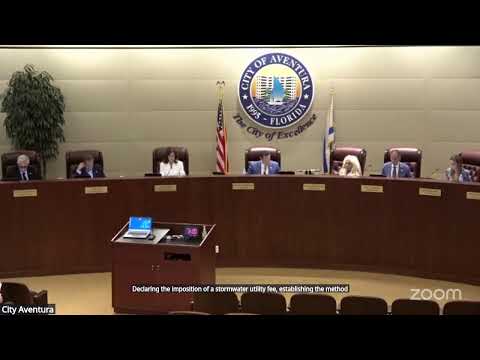
Javier Bettencourt, executive director of the Citizens Independent Transportation Trust, told the Aventura City Commission on May 6 that Miami‑Dade’s half‑cent sales surtax has generated nearly $5 billion and urged renewed focus on transit — including a federally funded commuter rail that would use the Brightline corridor and serve Aventura.
Javier Bettencourt, executive director of the Citizens Independent Transportation Trust, told the Aventura City Commission on May 6 that Miami‑Dade’s half‑cent sales surtax has generated nearly $5 billion since its inception and now collects roughly $400 million a year, and he urged cities to push for more transit investment in coming federal funding rounds.
Bettencourt said the surtax created the trust, which acts as an oversight body for the funds, and stressed the organization’s role: “We are not the department of transportation and public works,” he said, describing the trust as a watchdog that audits county and municipal uses of the surtax.
The presentation covered countywide projects paid with surtax dollars and the politics of future funding. Bettencourt highlighted investments such as new rail and bus fleets, fare‑free initiatives for seniors and Metro Mover, and recent station work at Miami Central and Aventura. He said municipalities receive about 20% of surtax revenue and praised Aventura’s use of those funds: “Aventura is only one of four cities that we have that offer all three modes of transit,” municipal program manager Mariana Price told the commission, citing fixed route, on‑demand and bike services and noting the city’s rising ridership totals.
The session turned to the Northeast Corridor — the alignment that parallels Brightline — where Bettencourt framed a commuter rail service as complementary to Brightline and urged local officials to press for federal capital. “We have committed our local funding for this. The state has committed funding and the previous administration at the federal level has also committed funding,” he said, adding that the current administration’s backing had yet to be secured and that about $400 million in federal funds would be necessary to move the project forward.
Commissioners and residents asked about timing and implementation. Bettencourt said the project could be built more quickly than a full new rail line because tracks and two stations already exist in Aventura, but noted a national backlog for rolling stock as a constraint. “The stations could be built fairly rapidly... the hardest part is the rolling stock,” he said.
The trust also briefed commissioners on countywide priorities including bus rapid transit projects, smart traffic signal programs and a new ambassador program to gather rider feedback. Bettencourt invited local officials to advocate in Washington and to join the trust’s podcast and outreach efforts.
The presentation concluded with commissioners offering support and pledges to assist in federal advocacy; Bettencourt said more voices would help secure the funding he described as critical to advancing commuter rail service for the corridor.