Get Full Government Meeting Transcripts, Videos, & Alerts Forever!
Get email alerts on the Public Health Pools topic
No spam. Unsubscribe anytime.
Decatur County health officials propose pool ordinance as state funding for 'Help First' program drops
Summary
Health department staff told county commissioners that a state cut to Help First Indiana will reduce community grants; staff presented a proposed local pool ordinance to permit and inspect public and semi-public pools and proposed fees to cover inspection costs.
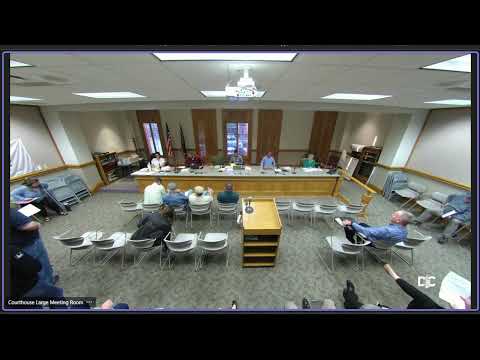
Decatur County health department officials told county commissioners on May 5 that a large state funding cut will reduce community grants and presented a proposed local pool ordinance that would create permitting and inspection authority for public and semi‑public pools.
Health department director Sean Durbin told the board the legislature reduced Help First Indiana funding from $150,000,000 to $40,000,000 this year, and the department expects a corresponding drop in county allocations. "I don't have exact figures," Durbin said, adding the department has been using grants and internal reserves to avoid cutting staff or services but expects some community grants to be reduced.
The proposed ordinance, presented by health department environmental staff member Alicia Navi, would add a local permitting and inspection program for public and semi‑public pools. Navi told commissioners the ordinance gives the department a framework to set local standards, permit operators and inspect pools; it estimates about 10 pools would fall under the rule and proposes fees of $600 for year‑round pools and $300 for seasonal pools. "It's not about control," Navi said. "It's not about generating new revenue. It's about prevention, public health, and making sure that our families have safe pools to enjoy."
Navi described the program's inspection schedule: year‑round pools would be inspected twice a year and seasonal pools once a year. The proposed fee schedule, she said, mirrors the county's restaurant permit fees and is intended to cover travel, testing supplies and staff time so inspections do not become a general‑fund expense.
Commissioners asked about enforcement and reopening after closure. Navi said the ordinance would include procedures for immediate closure for serious violations. On less severe failures — chemical imbalances or pH issues — staff can perform on‑site corrections or follow up with a reinspection before an operator reopens. She and a colleague, Alex Myers, recently completed certified training on pool operations and enforcement.
Durbin also reported on a recent community baby shower designed to connect new and expectant mothers to local services; he said 34 expectant or recently postpartum mothers attended and 80 people participated overall. He described the event as successful in linking residents with resources.
Commissioners approved the pool ordinance on first reading and directed staff to make a limited set of edits before second reading. No personnel reductions were proposed at the meeting.
Ending: Commissioners scheduled a second reading and review of suggested edits; the health department said it will return with the revised ordinance and answers on estimated county fiscal impacts once state allocation figures are clarified.