Get Full Government Meeting Transcripts, Videos, & Alerts Forever!
Get email alerts on the State Budget topic
No spam. Unsubscribe anytime.
Wright County officials warn state budget shifts could force service cuts, urge residents to contact governor
Summary
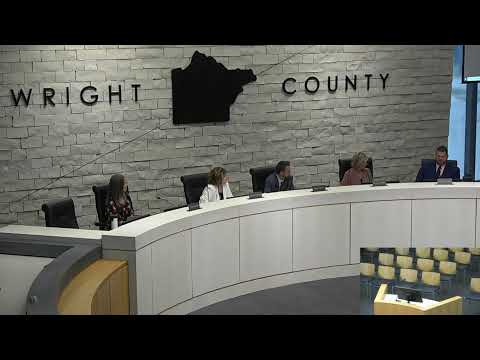
Wright County health and human services leaders told the Board of Commissioners on May 6 that the governor's proposed budget and related legislation would shift millions of dollars in costs from the state to counties, potentially forcing program reductions or higher property tax levies if lawmakers do not change course.
Wright County health and human services leaders told the Board of Commissioners on May 6 that the governor's proposed budget and related legislation would shift millions of dollars in costs from the state to counties, potentially forcing program reductions or higher property tax levies if lawmakers do not change course.
Jamie (HHS director) said the proposed changes “do impact the people that we serve,” and warned the county already faces mandates that staff must continue to perform even if funding is reduced. “The state is shifting cost to the counties which require higher property taxes,” Jamie said, saying the shifts fall heavily on HHS programs including adult services and mental health.
County Administrator Greg Kreiser provided a numerical estimate tied to a specific bill. Using 2023 figures as a baseline, Kreiser said the portion of the proposal tied to rate-share exceptions in House File 2434 would translate to “an estimated $3,300,000 hit to the levy instantly” and about $6,000,000 across the biennium. Kreiser said the current county rate-share is about 16.28 percent and cautioned that the county’s share could increase toward 33 percent if the federal funding assumptions change.
Commissioners and staff framed the budget shift as a fairness and timing issue: they said previous cost shifts in downturn years were paired with state agency cuts, while the current proposals would preserve or increase some state agency budgets while transferring costs to counties. Jamie said the county must still provide mandated services even if funding is reduced, increasing the pressure on local budgets and taxpayers.
Officials described immediate operational consequences. At the start of the meeting commissioners removed several consent items and asked staff to delay rehiring and personnel actions until the board meets again, to allow time to understand the final state budget and its local impact. The board later approved removal of HHS consent items 4, 5 and 6 and confirmed those matters would be revisited once more information on the state budget is available.
County leaders urged residents to contact the governor's office and legislators before the session's deadline. Kreiser and other speakers said that without mitigation from the state, counties would likely need to shift cuts across departments to absorb HHS funding shortfalls and that reductions could be long-lasting.
Officials tied the budget conversation to several ongoing local initiatives described during Health & Human Services remarks: the county’s co-responder mental-health program, the four-county crisis response team, and unmet needs identified by the county mental-health advisory committee (including affordable child care, youth mental-health supports and peer services). They emphasized that workforce and service gaps — long wait lists for behavioral health providers, limited insurance coverage for ongoing care, and possible reductions in federal funds — will worsen if local budgets are constrained.
The board did not adopt any countywide tax increases at Tuesday's meeting; instead it directed staff to pause selected personnel actions and to return with more information. Commissioners encouraged rapid public engagement, noting May 19 as a near-term legislative milestone and asking residents to contact the governor's office to describe how potential cost shifts would affect households and county services.