Get Full Government Meeting Transcripts, Videos, & Alerts Forever!
Get email alerts on the Civil Commitment Substance Use Disorder topic
No spam. Unsubscribe anytime.
Appeals Court asked to apply Matter of JP and vacate civil-commitment order in RB matter
Summary
Appellant argued the civil-commitment order under Section 35 should be vacated because the petitioners failed to present clinical testimony diagnosing a substance use disorder and because a clinician’s written report was not admitted into evidence and appears to have been filed after the order.
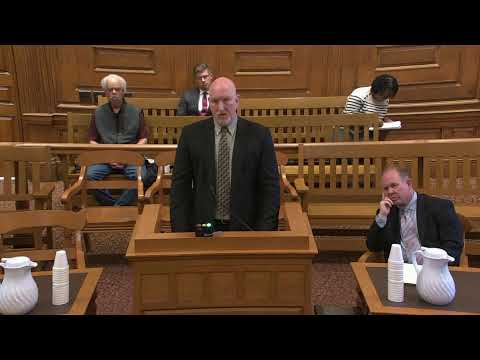
Appellate counsel for RB told the court the civil-commitment order issued under Section 35 should be vacated because the petitioners did not put forward clinical testimony diagnosing a substance use disorder and because the clinician’s written report was not in evidence and appears to have been filed after entry of the order.
Eric Beal, arguing for the appellant, urged the panel to apply the Supreme Judicial Court’s recent decision in Matter of JP, which he described as requiring clinical diagnosis testimony based on DSM criteria to support civil commitment for substance use disorder. Beal said the petitioners bore the burden to prove by clear and convincing evidence both that the respondent had a substance use disorder and that the disorder made the respondent likely to cause imminent, serious physical harm.
Beal told the court the report included on the docket (record appendix 4) lists an outcome of commitment and appears to have been filed after the order; he said the report was not introduced into evidence at the hearing and that several factual assertions (two overdoses, cutting incidents) appear only in the report, not in live testimony. “The report was not in evidence,” Beal said. “It would have been hearsay and was not discussed in the hearing.” He argued those omissions meant essential elements were unsupported at trial.
The justices and counsel examined whether the transcript included the clinician’s testimony and how the court treated documentary materials. The panel questioned whether the social worker’s in-court testimony addressed overdoses, self-harm, and recent active use; counsel and a justice observed some of those details are present only in the written report and not clearly established in the transcript.
The court took the matter under advisement.