Get Full Government Meeting Transcripts, Videos, & Alerts Forever!
Get email alerts on the City Budget topic
No spam. Unsubscribe anytime.
Port Hueneme warns of ‘economic uncertainty,’ seeks direction to close budget gaps
Summary
City staff told the council the city has narrowed a multimillion-dollar shortfall but must choose a mix of spending cuts, revenue adjustments and one-time options to balance a two‑year budget amid falling cannabis receipts and rising costs.
Port Hueneme city staff told the City Council on May 5 that the city has narrowed a previously larger budget shortfall but faces a second phase of “economic uncertainty” that will require ongoing adjustments to keep the next two‑year budget balanced.
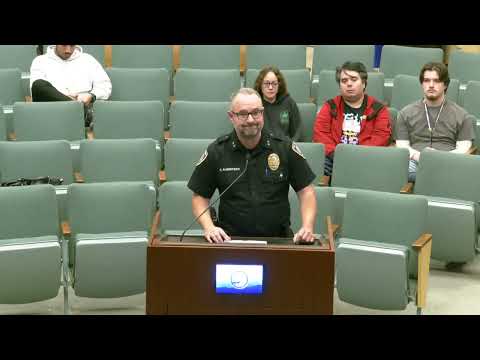
City Manager Charles Perrettes opened the council’s biannual budget workshop with a high‑level assessment: "the new word of the day that we've heard really consistently ... is economic uncertainty," and staff should expect to "make adjustments throughout the year." He said personnel costs make up the large share of the budget: "personnel costs are about 70% of our general fund budget. Personnel costs ... are about $20,000,000 of our $27,000,000 budget."
The workshop summarized decisions staff already has taken and options under consideration. Staff reported it has reduced operating costs since an earlier, larger gap: the operating budget had been trending up toward about $29.5 million but staff cut it to roughly $28.17 million when the report was prepared, narrowing a previously reported $2.4 million gap to roughly $400,000–$500,000. Revenues, by contrast, are essentially flat — staff projected general fund revenues in the high‑$27 million range — while costs continue to rise because of inflation and negotiated pay increases. The city also faces a structural change in a key revenue stream: "our cannabis revenue went from about 3,000,000 at its peak ... and has come all the way down to about 1,000,000," Perrettes said.
Why it matters: staff described a suite of responses rather than a single solution. Already adopted steps include a temporary external hiring freeze, a 5% departmental reduction exercise, delaying nonessential capital projects, and creating a CIP reserve fund. Staff recommended a combination of (1) additional ongoing reductions, (2) limited use of one‑time reserves, (3) targeted revenue increases such as utility and fee adjustments, and (4) exploring one‑time proceeds from surplus property sales. Perrettes said the CIP reserve was created in September 2023 and could help for a couple of years but is not a long‑term fix. He warned that the second fiscal year in the two‑year budget will be especially challenging because of built‑in salary/benefit increases.
Council members pressed staff on details and implementation. Council Member Perez asked whether the city manager was confident in the finance team’s numbers and long‑term approach; Perrettes replied that the focus is to define a sustainable “normal” budget level and to avoid repeating past cycles of spending during temporary revenue peaks. Vice President Lopez asked for a department‑level breakout of full‑time equivalent positions (FTE) going back to 2017; staff agreed to provide counts by department at the next workshop. Council members also asked about enforcement of the hiring freeze and whether any program eliminations were being considered; staff said they have tried to avoid cutting core programs and have focused on attrition, reorganization, reducing travel and training budgets, and other nonpersonnel items first.
Staff also told the council that insurance premiums had increased recently, from about $1.8 million to roughly $2.0 million, and that the city is continuing to update revenue forecasts with outside consultants who have urged conservative assumptions because of the uncertain economy. Perrettes recommended that the council expect mid‑year adjustments and not assume a single static revenue outlook. He said staff will return with a detailed list of proposed reductions at a second workshop scheduled for May 19.
What the council did: the council voted to direct staff to continue the two‑year budget process and return with the detailed reductions and options at the May 19 workshop. Mayor McQueen LaJeune called for a focused, detailed follow‑up and staff confirmed the next meeting will present proposed reductions, draft fee changes and any recommended use of one‑time funds.
Background: staff said the two‑year effort grew from earlier work to insulate the budget from falling cannabis revenues, and that because cannabis receipts impact multiple tax categories, the city has been proactively trimming operating and capital spending to avoid exhausting reserves. Perrettes said the city had reduced several projects and reprioritized grant funds to finish Bubbling Springs Park without draining reserves.
Looking ahead: staff asked the council for policy direction about how aggressive to be on the second fiscal year, whether to prioritize fee adjustments, and whether to consider surplus property sales as a temporary bridging strategy. Perrettes and finance staff emphasized that any combination of actions is likely and that the council should plan for continued budget adjustments during the year.
Ending: staff will return May 19 with a line‑by‑line set of proposed reductions, anticipated revenue changes, and more detail on the personnel picture. The council asked staff to provide a historic FTE count by department and to prepare options that minimize permanent service losses where possible.