Get Full Government Meeting Transcripts, Videos, & Alerts Forever!
Get email alerts on the Property Boundary topic
No spam. Unsubscribe anytime.
Appeals court weighs boundary evidence after neighbor cuts trees near bog
Summary
In Sylvester Bridal v. Back River Bog Co. LLC, the panel debated whether the plaintiff needed an expert surveyor to prove property boundaries and whether a juried all‑or‑nothing verdict was supported by the evidence; justices took the case under advisement.
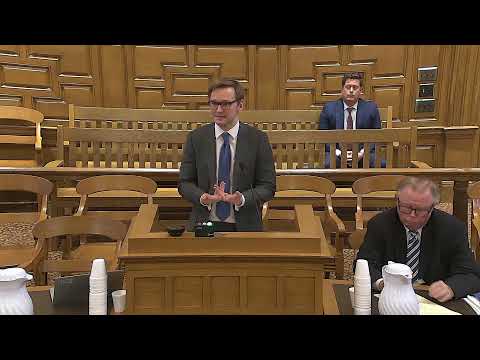
The Massachusetts Appeals Court heard argument in Sylvester Bridal v. Back River Bog Company LLC, docket no. 24P1271, a dispute arising from removal of approximately 30 trees on an embankment adjacent to a cranberry bog and conflicting claims about whether the trees stood on the bog company’s property or on the neighbor’s land.
Why it matters: The case highlights common boundary disputes that turn on survey evidence, the necessity and role of expert testimony, and how jury instructions or a verdict form shape the factfinder’s ability to parcel discrete claims (for example, tree‑by‑tree findings versus an all‑or‑nothing verdict).
Counsel and the panel focused on whether the plaintiff needed an expert surveyor to present sufficient evidence that trees were across the line. The initial investigator and some plans in the record were decades old and aimed at locating a house, not resolving the current boundary dispute. One side argued the jury could resolve the question based on lay evidence and recorded plans, while the other emphasized that surveyor testimony — or at least a professional mapping of the embankment — was required to meet the plaintiff’s burden.
The argument also examined preservation of trial objections: defense counsel acknowledged a motion for directed verdict was made at the close of the plaintiff’s case but not renewed at the close of all evidence, a procedural step the SJC has held is usually required to preserve a sufficiency challenge. The panel probed whether the timely objections and later communications with the judge preserved the issue on appeal.
Separately, appellate counsel disputed that the jury verdict slip and instructions should have allowed the jurors to apportion liability by tree; the appellant says the jury’s apparent all‑or‑nothing answer produced an unfair result. The trial appendix, proposed instructions, and whether a proposed verdict form had been filed were discussed; counsel said the record appendix did not clearly include a formal proposed verdict slip.
Court action: The panel took argument under advisement.