Get Full Government Meeting Transcripts, Videos, & Alerts Forever!
Get email alerts on the Criminal Justice Breaking And Entering topic
No spam. Unsubscribe anytime.
Appeals court hears challenge to sufficiency of evidence in McGrath breaking-and-entering conviction
Summary
On May 6, 2025, the Massachusetts Appeals Court heard oral argument in Commonwealth v. McGrath over whether the evidence supports a conviction for breaking and entering with intent to commit a misdemeanor, focusing on the timing of intent and whether the Commonwealth must specify the underlying misdemeanor.
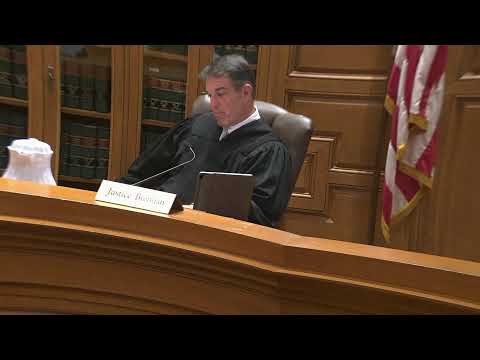
SPRING SESSION, MASSACHUSETTS APPEALS COURT — On May 6, 2025, a three-judge panel of the Massachusetts Appeals Court heard oral argument in Commonwealth v. McGrath, a challenge to the sufficiency of the evidence supporting a conviction for breaking and entering with intent to commit a misdemeanor. Chief Judge Vicki Henry presided with Judge Shinn and Judge Brennan; each side had 15 minutes and no rebuttal period.
The argument turned on timing: whether the defendant, Jill McGrath, had the requisite intent to commit a misdemeanor at the precise moment she broke and entered a home, or whether any intent to take the victim’s dog developed later. Appellant’s counsel Bridal Baranowski told the panel that “the Commonwealth has to prove each element of the crime beyond a reasonable doubt,” and argued the record did not show McGrath intended to steal the dog at the moment of entry. Baranowski emphasized uncertainty about a prior threat to the victim’s husband, saying, “So we have a 10 month window” during which that alleged threat could have occurred, and that the fact finder would be required to speculate about timing.
The Commonwealth, represented by Ellen Lazar, told the court the evidence was sufficient to support the conviction. Lazar said the judge could consider the actual taking of the dog, the defendant’s post‑confrontation remark — reported by the victim as “I’m not gonna give you your dog back till you give me my stuff” — and prior threats as factors a factfinder could weigh. “The evidence was sufficient to support the conviction,” Lazar told the panel, and she cited appellate decisions the Commonwealth views as permitting an unspecified underlying misdemeanor to sustain a breaking‑and‑entering conviction.
The panel questioned both sides about two linked legal issues: (1) whether the Commonwealth was limited on appeal to the specific theory it advanced at trial, citing footnote 3 of Commonwealth v. Lee; and (2) whether a judge (or jury) may infer the intent to commit criminal trespass or larceny at the moment of entry from the surrounding facts. Defense counsel argued Lee and related decisions require the prosecution to stick to the theory litigated below; the Commonwealth relied on other authority it said holds that the underlying misdemeanor need not be specified to sustain a conviction (counsel cited Rogan and Scott, among others).
Judges explored factual inferences on trespass. Judge Shinn asked whether a factfinder could infer the defendant intended to remain after being told to leave and thus commit trespass; Baranowski responded that the central legal question is whether the intent existed when the breaking and entering began. The parties also discussed whether certain testimony admitted at trial — including the victim’s report of a prior threat to her husband that McGrath would take the dog — was hearsay and, if so, whether any trial counsel failure to object affects the appellate sufficiency review.
At the close of argument the court asked for further briefing. Chief Judge Vicki Henry said, “I think a letter might be helpful,” inviting the Commonwealth to file a short letter addressing whether the judge must specify the underlying felony or misdemeanor for purposes of notice and appeal. With that request noted, the panel submitted the case for decision.
The judges did not rule at argument. The case will be decided on the briefs and the record; the court’s eventual opinion will resolve whether the evidence, when viewed in the light most favorable to the Commonwealth, was sufficient to prove intent at the time of the breaking and entering and whether the prosecution was required to specify the underlying misdemeanor at trial or on appeal.