Get Full Government Meeting Transcripts, Videos, & Alerts Forever!
Get email alerts on the Affordable Housing topic
No spam. Unsubscribe anytime.
Neighbors, Augusta Housing Authority clash over Meadowbrook Phase 2 support; commission declines to endorse letter
Summary
Hamptons and Breeze Hill residents said they received insufficient notice of an Augusta Housing Authority redevelopment; the commission voted down a requested letter of support for the project's Phase 2 tax-credit application amid calls for more direct community outreach.
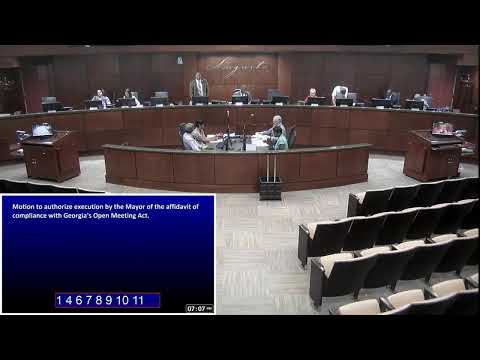
Augusta commissioners on May 20 rejected a request to sign a letter of support related to Phase 2 of the Villages at Meadowbrook, a planned Augusta Housing Authority (AHA) redevelopment, after residents said they were not adequately notified and asked for direct meetings with the authority and developer.
Residents from the Hamptons and Breeze Hill neighborhoods told the commission they only learned of construction and clearing activities during the Masters week and that published notices used a different development name, making the notices confusing. "We are here to publicly, again, for the second time, vehemently oppose the invasion of the Augusta Housing Authority on our subdivision," said Dakar Brown Myers, president of the Hamptons Homeowners Association.
Deputy AHA Executive Director Douglas Freeman said the authority purchased the property in February 2007 and has since followed public-notice procedures for its revitalization plan and its recent actions. Freeman told the commission the project is not public housing but an affordable, mixed-income development using Low Income Housing Tax Credits; he said Phase 1 is already under construction and Phase 2 would target older adults and workforce housing.
Freeman outlined affordability targets: the development is intended for households at roughly 60% area median income (AMI) with some units up to 80% AMI; he estimated rents would range roughly "between, like, $500, 600 to a little bit over a thousand dollars a month." Freeman told the body that if the commission withheld a supporting letter to help secure tax-credit points, the authority would still apply but could lose preference points that might delay or reduce Phase 2 awards.
Neighbors said the principal problem was deficient direct notice and uncoordinated outreach. Davenport—s president and other residents said they received public notices that identified the project as "The Villages at Meadowbrook," which they said is misleading because Meadowbrook is a different area entirely. Several residents described construction-related damage to yards and irrigation systems and asked for an immediate meeting with the developer and the authority.
Commissioners split on the question of a support letter. Commissioner Stacy Pulliam explained the role of the Georgia Initiative for Community Housing (GICH) and said the program can provide scoring points under the DCA tax-credit process. After debate and public comment, a motion to approve the commission—s letter of support failed on a roll-call vote.
Next steps: Commissioners asked the authority and developer to meet directly with impacted residents, to offer site tours of completed AHA projects (Walton Oaks, Walton Green) and to provide written project details including proposed unit sizes, income targeting and property management plans. Commissioner Don Clark said he would not vote to support the letter until neighbors receive fuller engagement and direct answers about impacts on property values and site operations.
Why it matters: The dispute highlights a recurring tension between housing redevelopment aimed at increasing affordable housing stock and neighborhood expectations about notice and land-use impacts. The authority said the project represents significant private/public investment and that similar earlier AHA redevelopments have been followed by lower crime rates and neighborhood stabilization.