Get Full Government Meeting Transcripts, Videos, & Alerts Forever!
Get email alerts on the K12 Math Cte Arts topic
No spam. Unsubscribe anytime.
MMSD trustees hear wide-ranging update on middle‑school math, CTE expansion and arts programming
Summary
District staff told the Madison Metropolitan School District Board of Education Instruction Work Group that math instruction, career and technical education (CTE) expansion and arts programming are priorities; a 41‑member math task force and new middle‑school CTE sections are intended to raise access and equity.
Madison Metropolitan School District leaders and principals updated the Board of Education’s Instruction Work Group on middle‑school instruction on math, career and technical education and the arts, describing districtwide initiatives aimed at increasing access and aligning grade‑level learning.
The presentations emphasized how the district’s strategic goals and investments support grade‑level standards, with staff pointing to recent gains in students taking algebra or higher while in middle school, expansion of middle‑school CTE courses and new arts residencies across schools.
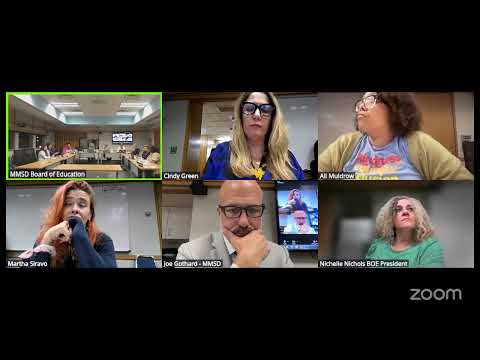
Cindy Green, a district staff member who opened the evening’s presentation, told the board that the session would “start with an update on mathematics and an update on middle school programming.” She introduced a team of central‑office and school leaders who described work intended to lift student outcomes and expand programming choices.
Nardhumbaya, the district’s middle‑school CTE specialist, said the district’s CTE audit in 2021 found programs concentrated at a handful of schools and created an equity gap. “Our goal is to make sure that we have middle school CTE at all the middle schools,” she said, outlining an expansion that district staff said will include more than 55 CTE course sections and 15 CTE programs across nine middle schools in the coming year. Staff said three middle schools do not yet have formal CTE and that the district plans targeted outreach to those schools.
District presenters described CTE as intentionally tied to curriculum and career pathways. They said middle‑school CTE courses and student organizations are intended to build early experiences so students make more informed high‑school choices and better access postsecondary credentials.
On arts programming, staff noted residencies and districtwide events. One presenter pointed out that Hamilton’s choir was selected for a capital concert series and that hip‑hop artist Dowery Ruiz conducted residencies across middle schools this year.
Math instruction was a primary focus. Kaye Hunter, the district math teacher leader for middle school, described leadership moves driven by district and classroom data and by research on the “three shifts” in mathematics: coherence, rigor and focus. Hunter said the district created common, standards‑based assessments and revised scope and sequence documents to promote aligned, grade‑level instruction. “Rigor is first defined by conceptual understanding,” she said, adding that procedural skill and fluency are necessary so students can use cognitive energy for application.
Sheba Mays, principal at Toki Middle School, described building protected common planning time and “win time” extensions so teachers can address gaps without pulling students from other classes. Mays said screening and progress monitoring show improvements across student groups and increased classroom engagement.
The math task force presented by district staff includes 41 members, staff said, with representatives from central office and schools and outside partners such as the University of Wisconsin–Madison. Staff said the group has focused this year on broadening the purposes for learning mathematics, creating equitable structures and implementing equitable instruction, and that it will finalize recommendations and action steps over the summer.
Board members asked about who takes algebra in middle school, completion rates, and whether students retake courses in high school. District staff said they are analyzing post‑middle‑school course taking and outcomes with the research and assessment team. Board members also discussed scheduling, teacher preparation time, standards alignment across elementary and middle grades, and supports for students with individualized education plans.
No formal policy was adopted at the Instruction Work Group. The board did approve the meeting minutes for the April 7, 2025, Instruction Work Group meeting earlier in the session; a motion to approve the minutes was seconded and passed “unanimously,” according to the meeting record. Presenters said parts of the CTE work will come to the operations board for formal support and that the math task force will present final recommendations to senior leadership this summer.
The district framed the work as both instructional (core math materials and assessment alignment) and programmatic (CTE and arts expansions), and staff emphasized equity goals — expanding middle‑school CTE beyond the schools that historically hosted it and directing full‑day resources to schools with higher concentrations of students of color and multilingual learners. Board members asked staff to report back on longitudinal outcomes for students who take algebra in middle school and on disaggregated results by student group.
District staff said next steps include final math task‑force recommendations, continued CTE rollout, and further alignment work to address “standards gaps” created or widened during the COVID‑era disruptions to instruction.