Get Full Government Meeting Transcripts, Videos, & Alerts Forever!
Get email alerts on the Dementia Resources topic
No spam. Unsubscribe anytime.
Baltimore County launches six-month 'Living with Dementia' roadmap and presentation series
Summary
The Baltimore County Department of Aging announced a six-month presentation series tied to a new dementia resource roadmap, monthly sessions beginning May 8 and running through October, and volunteer and training opportunities to support people living with dementia and their care partners.
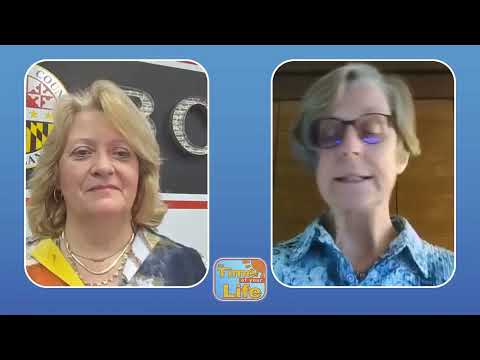
The Baltimore County Department of Aging on its Time of Your Life program announced a new Living with Dementia Roadmap and a six-month presentation series tied to that roadmap, with the first session scheduled for May 8 and monthly sessions through October. Emily Kearns, dementia specialist for the Baltimore County Department of Aging, described the roadmap as “a resource map to pull together dementia resources that have been dispersed and quite hidden from folks, in 1 place.”
Kearns said the roadmap is intended to guide people and care partners through what she called the dementia “journey,” identifying decision points and linking each to local resources. “Along the journey, there are twists and turns and there are choice points wherein everyone has to sit and look at resources to discern what the next steps might be,” she said.
The presentation series will focus each month on one of the roadmap’s decision points, Kearns said, with a panel of experts and a question-and-answer period. “We are starting to embark on a 6 month series. Every month, there will be an hour and a half session focusing on 1 of those choice points…the first 1 will be May 8, and then there will be 1 every month after that through October,” she said.
Kearns said the local initiative, Dementia Friendly Baltimore County, is a grassroots, multi‑sector effort affiliated with Dementia Friendly America and that the county’s leadership team includes about 40 volunteers from different sectors. She encouraged viewers to join the volunteer leadership team or train to become local presenters; she also mentioned options for deeper certification for people who want advanced skills.
The Department of Aging said the roadmap and linked materials, including welcome videos, are available on the agency website and that the department issues a newsletter four times a year. The program also said about 8,000 people subscribe to the department’s Time of Your Life Digest and listed subscription rates as $5 annually for Baltimore County residents 60 years of age and $7 for others; callers were given (410) 887-3050 for subscription information.
The broadcast framed the roadmap and series as education and outreach rather than a regulatory change: Kearns described the dementia specialist role as community education to reduce stigma, raise awareness of signs and symptoms, and offer communication tips and resources for people living with dementia and their care partners. “This is a full time role, in which I go out into the community and do dementia and brain health sessions to reduce the stigma around dementia and to raise awareness about the signs and symptoms and most importantly communication tips and also resources,” she said.
Kearns advised that the roadmap is intended to centralize resources so people can find assistance at different points — for example, if a home becomes unsafe, the roadmap points people to options such as in‑home supports or assisted living resources. She said the roadmap presents those touchpoints as benches on a map with links to local resources for that stage.
For more information, the Department of Aging’s website lists the Living with Dementia Roadmap and details about the presentation series, volunteer opportunities, and training. Contact information provided on the program for subscriptions and inquiries is (410) 887-3050.