Get Full Government Meeting Transcripts, Videos, & Alerts Forever!
Get email alerts on the School Construction topic
No spam. Unsubscribe anytime.
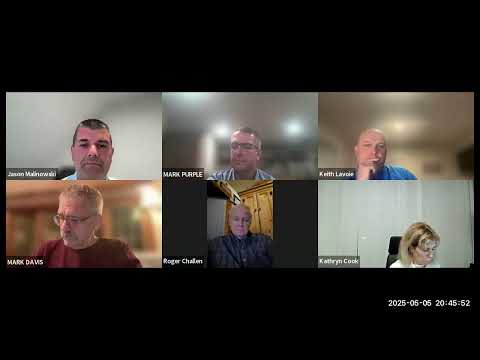
Southborough committee outlines stakes, costs and next steps before two votes on proposed Neary school project
Summary
At an open forum May 5, the NHERI Building Committee described the two upcoming votes, the $35 million MSBA grant at stake, project cost contingencies and next steps if either vote fails.
The NHERI Building Committee said Monday that next week’s two votes on a proposed new Neary School will determine whether Southborough can accept a $35,000,000 Massachusetts School Building Authority (MSBA) grant and proceed to design and construction.
The committee’s chair, Jason Malinowski, told residents the proposal needs a two-thirds affirmative vote at the special town meeting on Saturday and a separate majority vote on the Tuesday ballot for the project to move forward. Malinowski urged residents to participate in both votes, saying, “It is important that if you have a view on this project one way or another, you should express it at both meetings.”
Why it matters: The MSBA award is time-limited and conditions how the town can proceed. Committee members said the grant lowers the town’s net cost for a new Neary School but does not cover all expenses; the town would carry the remainder. Committee leaders described funding, procurement and construction safeguards intended to limit the town’s exposure to rising costs, while residents raised questions about tariffs, contingency funds, capacity and future uses of the Finn School.
Most important facts - Votes required: The special town meeting at Algonquin Regional High School requires a two-thirds affirmative vote to approve the motion that will set the maximum project amount; the Tuesday ballot requires a simple majority to proceed with the project financing and use of the grant. Malinowski said residents must be present at the town meeting to vote; the ballot vote runs during polling hours (6:30 a.m.–8 p.m.) and absentee ballots must be requested by 5 p.m. the day before the election. - Grant and project finances: The MSBA has offered a $35,000,000 grant tied specifically to the Neary project. Committee members told the forum the overall project budget presented to voters stands in the neighborhood of the figures discussed publicly (committee presentations have referenced roughly $108 million–$109 million in total project cost), with the MSBA grant reducing the town’s share. The committee said it is carrying a $12,000,000 contingency in its budget. - Contingency and secured funds: The committee said roughly $1,000,000 of energy-related incentives are secured through the Mass Save program and that roughly $4,000,000 of federal funding mentioned in discussions is tied to a federal grant that would require congressional action to rescind. Malinowski said, “we're currently carrying a $12,000,000 contingency in the overall numbers that we've presented.” - Procurement and cost controls: If voters approve the project, the committee expects to use a construction manager at-risk contracting approach (often abbreviated CM at‑risk). The committee said that design documents, procurement and final bids will be completed before demolition or major on-site construction begins. If contractor bids exceed the approved maximum project amount, the committee said the town would not proceed; the MSBA agreement would also be void if the town’s contract amount exceeded the MSBA commitment. - Tariffs and price‑risk: Residents asked repeatedly about recent tariff activity and how materials-price risk will affect the budget. Committee members said current estimates incorporate recent market conditions and that further, more detailed hard-cost estimates will be produced when the construction manager and design team complete construction documents. The committee pointed to the two safeguards above (contingency and the not-to-exceed contract cap) as protections for the town.
Other substantive points discussed - Finn School: The committee and the select board representative said the $108M–$109M school figure covers the Neary project only; a separate, modest allowance of about $3,000,000 is in the town capital plan for a ‘‘light renovation’’ to the Finn School if Finn is taken offline and repurposed. Committee members emphasized that decisions about Finn’s long-term use or disposition are outside the NHERI Building Committee’s authority and would require select board and town meeting actions. - Playground and fields: Committee members said a playground is intended for the new Neary site but that the detailed playground line item is not separate in the schematic budget; they estimated a total playground cost in the neighborhood of $400,000 and said parts of a playground may be eligible for MSBA reimbursement or funded through Community Preservation Act (CPA) funds and private donations. If construction activity disrupts playing fields, contract requirements will require the contractor to restore the fields to their prior condition; the committee said no additional capital investment for upgraded turf fields is currently budgeted. - Enrollment, capacity and future expansion: The proposed design targets roughly 610 student capacity with modest built-in flexibility. Committee members said demographic work informed the size and that the site was selected to allow a future addition to the building if future enrollment growth required it. - Environmental/site testing: The committee said subsurface borings and water-monitoring well testing have not shown concerning contamination at the Neary site, described the wetlands as a buffering feature and said the town will comply with all applicable wetlands and stormwater requirements during construction. They said annual testing results have shown only low, background readings and that they will share test reports with town staff and post available results. - If votes fail: Committee members explained that if either the two-thirds town meeting vote or the majority ballot vote fails, the MSBA award process allows a window (the committee described a 120-day period after the award) to respond, but reentering the MSBA pipeline would likely take years and carry no guarantee of an identical award. Committee members said a practical estimate for returning to the MSBA pipeline is a minimum of three years, depending on timing and MSBA capacity.
What the committee directed or pledged at the forum - Post materials: Committee members agreed to post the March 2024 grade-configuration survey results and other requested documents to the committee website and to provide written follow-up to questions the forum could not resolve that night. - OPM and transparency: The committee noted an owner’s project manager (Skanska) is retained and the MSBA will audit and review costs; committee members said they intend to maintain regular public reporting during design and procurement phases.
Quotes from meeting participants - Jason Malinowski, chair, NHERI Building Committee: "It is important that if you have a view on this project one way or another, you should express it at both meetings." - Jason Malinowski, chair: "We're currently carrying a $12,000,000 contingency in the overall numbers that we've presented." - Kathy (select board representative and finance subcommittee chair): "$35,000,000 is a lot of money, so I'm more concerned about losing that."
Ending note: Committee members emphasized that the next steps depend on the two votes and encouraged residents to review posted materials and vote at both the special town meeting and on the Tuesday ballot. The committee said it will continue public meetings and post updates during the design and procurement stages if the project proceeds.