Get email alerts on the Economic Development topic
No spam. Unsubscribe anytime.
Developers Pitch ‘Sanford Horizons’ plan as multi‑phase, value‑capture infrastructure program
Summary
Landmark Development and Sanford University representatives presented a multi‑phase Creekside plan that would leverage private investment to fund civic infrastructure through a proposed value‑capture mechanism; councilors and residents raised concerns about scale, traffic, athletic facilities and the scope of incentives.
Landmark Development and Sanford University representatives outlined a multi‑phase Creekside master plan on May 5, proposing private financing of major civic infrastructure and a value‑capture mechanism to repay those investments.
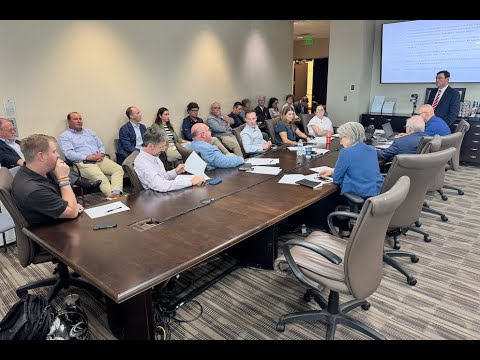
The presentation, led by Bob Dunn of Landmark Development with Sanford staff including Dr. Colin Coyne, framed the Sanford Horizons project as an infill development tied to a civic anchor that could generate “nearly a billion dollars of investment,” a fiscal return the presenters said would produce large tax‑base gains for the city and the school system over a multi‑decade horizon.
The developers proposed privately financing what they described as roughly $104,000,000 in civic infrastructure (roads, stormwater, pedestrian bridge and recreation facilities) and recovering a portion of the incremental tax revenues produced by the project over time. Dunn said the team’s modeling — run by AECOM and reviewed by PFM — forecasts large fiscal returns; he described the proposed city recovery share as “in the mid‑20% range” of the civic‑infrastructure cost over a 20‑year period.
Council and residents pressed developers on specifics. Questions included whether a proposed hotel’s height could be reduced, how student‑oriented housing would be restricted so it would not convert to ordinary market apartments, and whether municipal park sites might be used to replace athletic fields currently proposed for Creekside East. Multiple speakers emphasized that community engagement has been substantial but said detailed answers about traffic, stormwater impacts and how recreational facilities would be handled remain necessary.
Councilors noted the project’s size relative to Homewood’s recent development history and asked for tangible limits or caps on any incentive or value‑capture arrangement. Mayor and council members signaled openness to studying the proposal but stopped short of endorsing the level of incentive the developers suggested; finance committee members later carried the incentive item over to a future meeting so council can review details and possible ceilings.
Developers said they will continue community meetings, provide additional technical studies (traffic, stormwater and feasibility), and return to planning commission and council for required zoning and development plan approvals. Councilors and staff said the item will appear again on upcoming planning and council agendas, including a planning meeting scheduled May 19 and a full‑council presentation June 9.
Community members and councilors requested clearer written details on the proposed funding mechanism, the portion and duration of value capture, and firm commitments governing the location and operation of athletic and housing facilities before any formal agreement is pursued.
The presentation and the public discussion made clear the project is at a proposal stage and that substantial additional technical, legal and fiscal review is required before council would consider any formal incentive or development agreement.
AI generated
The text on this page is AI generated. Summaries, highlights, analysis, and video transcripts are all produced from the original source material.
AI can make mistakes, so if you spot one, and we will fix it for everyone.
Note: the source content is unaltered by us. Any content source we link to, be it a video, an audio recording, or a document, is presented exactly as its publisher released it. That publisher is usually a government body, sometimes an individual official or another organisation.