Get Full Government Meeting Transcripts, Videos, & Alerts Forever!
Get email alerts on the Neary Building Parkerville Landfill topic
No spam. Unsubscribe anytime.
Southborough officials outline testing and mitigation plans for proposed Neary school near Parkerville Landfill
Summary
Mark Davis, a member of the Neary Building Committee, and Chris Craig, the town inspector, briefed the Southborough Board of Health on testing and mitigation work near the Parkerville Landfill ahead of a May 10 special town meeting on the proposed Neary school building.
Mark Davis, a member of the Neary Building Committee, and Chris Craig, the town inspector, briefed the Southborough Board of Health on testing and mitigation work near the Parkerville Landfill ahead of a May 10 special town meeting on the proposed Neary school building.
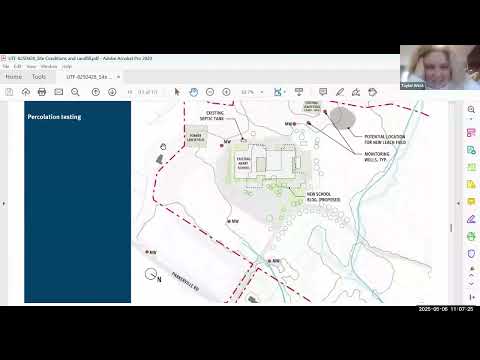
The Neary project site sits adjacent to the capped Parkerville Landfill; Davis and Craig summarized long‑running groundwater and surface‑water monitoring, proposed construction controls (including a vapor barrier and gas‑venting system) and steps the town can take to formalize long‑term oversight with the Department of Environmental Protection (DEP). “There’s low level materials, that have been consistently there, and according to Parr, not anything of of concern,” Davis said, describing monitoring results his consultant provided.
Why it matters: the proposed new school would be sited within a few hundred feet of active landfill monitoring points, and residents have raised questions about what testing and mitigation will protect students and staff. The Board of Health heard technical details intended to show how the town and the project team would detect and respond to any contaminants or landfill gases and how routine monitoring ties into DEP oversight.
Davis said the town already maintains a long history of testing: “we have probably out of the last 30 years, we probably have 25 years of testing, deep water testing and annual surface water testing, which is done as part of the program, that DPW does.” He noted monitoring reports are sent to DEP, which reviews results and raises concerns if warranted. Craig agreed it would be useful to consult DEP again: “I have a feeling that they would say we're doing what we have to do. We've had a very robust monitoring plan for the past 30 years for this landfill. But, of course, it doesn't hurt to get their their input on it to see where they might wanna see improvements.”
Planned site controls described by Davis include removing any unsuitable fill beneath the building footprint and replacing it with engineered fill; installing a vapor barrier and a radon‑gas monitoring and venting system under the foundation; engineering drainage to keep groundwater away from the foundation; and installing three new monitoring wells in front of the school to supplement existing wells. Davis said landfill gas testing is performed four times a year and the radon venting system would also allow detection of other gases if they were present: “There will be a vapor barrier under the foundation. There will be a radon gas monitoring and venting system under the school… That will also serve… to monitor those gases as well.”
Davis described subsurface conditions encountered by soil borings and how they guided siting decisions: initial borings in the open field area showed “the soils there are unsuitable…and it doesn't mean anything other than they're sandy. We found no contamination, but what we found is general materials there that could not support a building.” Because of those results, the project team proposes building closer to the existing school footprint and removing and replacing unsuitable soils only where structural support is required.
Davis also raised a town‑administration item: an apparent title issue dating to a town meeting action in the 1990s that currently places the landfill under the school department's title. He said the town should correct that record so responsibility and ongoing maintenance fall under DPW or another appropriate town department and suggested the Board of Health, DPW, Recreation and DEP meet to agree on a formal maintenance and communication plan: “it puts it really under the DPW, where it belongs…we need to come back in and correct some town meeting action that was done in the nineties.”
Board members pressed for clarity on monitoring and next steps. Liz Zulek, Board of Health member, thanked the presenters and said the briefing reduced misinformation she had seen: “There's a lot of misinformation out there right now, so thank you for sharing it.” Safdar Medina, Board of Health member, asked for clarification about soil conditions under the current building; Davis reiterated that borings over the proposed fields were sandy and unsuitable for heavy foundations, that no contamination had been found, and that the project budget includes additional borings and on‑site remediation where necessary.
Davis and Craig said the Board of Health’s formal role is primarily oversight if testing indicates a concern. Davis added the project team intends to return to regulatory boards with permits as required: “we recognize, that we have a responsibility to come back to you, for all the permits…we will be back and consult and design right to your regulations.”
The Board did not take any formal votes on the Neary project at the May 6 meeting. The project team and town staff asked the Board of Health to review materials if the special town meeting vote passes and to be prepared to act if monitoring results require public‑health follow‑up.
The Neary project is scheduled for a special town meeting on Saturday, May 10, at 9 a.m. at Algonquin; the Board of Health said it will continue to monitor test results and DEP correspondence and will engage further if the project advances.