Get Full Government Meeting Transcripts, Videos, & Alerts Forever!
Get email alerts on the General Obligation Bond topic
No spam. Unsubscribe anytime.
Casa Grande council authorizes $67 million bond question for November to fund parks, fields and an aquatic center
Summary
The Casa Grande City Council voted to place a $67 million general obligation bond question on the Nov. 4 ballot to finance new sports fields, an aquatic center and related infrastructure after residents and youth sports volunteers urged action on field shortages and pool availability.
The Casa Grande City Council voted unanimously Tuesday to place a $67 million general obligation bond question on the Nov. 4 ballot, clearing the way for potential construction of new baseball/softball and multipurpose fields and planning work for a new aquatic center.
City Manager Larry told the council the bond would accelerate projects that otherwise would be paid for over time. "What a general obligation bond does is allow us to accelerate it," Larry said as he described the proposed scope and preliminary cost estimates.
The proposed bond package includes an estimated $40 million for new ballfields, parking, restrooms, lights and related infrastructure at Ed Hooper Park adjacent to Palmer Mason Sportsplex, and roughly $27 million for a new aquatic center aimed at lap swimming and recreational programming, for a combined $67 million estimate staff used for ballot planning.
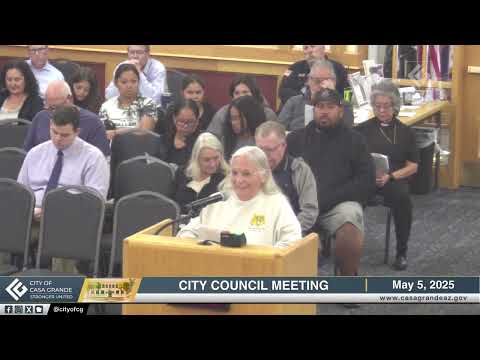
The bond discussion drew a large public turnout of youth coaches and parents who urged council to act. "We are always struggling for fields," said Ricardo Villa, identifying himself as a representative of the Casa Grande Rattlers soccer club. "I just want to support this addition of multipurpose fields. I think it would be very beneficial to us, to our kids." Hector Andujo, a resident, added: "If it needs to happen, it needs to happen now."
Councilmembers and staff emphasized that general obligation bond proceeds are restricted to capital projects. City staff noted operations and maintenance must be funded separately, but said increased facility usage could generate revenue to help operations over time.
Financial adviser Nick Dodd outlined likely tax-rate impacts under assumptions used for the voter pamphlet. Using a model that assumes a $300,000 assessed-value home, the city estimated the combined secondary property tax that would service existing and proposed debt could reach roughly $505 per year at a high-point scenario; staff emphasized rates will vary based on assessed-value growth and interest rates.
Mayor Fitzgibbons and the council framed the ballot question as a public decision. Resolution No. 5767, to call a special bond election to authorize issuance and sale of up to $67,000,000 of general obligation bonds, was moved, seconded and approved on a roll-call vote.
Councilmembers urged community support during the campaign phase. Mayor Fitzgibbons said residents, youth organizations and small businesses would all need to help educate voters if the council moves to put the question on the ballot.
If approved by voters, the bond would allow the city to begin design and construction sooner than pay-as-you-go funding would allow; staff said detailed procurement, final estimates and a construction timeline would follow subsequent approvals and any partnering agreements with school districts or other agencies.
The council vote to place the question on the Nov. 4 ballot was final for this meeting; the council did not appropriate bond proceeds tonight. Final issuance, timing and tax-rate impacts will be defined when the city sells bonds and sets terms.