Get Full Government Meeting Transcripts, Videos, & Alerts Forever!
Get email alerts on the Bza Rules Procedure topic
No spam. Unsubscribe anytime.
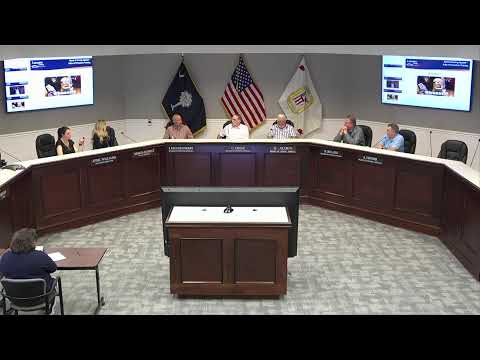
Lancaster County BZA hears rules-of-procedure briefing; attorney outlines limits on ex parte contacts and executive sessions
Summary
The Lancaster County Board of Zoning Appeals heard a detailed briefing from County Attorney Jenny Merck DuPont on the board’s rules of procedure, limits on outside contacts, and when the board may use executive session, officials said.
The Lancaster County Board of Zoning Appeals heard a detailed briefing from County Attorney Jenny Merck DuPont on the board’s rules of procedure, limits on outside contacts, and when the board may use executive session, officials said.
DuPont told board members the county attorney’s office provides procedural guidance but cannot serve as an impartial advisor on the merits of cases when the office routinely represents planning and zoning staff. “There is only 1 of us, and it is me. So I am a true 1 stop shop,” she said, explaining why the county attorney must avoid advising the board on substantive case outcomes.
The briefing outlined several items board members and staff said are central to keeping BZA actions defensible on appeal. DuPont reviewed applicable authorities, including the South Carolina Comprehensive Planning Act, Lancaster County’s Unified Development Ordinance and Code of Ordinances, a county General Provisions Ordinance adopted in fall 2024, and the state Freedom of Information Act (FOIA). She said Robert’s Rules of Order will fill procedural gaps where the board’s own rules do not address an issue.
Why it matters: BZA decisions are quasi-judicial and can be appealed to circuit court. DuPont emphasized that appeals evaluate the certified record of the board’s proceedings and that an appeal must be filed within 30 days after a board decision is mailed. She underlined the importance of clear minutes, orders, and records: the clerk’s mailing of the board order starts the appeal deadline.
Key points discussed
- Ex parte contacts: DuPont said board members “shall not discuss any case pending before the board with parties of record or other interested persons except as part of a public hearing concerning that case,” quoting an advisory interpretation. If contacted, members must decline to discuss the case and tell the person they can appear at the public hearing. Members who believe a contact has compromised their impartiality should disclose it on the record and consider recusal.
- Executive sessions: Under FOIA, the board may go into executive session to receive legal advice relating to a pending, threatened, or potential claim, but may not use executive session to debate or decide how to apply law or criteria to a case. DuPont said no final action, polling, or votes may occur in executive session; the board’s deliberations and votes must be public.
- Appeals and mediation: DuPont reviewed appeal paths, including a statutory pre-litigation mediation option. A property owner who requests mediation can have the case referred by the circuit court to mediation; any settlement must be provided in writing within five working days and be approved by the local governing body and the circuit court before it takes effect. If mediation fails or is not approved, the property owner may file a petition in circuit court within 30 days.
- Organizational rules: State law sets membership parameters (3–9 members); Lancaster County’s ordinance establishes the county BZA at five members, four-year terms, and limits on consecutive terms (two) unless county council approves an exception by a two-thirds vote. The board’s current rules (adopted June 8, 2017) set officer roles, hearing procedures, notice and signage requirements, recordkeeping, and guidance on evidence and witness testimony (relevancy, noncumulative testimony, and prohibitions on hearsay).
- Procedure reference materials and training: DuPont said she will provide condensed Robert’s Rules handouts and “cheat sheets” for common parliamentary motions. Staff told members they plan to hold regular monthly meetings when feasible and to arrange training sessions that could provide required continuing education credits.
- Board counsel funding: DuPont said the county has requested funds in the current budget process to retain a separate attorney for the BZA so the board can receive independent legal advice at meetings.
Board housekeeping and votes
The board approved the meeting agenda (vote recorded as 4–0) and approved minutes for the March 4, 2025 meeting (vote recorded as 3–0, with one abstention by a member absent at that meeting). Staff said one case is scheduled for the June meeting and reiterated plans to continue monthly meetings and provide training when no cases require full hearings.
DuPont provided several practical pointers about handling witnesses and exhibits, reminding members to focus on evidence relevant to the application before the board (special exception, variance or other request) and to limit cumulative testimony.
The briefing closed with staff and members discussing whether council’s electronic participation rules apply to the BZA; staff clarified that because the BZA adopts its own rules of procedure and those rules refer to Robert’s Rules to fill gaps, the county council’s electronic-meeting provisions do not automatically apply to the BZA under the board’s current rules.
The board and staff said they will circulate DuPont’s presentation slides and the Robert’s Rules handouts to members ahead of future meetings.