Get Full Government Meeting Transcripts, Videos, & Alerts Forever!
Get email alerts on the Local Government topic
No spam. Unsubscribe anytime.
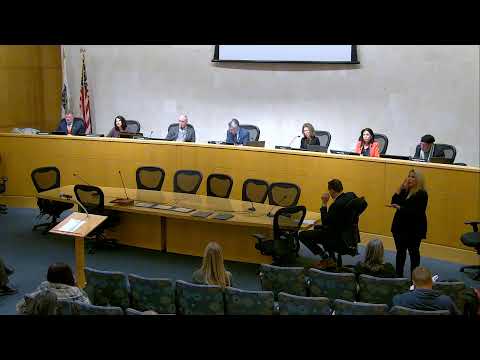
Princeton swears in mayor and council, elects Mia Sachs council president and approves 31-item consent agenda
Summary
At its Jan. 7 reorganization meeting, Princeton officials swore in Mayor Mark Frieda and new council members, elected Mia Sachs as council president, approved a 31-item consent agenda and outlined housing, equity and climate priorities for 2025.
Princeton officials swore in Mayor Mark Frieda and newly elected council members during the town’s reorganization meeting on Jan. 7, 2025, then the governing body elected Mia Sachs as council president and approved a 31-item consent agenda to start the year.
The reorganization meeting is the annual session in which the municipality administers oaths, elects internal leadership and adopts routine administrative items. Mayor Mark Frieda and newly seated council members took the oath of office early in the meeting; state Sen. Andrew Zwicker and other elected officials administered several of the oaths. After the swearing-in, Councilman David Cohen moved to elect Mia Sachs as council president, Leighton Newland seconded, and members approved by voice vote.
The newly constituted governing body used the meeting to state priorities for the coming year. Mayor Mark Frieda said the council will keep returning to core practices of listening, openness and teamwork and pushed for clear communication and strong municipal services. “I will strive to do my best every day,” Frieda said. Frieda also thanked Princeton University and other partners for a five-year voluntary contribution the town negotiated in 2024.
Councilman Leighton Newland said addressing housing affordability and racial and cultural displacement would be a priority. “Can we integrate affordable housing into every part of town?” Newland asked, urging changes to zoning to allow more multifamily housing and prevent displacement in historic neighborhoods such as Witherspoon-Jackson. Newland said he supports allowing mixed zoning to increase moderate- and middle-income housing.
Council President Mia Sachs, newly elected by her colleagues, and other council members outlined related priorities including strengthening collaboration with the Princeton Housing Authority, addressing short-term rentals, expanding mental-health outreach for youth and seniors, and exploring new revenue streams to support equity goals. Council members also mentioned sustainability and climate resilience, transit improvements, and continued downtown economic development as year-one priorities.
The governing body approved a 31-item consent agenda “en bloc” after Councilwoman Leticia Fraga moved the item and Michelle Perron Lambros seconded; members voted aye and the items were adopted. The consent agenda covers routine financial transactions, contracts and administrative items the council said are necessary to keep the municipal government operating at the start of the year; the individual items were not described in detail during the meeting.
Ceremonial remarks included a brief address by Gov. Phil Murphy and extended remarks from outgoing Councilwoman Eve Niedergang, who reflected on six years of service and lessons learned in municipal governance, and other elected officials present, including former Trenton Mayor Doug Palmer and Assemblywoman Michelle Jurolis.
The meeting concluded after a short public-comment period; two members of the public spoke (see separate article). Council adjourned following a motion by Councilman David Cohen, seconded by Councilwoman Michelle Perron Lambros.
Votes and formal actions taken at the Jan. 7 reorganization meeting were procedural: the council elected internal leadership, administered oaths of office, approved the consent agenda and adopted an adjournment motion. No ordinance or policy was voted into effect during this session.