Get Full Government Meeting Transcripts, Videos, & Alerts Forever!
Get email alerts on the Estate Planning Probate topic
No spam. Unsubscribe anytime.
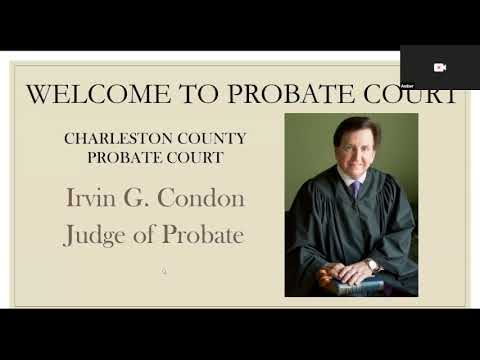
Charleston County probate workshop outlines wills, powers of attorney and conservatorship options for families
Summary
A Charleston County probate court presenter reviewed estate-planning documents, probate timelines and guardianship/conservatorship procedures, and directed attendees to local resources and e-filing options.
A Charleston County probate court presenter explained the basics of estate planning, probate administration and guardianship/conservatorship at a public workshop, and answered attendees’ questions about protecting older adults who may be losing capacity.
The presenter told attendees the probate office handles wills and trusts, adult guardianships and conservatorships, involuntary commitments and other matters, and advised families to organize documents and speak with an attorney. “Probate court has a little bit of everything,” the Probate Court presenter said.
Why it matters: Families caring for older adults with dementia frequently face choices about health care, finances and potential legal guardianship. The presenter summarized legal tools that can avoid a court conservatorship — including a durable financial power of attorney, a health care power of attorney and trusts — and described when court action may still be necessary.
Most important facts
The presenter said Charleston County Probate handles about 2,200 estates a year and keeps roughly 3,500 open cases at any one time. The office also processes about 2,000 involuntary commitment matters and roughly 1,000 guardianship/conservatorship proceedings.
He outlined three probate paths used in South Carolina: summary proceedings (used when the estate is under $25,000 and involves no real estate), normal administration (the typical path), and contested administration (notice and hearing). Under normal administration, creditors’ claims generally run to 8 months from the first published notice or one year from the date of death; the presenter said normal administration cases typically take nine to 10 months to complete.
Recording requirements and filings
The presenter emphasized that the financial durable power of attorney must be recorded at the registered deeds office to be effective for third parties handling real property or certain transactions. He said wills are presented to the court only after a person dies and that the county offers e-filing for probate documents; e-filing requires a one‑time fee (about $7 plus convenience charges) and allows filers to submit documents electronically.
Guardianship and conservatorship guidance
The presenter told attendees that a health care power of attorney and a durable financial power of attorney are commonly used to avoid court conservatorship and guardianship. But if an individual refuses to relinquish control and is making unsafe financial or care decisions, a court conservatorship or guardianship may be necessary.
“Sometimes you do need that conservatorship to let third parties know that [a person] doesn’t have the capacity to enter into contracts,” the Probate Court presenter said, while also noting courts try to grant the least-restrictive limitations and may allow small personal spending by the ward.
Attendee questions and practical steps
Attendees described situations involving dementia, contested finances and family disagreement. One attendee asked whether an attorney could include monitoring provisions; the presenter recommended discussing concerns with the estate-planning attorney and said attorneys often can build protections or check-ins into documents. The presenter advised gathering documentation from physicians if pursuing guardianship — conservatorship may begin with a preliminary hearing and usually involves a court-appointed attorney and examiner to evaluate capacity.
Local resources
The presenter listed local organizations that assist families, including Charleston Pro Bono, South Carolina Legal Services, Charleston Legal Access, Coastal Community Foundation, the Center for Heirs’ Property and Trident Area Agency on Aging. He also noted community options such as caregiver support programs, volunteer caregiver services tied to the College of Charleston, Narcan training for overdose prevention and an online unclaimed-funds search run by the state treasurer.
Practical clarifications and common concerns
The presenter said some families prefer a living (revocable) trust to avoid probate, particularly if property is held in multiple counties or states, but cautioned that transferring assets into a trust requires upfront work. He noted cost ranges for attorney-prepared packages: “It can range from $500 up to $3,000 or $4,000,” and that many attorneys charge either flat fees or hourly rates.
He also described probate‑practice details specific to South Carolina, including that the statutory health-care power of attorney form used in the state is standardized, that a living will (declaration of desire for natural death) has safeguards such as physician signoff, and that certain records (for example, the durable financial power of attorney and some trust records) are recorded at the land records office.
Closing and follow-up
The presenter encouraged attendees to organize source documents, consult an attorney and use local resources; he invited questions and asked attendees to send follow-up information to a staff contact (Jamie) for further assistance. “If you can at least talk to [the attorney] and say, ‘Hey, just want to voice our concerns,’ they may listen,” the Probate Court presenter said.
Ending
The workshop provided a practical overview for families and caregivers weighing advance directives, powers of attorney and possible court interventions; attendees were directed to local legal‑aid providers and to the county’s e-filing option for probate paperwork.