Get Full Government Meeting Transcripts, Videos, & Alerts Forever!
Get email alerts on the Tree Protection Ordinance topic
No spam. Unsubscribe anytime.
Developers, affordable-housing groups and Trees Atlanta clash over proposed tree-protection ordinance
Summary
Developers and Habitat for Humanity warned a draft City of Atlanta tree protection ordinance would raise costs, reduce housing density and jeopardize affordable projects; Trees Atlanta and environmental advocates said stronger rules are needed to halt rapid canopy loss.
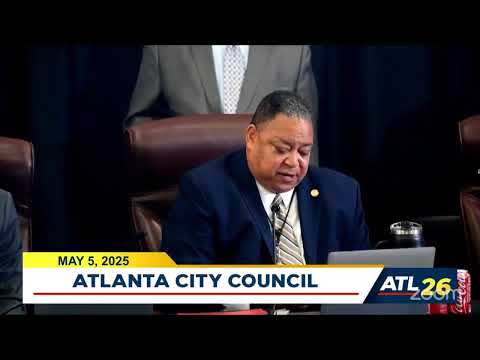
A draft City of Atlanta tree protection ordinance drew sharply divided public comment at the City Council meeting, with affordable-housing builders and developers saying the proposal would make projects infeasible while canopy advocates said the city is losing tree cover too fast. Public commenters asked the council and staff to revise the draft before adoption.
Why it matters: Council consideration of a new tree ordinance could change development costs and the supply of “missing middle” housing while affecting Atlanta’s overall tree canopy, a key factor in heat mitigation and neighborhood environment.
Developers, Habitat for Humanity and industry groups told the council the draft is too prescriptive and would have major unintended consequences. Andrew Gervi, legal counsel and director of real estate for Habitat for Humanity of Greater Atlanta, said a uniform conservation-area requirement “would be devastating to Atlanta Habitat's mission.” He told the council a planned Browns Mill Village project “would be reduced to just 81 homes under the proposed requirements” and that the resulting cost-per-lot increase could make affordable homeownership infeasible.
Multiple private builders and development representatives echoed that view. James Sheeks, a local home builder, said the “affordable housing waivers, the terms keep changing” and warned that moving to a vote quickly would be “dangerous and very bad public policy.” Kevin Norton, senior vice president of land development at Empire Communities, described the draft as “overly complex, difficult to interpret, and nearly impossible to implement at this scale.” Michael Perez of the Council for Quality Growth cited case studies presented to the council that showed the draft could “increase per lot cost by $20,000 to $50,000 [and] reduce density by up to 40%,” measures he said would push development and housing production outside Atlanta.
Canopy advocates and urban-forest groups pushed the opposite concern: that the city is losing canopy quickly and needs stronger protections. Greg Levine, executive director of Trees Atlanta, said the city’s recent data show canopy loss accelerating and that “we are losing canopy quickly.” Levine warned that failing to pass a stricter ordinance would leave low-income neighborhoods disproportionately exposed to heat and other environmental harms: “Poor people need trees too.”
Where council stands: Council members and staff reiterated the need for more stakeholder work. Speakers noted the draft has evolved in recent weeks and that the administration and council committees will continue stakeholder engagement. No final vote on a citywide ordinance was evident in the meeting record; public commenters and several council members urged more study and adjustments to preserve housing feasibility while increasing replanting incentives.
What was not decided: The council did not adopt a final ordinance during the meeting. Public speakers asked for programmatic flexibility, clearer waiver terms for affordable projects, and transparent use of the tree trust fund. Speakers on all sides asked for more time to reconcile canopy targets with housing goals.
Next steps: Commenters and council members urged continued negotiation between the city, developers, affordable-housing providers and canopy advocates, and asked staff to return with revisions and clearer cost analyses before any ordinance finalization.