Get Full Government Meeting Transcripts, Videos, & Alerts Forever!
Get email alerts on the Bean New Deal topic
No spam. Unsubscribe anytime.
Advocates press for 'Be New Deal' requiring plant‑based protein options at public institutions
Summary
Supporters told the Joint Committee on Higher Education that S922 (the 'Be New Deal') would expand access to plant‑based proteins at public institutions, citing climate, health and equity benefits and arguing the measure preserves choice while adding menu options and culinary training.
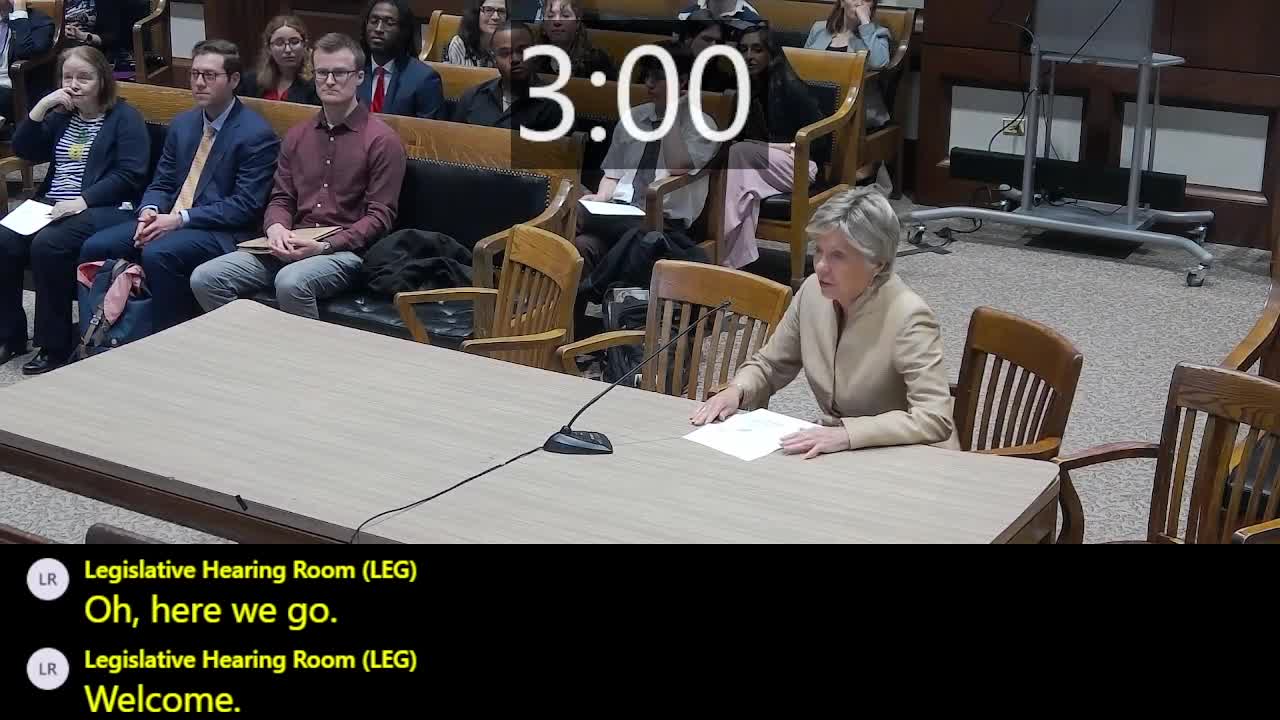
A diverse coalition — including public‑health professionals, environmental and animal‑welfare groups, students and restaurant operators — asked the Joint Committee on Higher Education to favorably report S922, commonly referred to in testimony as the “Be New Deal.”
Praial Patel of Humane World for Animals and Alex Sarussi of Mercy for Animals framed the bill as a pragmatic measure that preserves choice while requiring at least one plant‑based protein option per meal in state institutions and supporting culinary education and recipe development. “This bill is thoughtful, forward looking policy,” Patel told the committee, saying pilot projects showed meaningful greenhouse gas and resource reductions.
Testimony cited multiple studies and examples: a Brookline pilot that reduced emissions by replacing some animal‑based meals, research showing plant‑based meals can be substantially cheaper than meat‑based meals in institutional catering, and public‑health testimony that plant‑based proteins reduce disease risk by shifting saturated fat and increasing fiber. Xavier Toledo, a registered dietitian with the Physicians Committee for Responsible Medicine, told the committee the bill “brings state policy in line with the latest science and public health recommendations.”
Students and younger witnesses described personal constraints in campus dining: several said mandatory meal plans often left plant‑based students with limited options and that improved menu offerings would broaden access to culturally respectful, healthful meals. Restaurant operators and food‑service witnesses said demand exists and that culinary education and training would improve menu quality and uptake of plant‑based options.
Environmental and conservation witnesses noted that shifting some institutional purchasing toward plant‑based items reduces greenhouse gases, land and water use and helps curb biodiversity loss tied to animal agriculture. Witnesses urged the committee to adopt the bill’s minimum standards while funding culinary training and research into culturally appropriate plant‑based menus.
Committee members asked about costs, students with special dietary needs, and whether the bill would reduce choice; witnesses emphasized the bill preserves options and can lower food costs for institutions. No vote was recorded; proponents asked for a favorable report and follow‑up on procurement and implementation guidance.