Coalition urges Massachusetts to ban legacy preferences at colleges, calling the practice inequitable
Loading...
Summary
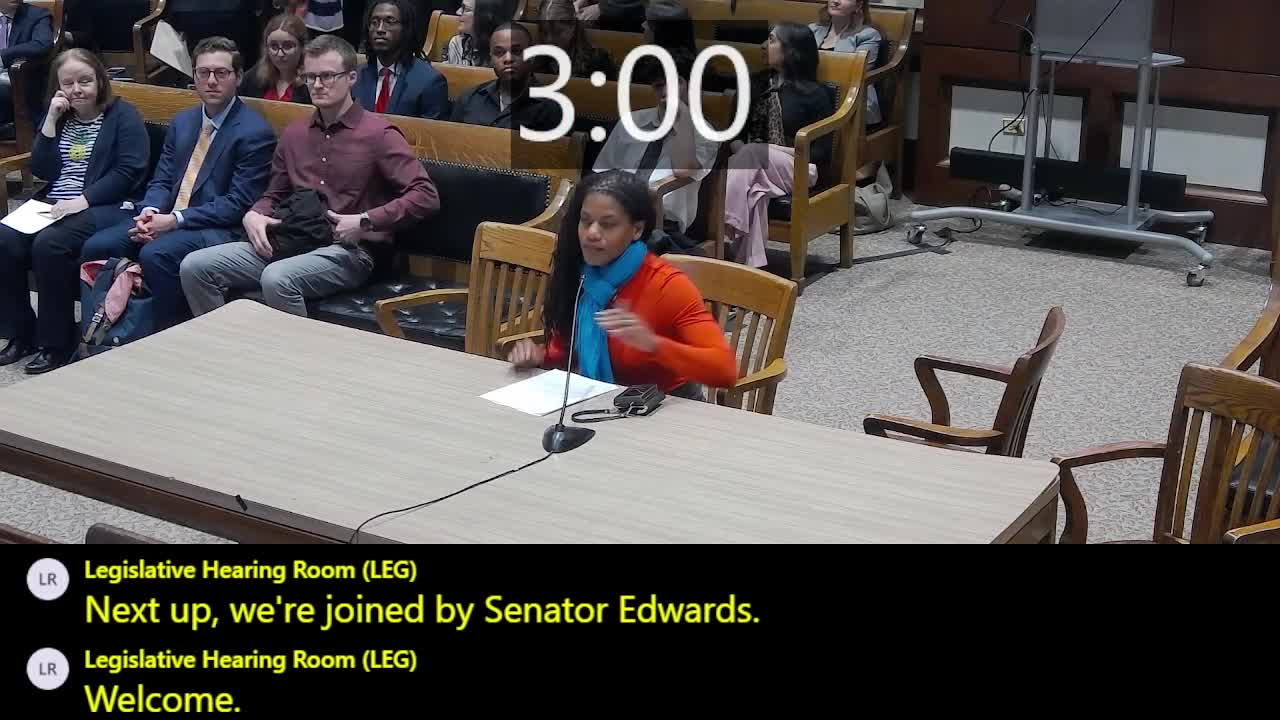
Senator Edwards and a coalition of students, alumni, advocates and civil‑liberties groups urged the Joint Committee on Higher Education to favorably report S928/H1452, legislation that would prohibit legacy preferences in college admissions.
Senator Edwards and a coalition of students, alumni, advocates and civil‑liberties groups urged the Joint Committee on Higher Education to favorably report S928/H1452, legislation that would prohibit legacy preferences in college admissions.
“Legacy preferences will not be considered into your admission into public schools or into private schools in the Commonwealth,” Senator Edwards said in testimony, arguing the practice is a relic of exclusionary admission policies that preferentially benefit white and affluent applicants.
Multiple advocates provided recent data and historical context. James Murphy, director of post‑secondary policy at Education Reform Now, told the committee the number of colleges using legacy preferences has fallen over the past decade but Massachusetts remains an outlier: “More than half of our colleges consider legacy status,” he said, noting Massachusetts has more legacy‑using colleges than most states. Murphy argued that legacy preferences “are wrong” and can be removed by institutions or statute.
Students and alumni described the practice as a barrier to access. Gemma Nolios, a Northeastern junior, traced legacy admissions to 1920s nativist policies that restricted Jewish and immigrant entrants and said the practice was designed to maintain demographic exclusion. Maddie Register, a first‑generation student, said legacy preferences concentrate advantage among the wealthiest families and cited Opportunity Insights data showing legacy applicants are substantially more likely to come from high‑income households.
Student leaders from selective institutions argued legacy policies are not necessary to sustain alumni engagement or fundraising. Enoch Ellis, student body president at MIT, testified that MIT does not consider legacy status and nevertheless maintains high alumni participation and philanthropic support.
Civil‑liberties and equity groups also testified. Tracy Griffith of the ACLU of Massachusetts called legacy admissions “a systemic barrier to educational opportunity” that reinforces racial and economic stratification and urged the committee to report the bill favorably.
Committee members asked about the legal reach of a statutory ban for private institutions. Witnesses said states can condition institutional authorities and that other states and institutions have already moved to end or limit legacy preferences; witnesses recommended legislative action rather than delay. No committee vote was recorded at the hearing.