Get Full Government Meeting Transcripts, Videos, & Alerts Forever!
Get email alerts on the Hunger Free Campus topic
No spam. Unsubscribe anytime.
Lawmakers consider codifying and funding 'hunger free campus' program to support students facing food insecurity
Summary
Supporters of H1466/S939 told the Joint Committee on Higher Education that 44% of public college and community college students face food insecurity and urged codifying and sustaining the Hunger Free Campus Initiative, which has received ARPA and FY25 funding.
Representative Vargas and Senator Lovely described H1466/S939 as legislation to codify and sustain the Hunger Free Campus Initiative, which sponsors say provides on‑campus meal credits, emergency funds and SNAP/WIC enrollment support.
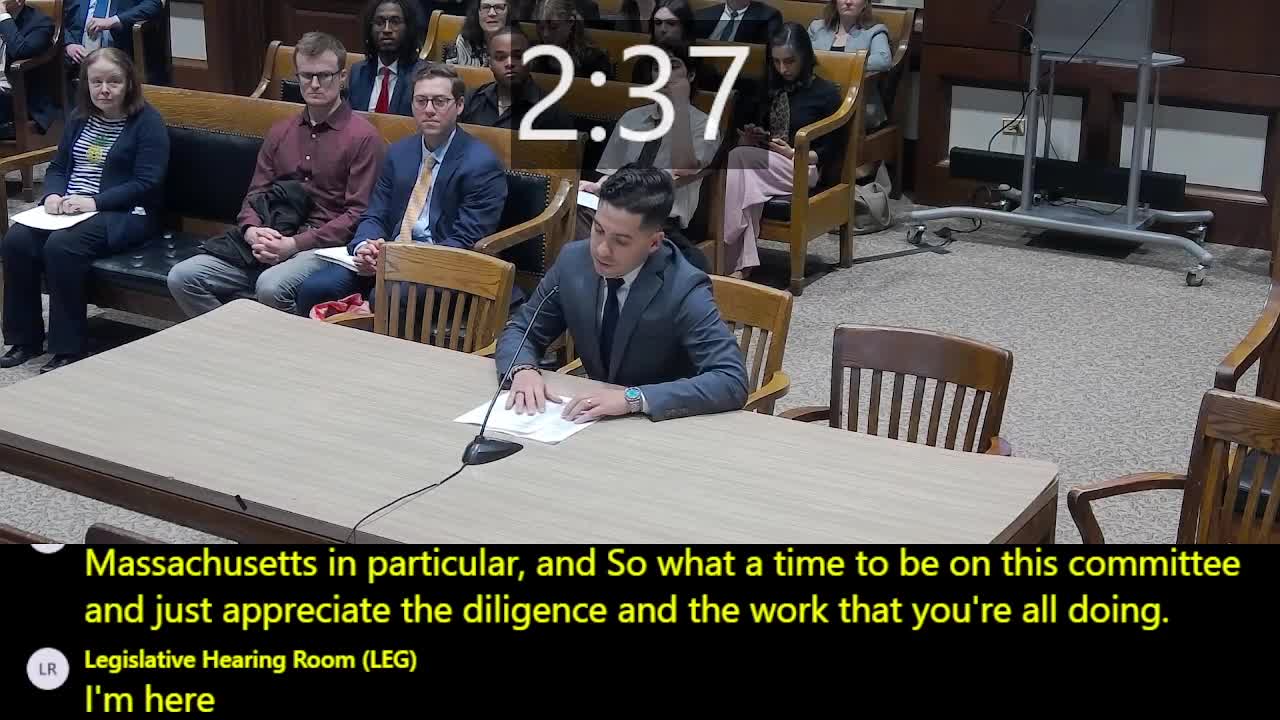
“Forty‑four percent of students in Massachusetts public universities and community colleges face food insecurity,” Representative Vargas told the Joint Committee on Higher Education, citing a recent study and urging codification so campuses can sustain programs that help students finish degrees.
Senator Lovely and advocates said the initiative has received state funding: they told the committee ARPA supported the program with approximately $3,700,000 in 2022 and the FY25 budget included about $500,000 for continuing grants. Kate Adams, senior public policy manager at the Greater Boston Food Bank, said those investments have supported pantries, culturally appropriate meals, SNAP enrollment assistance and pantry partnerships, but campus basic‑needs offices remain overstretched.
“Food insecurity doesn't just impact health, it affects graduation rates,” Adams said, citing a National Institutes of Health finding that students from food‑insecure households are less likely to finish an associate degree. Campus staff and witnesses asked for stable, earlier funding distributions so pantries and basic‑needs programs can plan year‑round rather than relying on ad‑hoc grants.
Student witnesses described daily demand on campus pantries and the personal effect of uncertain funding. Michael Hannigan, student senate president at Greenfield Community College, said the campus pantry is “constantly packed” and that uncertain funding schedules leave pantry staff scrambling to patch together resources from multiple grants. He said consistent, municipal or state funding would improve retention by preventing students from dropping out because they cannot meet basic needs.
Project Bread and other hunger‑relief advocates supported the bill and asked the committee to report it favorably, highlighting program components such as meal‑credit sharing, emergency aid, capacity building and anti‑stigma outreach to boost SNAP and other benefit enrollment.
The committee did not take a vote at the hearing. Sponsors asked for statutory language that would authorize the Department of Higher Education to administer grants, provide technical assistance, and collect outcome data so the program’s effect on retention and degree completion can be assessed.