Get Full Government Meeting Transcripts, Videos, & Alerts Forever!
Get email alerts on the Budget topic
No spam. Unsubscribe anytime.
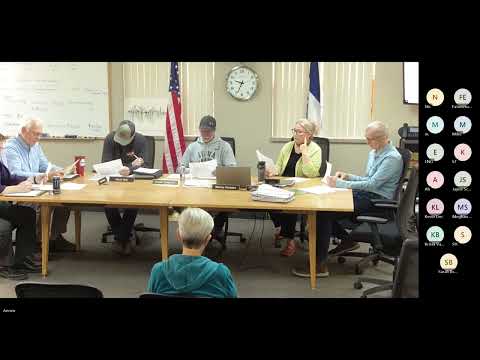
Winneshiek County adopts FY 2026 budget; board cites reserve target, 911 tower payments
Summary
The Winneshiek County Board of Supervisors held a public hearing and adopted the fiscal year 2026 budget, citing a 25% reserve target and a final payment schedule for 911 tower project costs. The board also recorded several routine votes, summarized below.
Winneshiek County supervisors opened a public hearing on the proposed fiscal year 2026 budget and adopted the budget after discussion and a roll-call vote.
The county’s presenter said the budget includes measures intended to preserve an operating reserve: “The target is to have at least 25% since we have to start in July, but the first property taxes aren't due until the September,” the staff member said during the presentation. The presenter described the handout as showing anticipated fund balances for the three funds supported by property taxes and explained how the budget condenses departmental line items for overview.
The budget also carries a scheduled series of payments tied to the county’s emergency communications project. “This budget does cover $900,000 payments emergency managements for the third payments to this for the 9 1 1 towers and there'll be a remainder payment next year that'll be lower somewhere around the $250,000 amount,” the presenter said. Supervisors said proceeds from the anticipated sale of the HHS building will be applied to infrastructure purchases rather than operating costs.
Supervisors discussed levy history and how state-level property tax changes are expected to affect future levy rates. The presenter noted a trend: “You can see we're going down about 6¢” in levy rate over the past decade, and added that state valuation changes may render direct levy comparisons less useful next year.
Public questions during the hearing addressed specific line items, delinquent property tax procedures and small budget items for pioneer cemeteries and historic preservation. In response, staff said the entire budget is posted online and offered to email handouts to requesters. The presenter read figures from the public record: “The pioneer pioneer cemetery's budget is $96.50 and historic, preservation county historic preservation is 26.”
After the hearing, a supervisor moved to adopt the FY 2026 budget. On roll call the board voted in favor and the chair announced the motion passed unanimously.
Votes at a glance
- Adopt FY 2026 budget — approved (unanimous). Recorded on the meeting as a roll-call; chair announced the motion passed unanimously. - Approve resolution to increase elected officials’ salaries by 3% — approved (unanimous). The board voted to set a 3% increase for the 10 elected county positions, reflecting the percentage given to other county employees. - Accept striping bid from CamLine (center- and fog-line work) — approved. Low bid accepted at $154,436.04; motion carried by voice vote. - Approve Solid Waste Agency recycling education grant application — approved (unanimous). Board approved submission of the grant application and authorized inclusion of the minutes. - Adopt consent agenda (minutes, claims, sheriff’s quarterly report) — approved (unanimous). - Continue public hearing on zoning ordinance amendment (A2 uses) — continued to a later date (motion passed by voice vote).
Why it matters
The approved FY 2026 budget preserves cash flow until property tax receipts arrive in September, funds near-term infrastructure priorities and allocates a large scheduled payment for the county’s 9-1-1 tower project. The board’s vote on elected-official pay aligns those salaries with other county wage adjustments. The continued public hearing on zoning sets up further review of a contested change to agricultural zoning rules.
What’s next
Supervisors closed the public hearing and adopted the budget at the meeting; agenda items that passed will be implemented by staff per usual timelines. The board continued the zoning public hearing to a later date to allow more stakeholder input and additional legal and planning review.