Get Full Government Meeting Transcripts, Videos, & Alerts Forever!
Bozeman staff weigh permanent parking limits, odd/even pilot to improve winter plowing and emergency access
Summary
City transportation staff reviewed results from an odd/even winter parking pilot and presented four policy alternatives — including permanent one-sided parking, expanded overnight restrictions and signage/enforcement plans — intended to improve plowing efficiency and emergency access after a heavy snow year.
Bozeman transportation staff on April 23 presented options to manage on-street parking in winter after a season that strained plowing operations, slowed residential street clearing and raised concerns about emergency vehicle access.
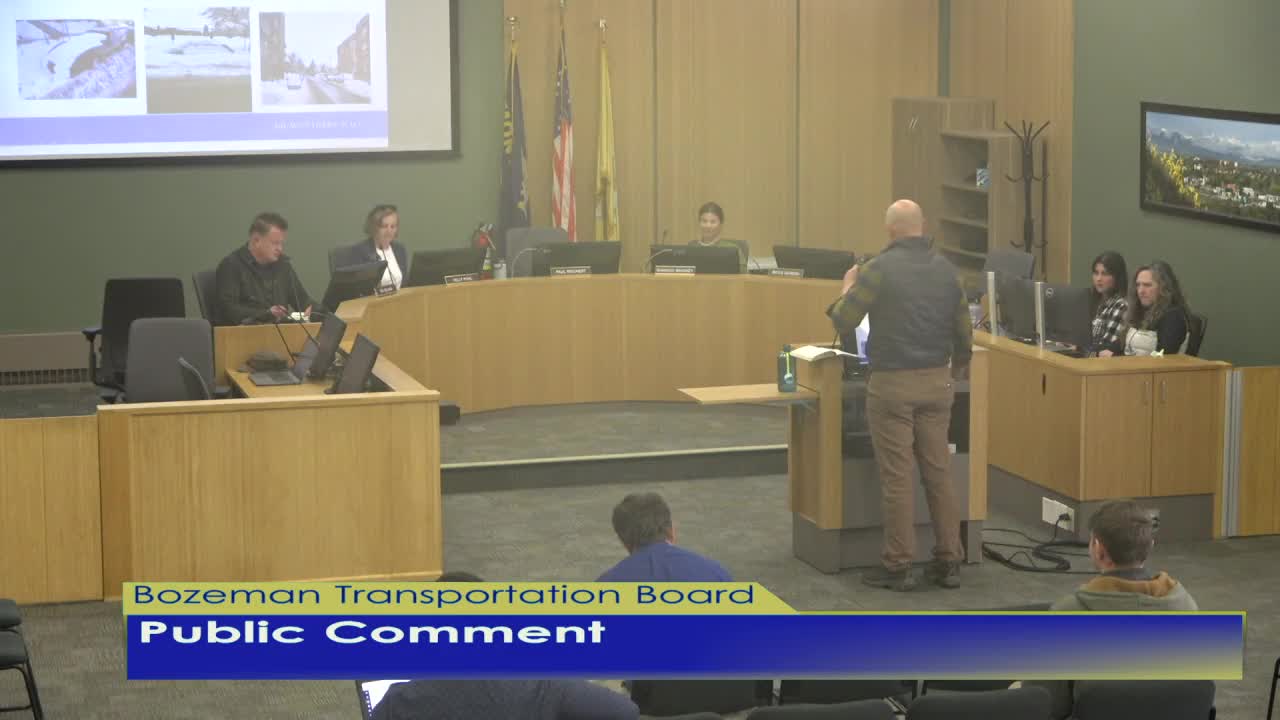
Nick Ross, director of transportation engineering for the City of Bozeman, told the Bozeman Area Transportation Board that a recent odd/even pilot showed clear performance differences between blocks that complied with alternate-side rules and those that did not. “We do need clear access to the curb on our local streets for purpose of snow storage,” Ross said, explaining that without that access snow cannot be stored and streets cannot be plowed effectively.
The discussion came during a work session; no formal vote was taken. Ross framed the issue with winter operations data: the Streets Division reported about 84 inches of snow for the season, roughly 46,000 lane miles plowed, 2,600 miles of sidewalks and shared-use paths cleared, and about $1.5 million in labor, material and equipment costs for the division this past snow year.
Why it matters: staff said parked cars on narrow, legacy downtown streets create operations slowdowns that turn a motor grader’s 4 mph production target into near walking pace when cars block curbs. That loss of productivity contributed to delays that left some residential streets uncleared for up to three weeks at peak winter conditions. Ross and staff also stressed public-safety risks: the International Fire Code requires a 20-foot clear width for fire apparatus operations, a standard staff said many downtown streets do not meet in winter when…
Already have an account? Log in
Subscribe to keep reading
Unlock the rest of this article — and every article on Citizen Portal.
- Unlimited articles
- AI-powered breakdowns of topics, speakers, decisions, and budgets
- Instant alerts when your location has a new meeting
- Follow topics and more locations
- 1,000 AI Insights / month, plus AI Chat