Get Full Government Meeting Transcripts, Videos, & Alerts Forever!
Get email alerts on the Water Adequacy Initiative topic
No spam. Unsubscribe anytime.
Bozeman staff tell commission water-rights ballot initiative would likely reduce housing supply and raise costs
Summary
City staff told the Bozeman City Commission on April 22 that a citizen initiative to tie water adequacy to a 33% affordable‑housing requirement would likely slow housing production, raise costs and push development outside city limits.
City staff told the Bozeman City Commission on April 22 that a citizen-drafted initiative tying water adequacy rules to a high inclusionary-housing requirement would not deliver the claimed benefits and could instead reduce housing supply and shift development outside the city.
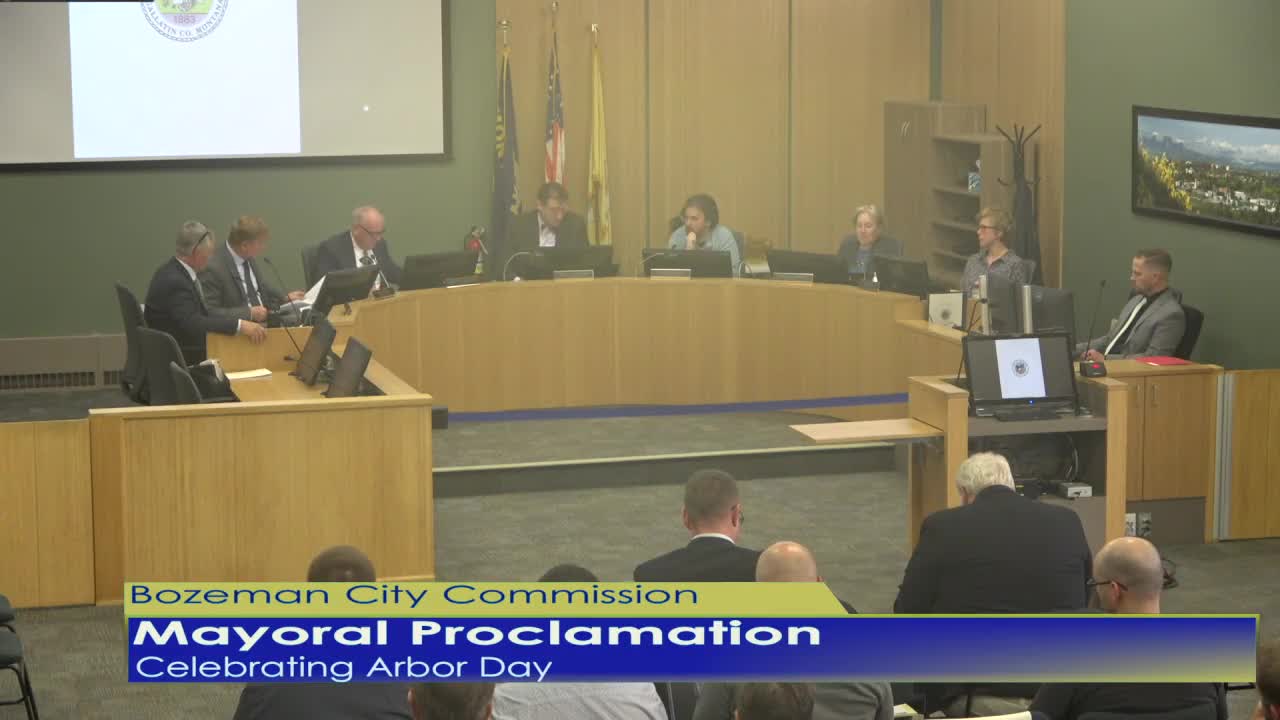
The work session — requested after the petitioners began gathering signatures for the measure commonly described by supporters as a “water adequacy” and affordable-housing initiative — included legal, planning, utilities and housing staff who outlined likely legal and operational barriers, as well as economic impacts on development costs and timing.
City Attorney Greg Sullivan said the city’s office reviews submitted citizen initiatives only for narrow technical statutory compliance (single-subject rules and ballot text) and not for how they would integrate with existing municipal code. “We do not review it for compliance with existing laws,” he said. Sullivan flagged language in the draft that uses the technical term "deed restriction," and noted Montana lacks clear statutory authority for long-term affordability covenants used elsewhere.
Chris Saunders, the city’s community development manager, summarized planning concerns: the initiative would require a site or subdivision to provide water adequacy by transferring water rights for each development unless the developer made at least 33% of units affordable (60% AMI renters, 120% AMI ownership) with deed restrictions for 99 years. Saunders said the proposal reduces options the city now uses (cash‑in‑lieu payments and off‑site conservation offsets) and would likely “push growth outside of the city limits.” He called the requirement “likely to block new developments” because of the time and complexity of obtaining and transferring individual water rights.
Utilities Director Sean Coats reviewed the city’s water supply numbers and the mechanics of municipal water development. He said Bozeman has legal rights to about 16,500 acre‑feet of water and used about 7,100 acre‑feet in 2024 (roughly 43% of legal supply in a normal year). In a conservative 1‑in‑50‑year drought scenario the city would use roughly 60% of its supply, he said. Coats also described the operational inefficiency of requiring many small private wells and treatment systems instead of using the city’s economy‑of‑scale approach to develop and operate water supply and treatment.
David Fine, housing and economic development program manager, said the numbers used by proponents do not match the economics of producing deeply affordable homes in Bozeman. “I’m not sure that this initiative does that,” Fine said of producing the level of affordable housing the petition requires without large subsidies such as Low‑Income Housing Tax Credits (LIHTC) or tax increment financing. Fine’s analysis showed that, given current land, lumber, labor and lending costs, requiring 33% affordability at the stated AMI levels would make many projects infeasible and reduce total housing production.
Staff described several specific concerns: the initiative’s deed‑restriction language may be legally problematic in Montana, the 99‑year restriction may exceed what courts will uphold, the measure ignores the city’s adopted administrative procedures in its affordable housing ordinance, and the initiative lacks transition language to clarify which pending applications would be subject to the new rules.
Commissioners asked questions about water use differences between single‑family and multifamily housing, the timeline to develop new water rights (staff said commonly three to eight years), the cash‑in‑lieu valuation (about $6,000 per acre‑foot currently), and whether the initiative would reduce the city’s ability to fund and create water supply. Deputy Mayor Morrison and others pressed staff about whether alternatives or mitigation were possible; staff said many implementation details would have to be developed if the measure makes the ballot and is adopted.
No formal action was taken by the commission at the work session; staff requested direction about outreach and next steps and answered public comment. Dozens of residents and representatives of business, builders and housing groups spoke at public comment. Supporters said the measure is an exercise in direct democracy to prioritize water for affordable housing; opponents — including the Southwest Montana Building Industry Association and the Gallatin Association of Realtors — said the measure would amount to an effective moratorium and would reduce the city’s ability to acquire water and to finance infrastructure.
The commission did not adopt or endorse the initiative at the meeting. Commissioners and city staff said the discussion was intended to inform voters if the petition proceeds to signature certification and a ballot campaign.
Ending: Staff will continue analytic work and requested additional direction from the commission about outreach and implementation steps should the initiative qualify for the ballot.