Get Full Government Meeting Transcripts, Videos, & Alerts Forever!
Get email alerts on the Water Supply topic
No spam. Unsubscribe anytime.
Planning board adopts updated water supply facilities work plan
Summary
At its meeting, the Jacksonville Beach Planning Board approved an updated Water Supply Facilities Work Plan that the city will adopt by reference into its comprehensive plan.
At its meeting, the Jacksonville Beach Planning Board approved an updated Water Supply Facilities Work Plan that the city will adopt by reference into its comprehensive plan.
The work plan, a short standalone document required by state statute when regional water-supply plans are updated, updates population and water-usage projections, capital improvement projects and treatment-plant capacity. Planning staff said the document is essentially the same text used in the city’s 2018 work plan with updated tables and data provided by Public Works.
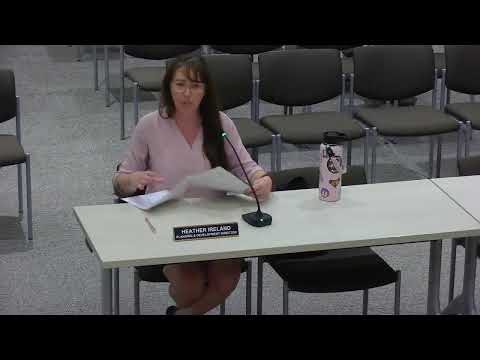
Planning staff member Heather (last name not specified) told the board the item is “boilerplate stuff the state requires us to do” to confirm the city has capacity to provide potable water and that the update must be completed within 18 months after the regional water-supply plan is updated. Heather said Public Works provided the capital outlay project list and that maps in the packet remain essentially unchanged because the water-supply system has not changed.
Board members asked questions about a reference in the packet to asbestos cement pipe. One board member asked whether the city should assess the risk of keeping asbestos cement pipe in the distribution system and whether removal or remediation could expose residents to risk. Heather and another board member responded that Public Works maintains a separate water-quality report that addresses contaminant and material-erosion concerns and that a separate Public Works project is identifying properties that may have asbestos cement pipe so homeowners can be evaluated and infrastructure gradually replaced. A board member with experience on the topic described asbestos concrete pipe as non-friable and said the primary operational risk is leakage from degradation rather than a direct public-health risk.
The work plan packet references the city’s consumptive use permit and annual water-quality reporting; Heather noted that the consumptive-use numbers are largely static and that water-quality issues are addressed in the separate Public Works report, which staff said they would locate and share with the board.
After questions, a motion to approve the work plan passed on a roll-call vote. The board’s roll call earlier in the meeting recorded David Bridal, Margo Moring, Nicholas Andrews, Debbie Cole, Justin Henderson, Dean Haddock and Matthew Feiler as present; each member recorded a “yes” on the final vote.
The planning department said the updated work plan (about nine to ten pages) will be moved forward as a comprehensive-plan update and that the city expects the same sign-off from the regional water management district that it received in 2018.
Less central procedural items discussed later in the meeting included the planning department’s reminder that the next regular meeting will fall on May 27 because of a holiday and that staff will confirm the agenda for the two May meetings by email.